Essay · EUROPE
Vulnerability and Ivan Illich

I have been thinking a lot about vulnerability as I decline to drive for my transportation.
Giving up driving a car is a kind of exposure therapy to reality that cannot be simulated or avoided.
The person walking in public space is vulnerable.
They breathe the air directly, hear the noise without a metal shell to muffle it, feel the weather, the sunrise/sundown/darkness, make eye contact with strangers and familiar faces.
They are exposed to traffic violence in a way that drivers who are sealed in their protective capsules are not.
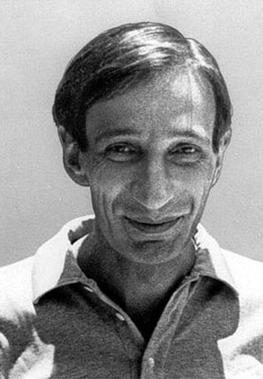
I was searching for language to describe this disparity when I found a quote from philosopher Ivan Illich that stopped me cold:
Beyond a certain speed, motorized vehicles create remoteness which they alone can shrink. They create distances for all and shrink them for only a few.
This quotation is from an essay titled “Energy & Equity”, authored by Illich in 1978 (essay PDF link).
It captures something essential about what depending on driving does to us.
The car destroys walkability and sells itself as the solution.
Speed restructures space itself. When cities are designed for 40mph traffic, destinations spread apart.
And the vulnerable who cannot afford the car become a problem–slowing the car by failing to travel at their speeds.
People that can afford cars–people who can drive–benefit at everyone else’s expense.
In a society organized around automobility, walking becomes a holy act.
Not because walking is morally superior, but because it refuses the remoteness that speed creates.
Walking is a statement:
I will be here, in this place, at this pace my body is capable of.
It says:
I accept the threats and opportunities my community provides.
The remoteness created by speed separates us from places and it separates us from each other, from our own bodies, from the immediate reality of where we are.
And because only some people can afford to shrink these distances, speed becomes a form of inequality: the ability to avoid the consequences of the remoteness that speed itself creates.
To be vulnerable, to walk, to be present, to refuse remoteness: this is holy not because it’s comfortable or safe or efficient.
It’s holy because it’s real. Because it keeps us in contact with the world as it actually is, not as it appears through a windshield.
Illich saw this clearly appear in his lifetime.
We are still learning what he meant.
As I read more of Ivan Illich, I learned that he was raised in pre-World War II Austria.
His mother was a Sephardic Jew who converted to Christianity, but this did not spare his family from persecution when the Nazis rose to power over Austria.
He and his family avoided the concentration camps thanks to their wealth, but he fled the country with his family and sought refuge in Catholic studies, becoming an unconventional Catholic priest in post-war New York City, then Latin America.
His reputation as a philosopher was built from becoming an educator on systemic ills created by modern society.
He is perhaps best known for:
- “de-schooling” - that formal schooling is harmful and a return to mutual aid education is preferable
- “conviviality” - human-scale, hand-held tools build a human’s sense of purpose and ownership over labor–in contrast to contemporary technologies that have super-human scale and degrade human relationships with labor
- “limits to medicine” - that western, contemporary medicine fails to accept that the human experience is not itself an illness and that life involves suffering that medicine cannot solve and in fact can create its own set of harms
I share these findings of mine as I find Illich’s ideas refreshing, and I have been surprised at how far his writings have traveled.
Apparently I have been out of the loop, never being exposed to his writings–while quite a few friends I have mentioned his name to are in fact familiar with him.
If you’d like to learn a little more about Illich without diving into his essays yet, I’ve found these two sources interesting:
- an hour-long interview with former California Governor Jerry Brown, about the influence of Ivan Illich
- a blog, titled “Scare City”, by a now deceased devotee of Illich
I have more thoughts to share on Illich’s writings, but this post is already quite long and I’ll spare you.
Until next time!
Enjoyed this post? Get new posts via email