Essay · EUROPE
Come and See

This was a difficult film to watch.

Between the dreadful soundtrack and relentless themes revolving around death, Come and See (1985) is the kind of theatrical film I imagine walking out of.

But watching it in the comfort of my own couch and having checked the DVD out from the library I could not avoid watching the film in full.
I forget who or what promoted this film to me.
I recall Come and See being held up as an example of Soviet filmmaking, depicting the cultural mindset of post-WWII Russians.
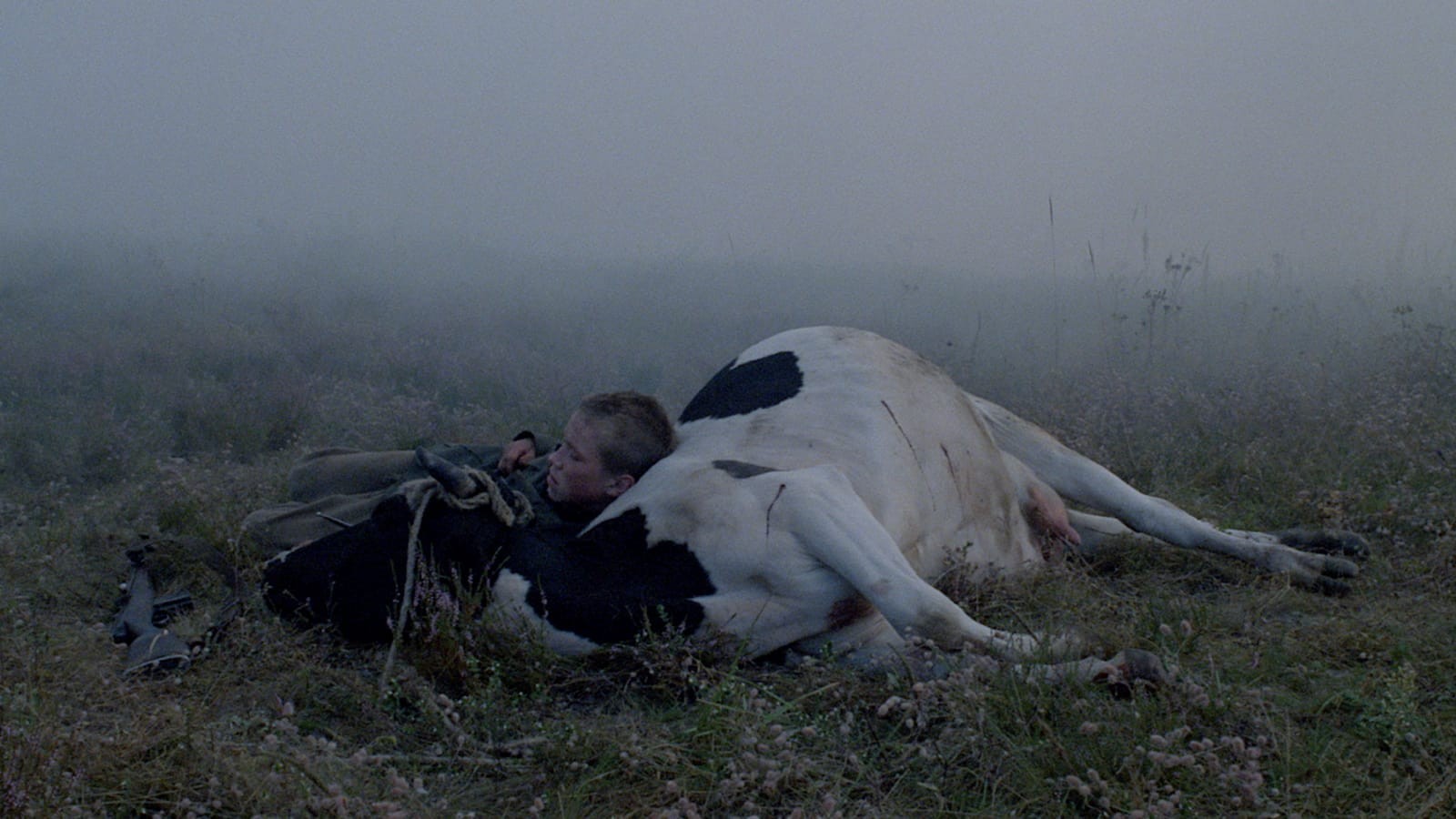
If you want to understand contemporary Russians, their culture, and their political power structure it is essential that you understand their traumas.
I am sure the same could be said the same of the USA:
Imagine trying to learn and understand the 500 years of American traumas in 2 hours and 20 minutes:
- perilous immigrant and settlement experiences,
- the Native American genocides,
- the Revolutionary and Civil Wars,
- abolition of slavery,
- Women’s Suffrage,
- the Civil Rights movement
In Soviet history, WWII is singular in the rough-edged history of a “Russian Empire”.
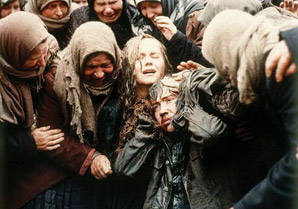
More Soviet “citizens” died in World War II than any other.1
What’s more: the Soviet’s Red Army has the strongest claim to defeating the Nazis and liberating Europe.
Through this lens, the dark and violent trauma of Come and See is a critical piece of media for the ignorant to consume.

Senseless murder and cold-bloodedness is nearly constant throughout the 2 hour 20 minute runtime.
The film’s protagonist (if you call him that) is ultimately over-shadowed by the metaphorical Partisan leader, Kosach, who brings some sense of justice to the film’s finale:
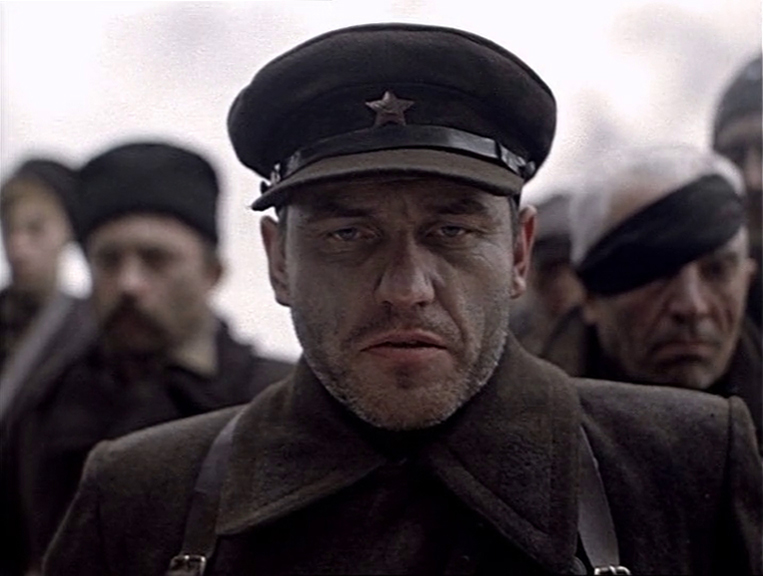
The film’s end is sharply different from its beginning: the Soviet Partisans march stone-faced towards Berlin to counter the Nazi atrocities.
While I stumbled my way up from my couch after watching this film, I am not sure I can recommend it besides for educational purposes.
But what other purpose does media serve, if not education?
I of course know the answer, and hope that you my kind reader understand this as well:
Humans choose media to consume very selectively–much like food.
Our media diet is self-selected.
Like food, we find some media delicious and some revolting.
But all media elicits a hormonal reaction we sit down to receive.
Come and See is an eye-opening film–if you can stomach it.
Enjoyed this post? Get new posts via email