Essay · URBANISM
What If California Is the Most Regressive State in America?

I grew up in California, born and raised.
I absorbed the state’s self-image from a young age and recognized the state by fundamental truths: confident, a financial powerhouse, and a leader in progressive causes.
I left for a bit, and I came back for its weather and economic opportunity.
Newly returned as an adult I paid rent, I bought a car (I had to in order to visit rental listings).
And I observed who lived and who left: the reasons they shared for leaving and the reasons that I could infer.
I had to wonder: why would people leave California?
The truth is that it’s not a choice.
California is punishingly regressive.
It is the most regressive state in the USA.
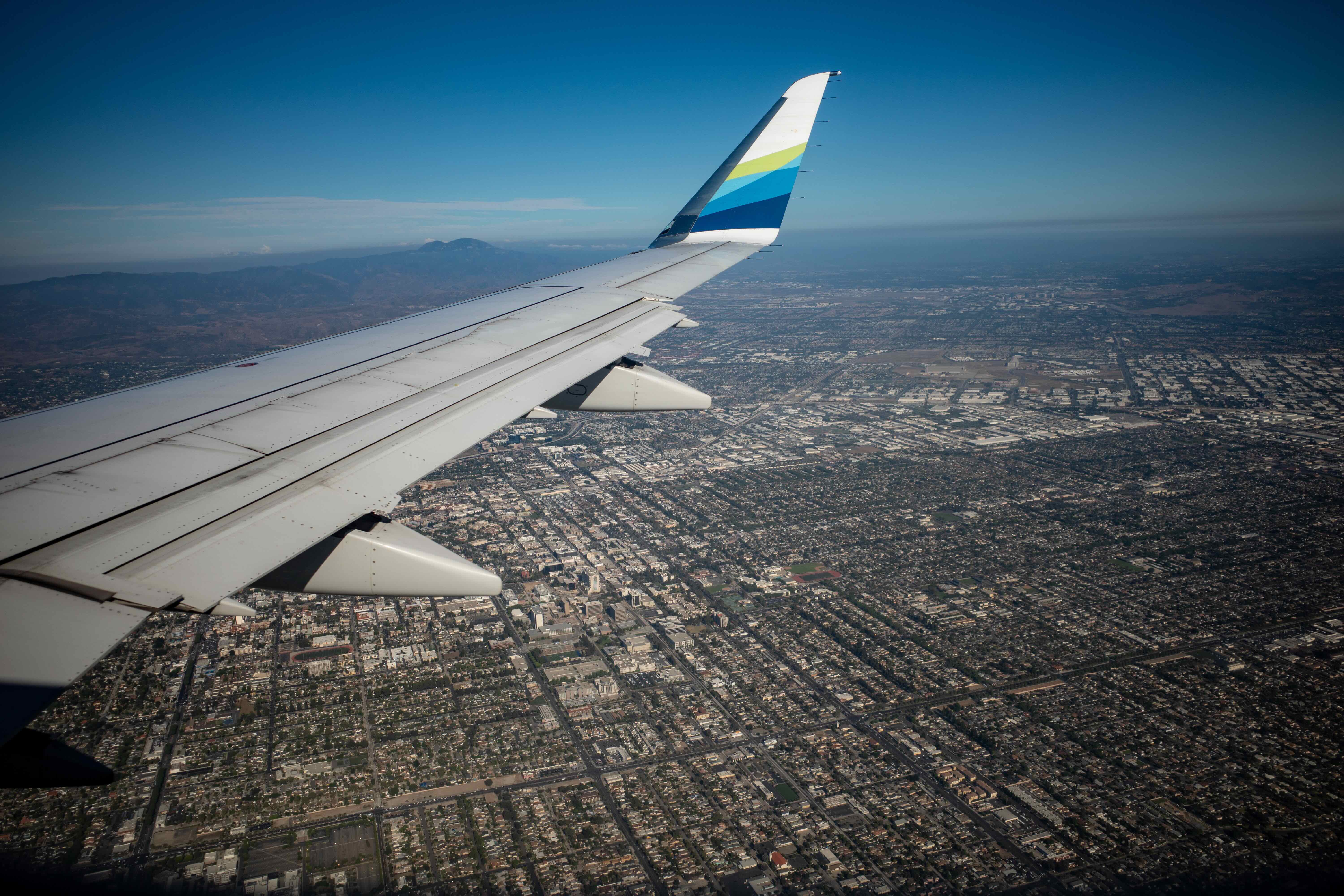
I took this photo flying into LA.
LA goes on forever.
It is single-family houses, cul-de-sacs, strip malls–all the way to the mountains.
California has the worst housing shortage in the country. By the Census Bureau’s Supplemental Poverty Measure (adjustments for actual cost of living) California ranks dead last among all fifty states.
Last.
In the most recent three-year data, 17.7% of Californians live in poverty by this measure, tied only with Louisiana and well ahead of Mississippi at 16.4%.
The national average is 12.7%.
The comparison that actually keeps me up at night is Texas.
I don’t want to live in Texas, in fact I don’t think most Texans want to physically live in Texas.
But a teacher in Texas can buy a house. A nurse can afford to live in the city where he or she works instead of a van.
In the Bay Area, those same people are commuting ninety minutes from somewhere they can halfway afford, or they’ve left entirely.
In contrast to California, Texas built housing.
It is car-dependent, sprawling, aesthetically grim housing—-but Texas built housing.
California did not.
California’s homeowner class made sure that didn’t happen here, and the bill got paid by renters, immigrants, and anyone who arrived after the good seats were taken.
The “Homelessness in California” Wikipedia article is an informative read.
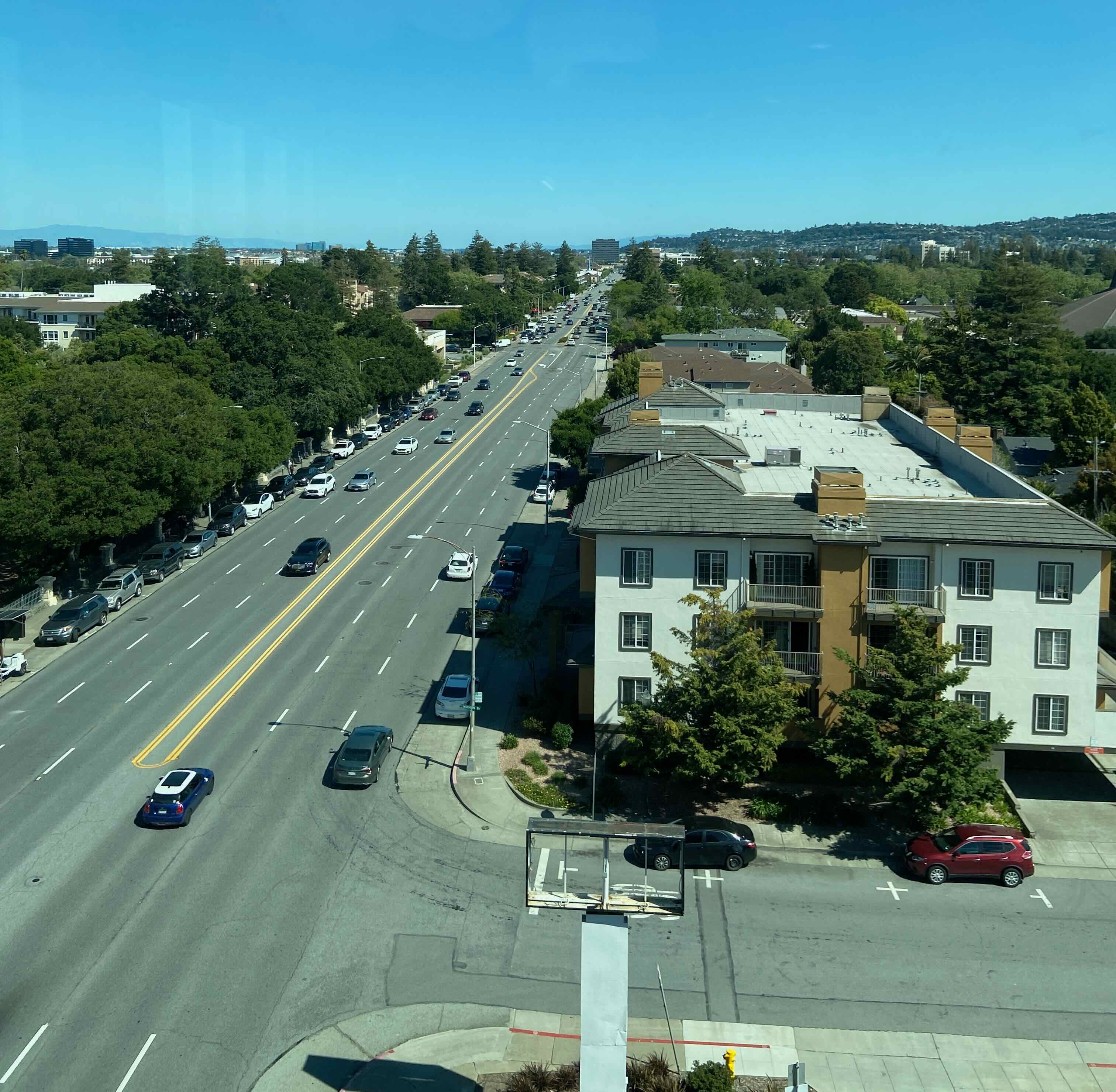
I took this photo a couple of miles from my residence.
El Camino Real is a stroad, running through some of the most expensive real estate on earth.
Five lanes, surface parking, a bus stop with no shelter.
The exact same arterial road that you find in any Texas suburb, except the houses behind it start at $2 million.
We didn’t avoid the bad parts of Texas urban planning.
We just added $2 million houses and called it progressive.
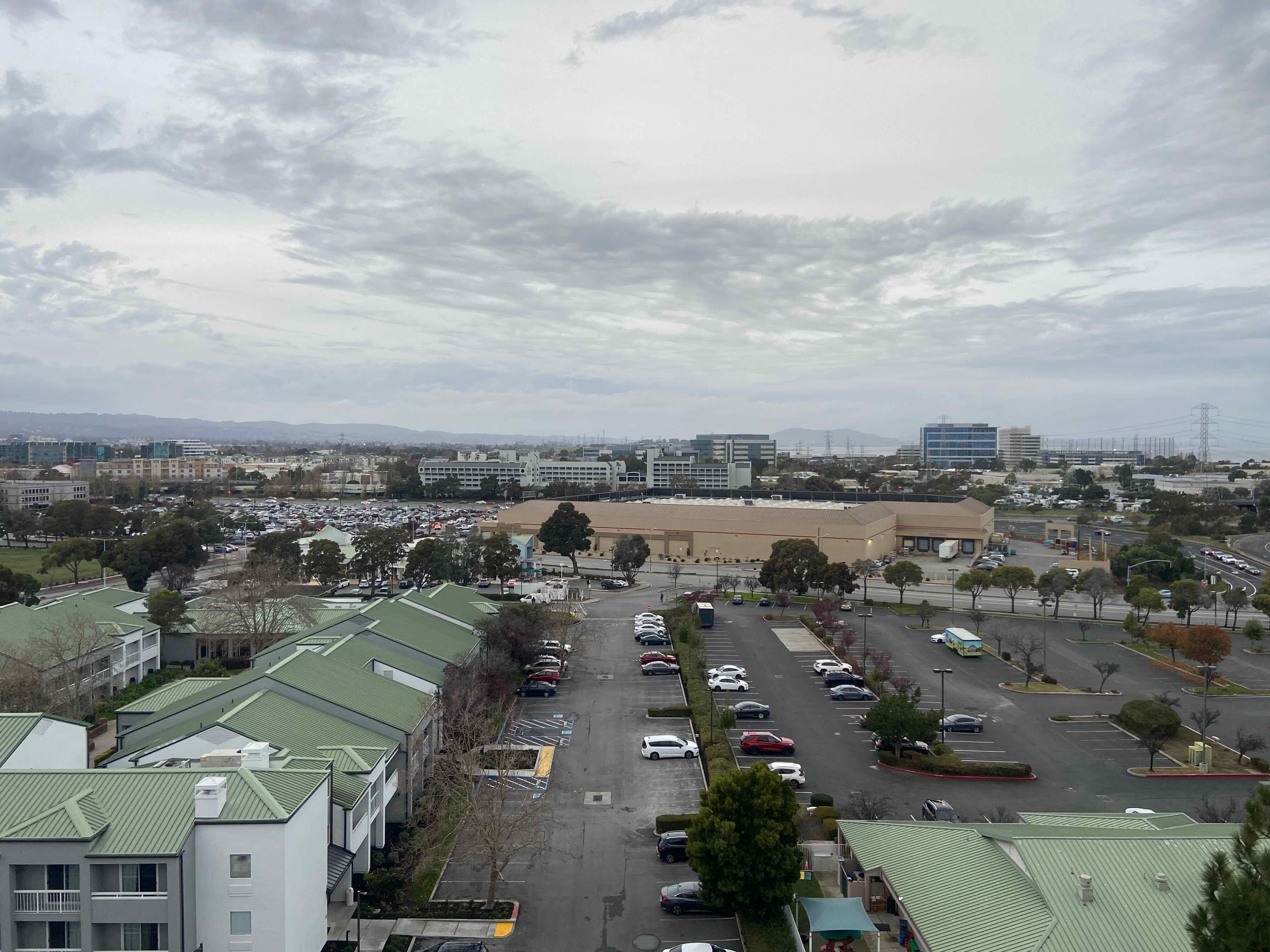
The policy that ties it all together is Proposition 13.
Passed by the voters in 1978 with 62.6% of the vote, it caps property taxes based on when you bought.
This means someone who bought in Palo Alto in 1987 pays almost nothing compared to someone who bought last year.
It’s a policy perfectly designed to entrench the advantages of whoever got here first, and it’s been untouched for nearly fifty years.
The revenue that gets lost has to come from somewhere so it comes from sales taxes, which hit lower-income households hardest.
California’s state sales tax is the highest in the nation at 7.25% (it falls to 7th when you account for local/county) (source).
This is the most regressive property tax structure of any state in the country, and it is held in place by the political coalition that considers itself the “progressive ones”.
California spends a lot on social programs, and its income tax is genuinely progressive. But on the outcomes that define whether a working-class person can build a life here (housing, cost of living, whether you can stay) the state has failed and it has failed because the people with the most power to change things had the most incentive not to.
This fake progressivism becomes most pronounced when discussions of rent control come up.
When these rent control efforts are made they are dunked to the ground and curb-stomped by a cadre of electeds at every level who own homes and do not rent.
Rent control for me (Prop 13), but not for thee!!!
Prop 13 has survived untouched for nearly fifty years and it isn’t because Californians lack self-awareness.
It’s because the people most harmed by it don’t vote. Nationally, homeowners turn out at rates roughly 20 points higher than renters. In California the gap is even more severe: ~73% of the state’s likely voters are homeowners, while ~63% of unregistered adults and ~58% of infrequent voters are renters.
Renters are close to half the state’s population, but they are a fraction of its participating electorate.
This isn’t an accident. Renters move more often, which means re-registering more often. They work hourly jobs with less schedule flexibility. They are disproportionately immigrants, younger, nonwhite which are the groups with compounding barriers to political participation.
Meanwhile homeowners–whose property values depend directly on keeping housing supply restricted–show up reliably and vote their balance sheets. A Stanford study shows that homeowner voter turnout nearly doubles when zoning is on the ballot (source).
California doesn’t just have a housing policy failure. It has a democracy failure, and the two are the same failure.
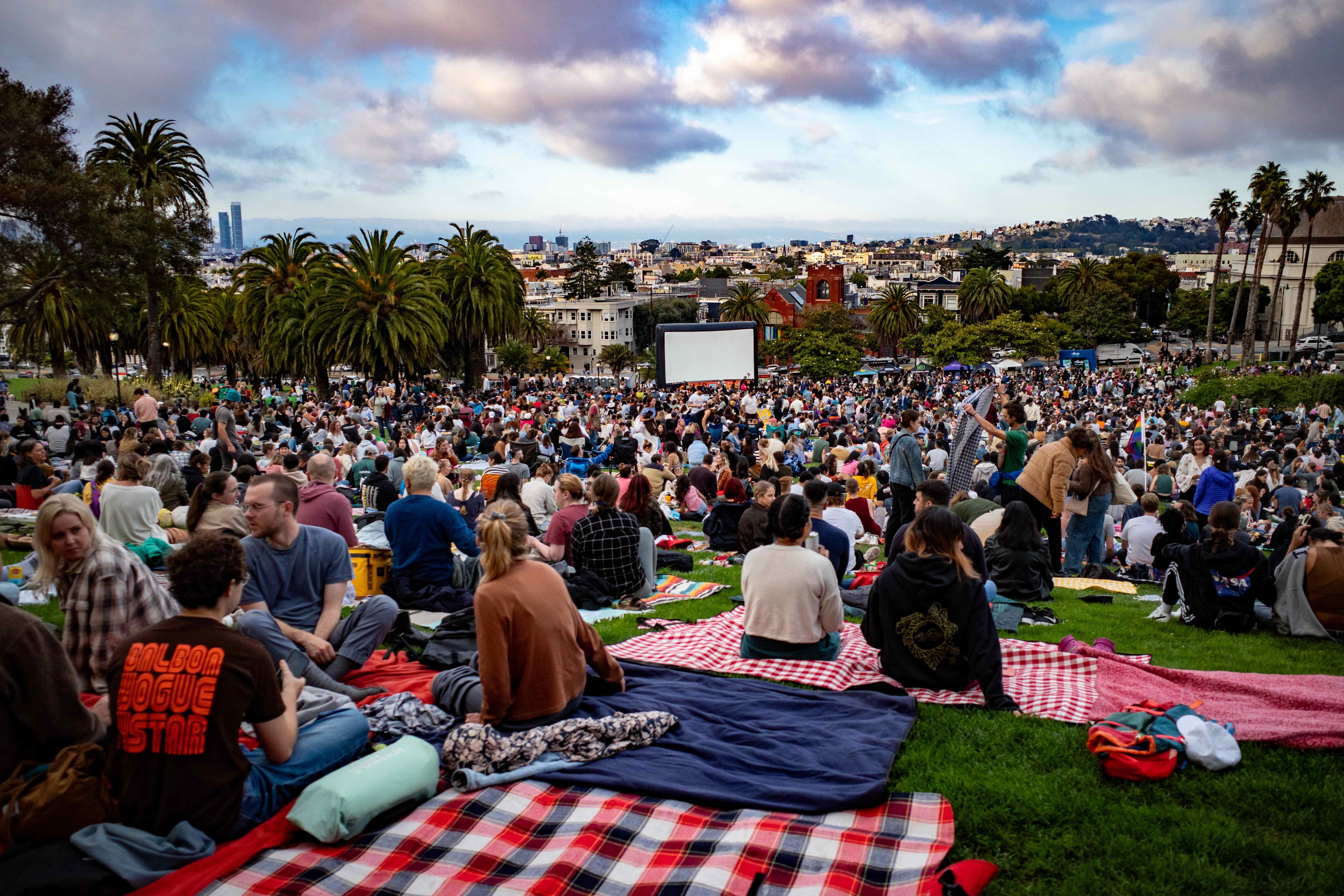 Dolores Park, San Francisco.
I love this place. I came back to it on purpose. I am raising my kid here.
On a good day in California (most of the year) it still feels like nowhere else.
That is why I wrote so critically of it.
California has every advantage: the weather, the geography, the economy, & the talent.
Dolores Park on a summer evening is a real thing.
The question is:
How many people get to afford to live in proximity to this scene?
And whether we’re willing to ask that question out loud.
The direct outcome of California’s policies is that its population is not keeping pace with the rest of the US, and so has its political clout.
We’ll see how the next decade looks as far as how folks vote with their feet.
As someone who cares for a more positive outlook for California I hope that its legislators and voters make the systemic reforms it needs to stay relevant for the next 50 years to come.
Enjoyed this post? Get new posts via email