Essay · URBANISM
What I Stopped Thinking About When I Went Car-Free

I feel a strange sympathy when people complain about gas prices, parking, insurance. Sympathetic, but distanced–like the way you’d feel watching someone struggle with a burden you set down so long ago you forgot how heavy it was.
I don’t own a car. I haven’t for 5 years. I live in a suburb of San Francisco with my partner and our infant.
There is obvious skepticism about how car-free suburban life works: groceries, rain, the pediatrician. I’ll write about those another time.
Today I want to talk about something harder to see: the enormous cognitive load that simply disappeared from my life when I sold my car.
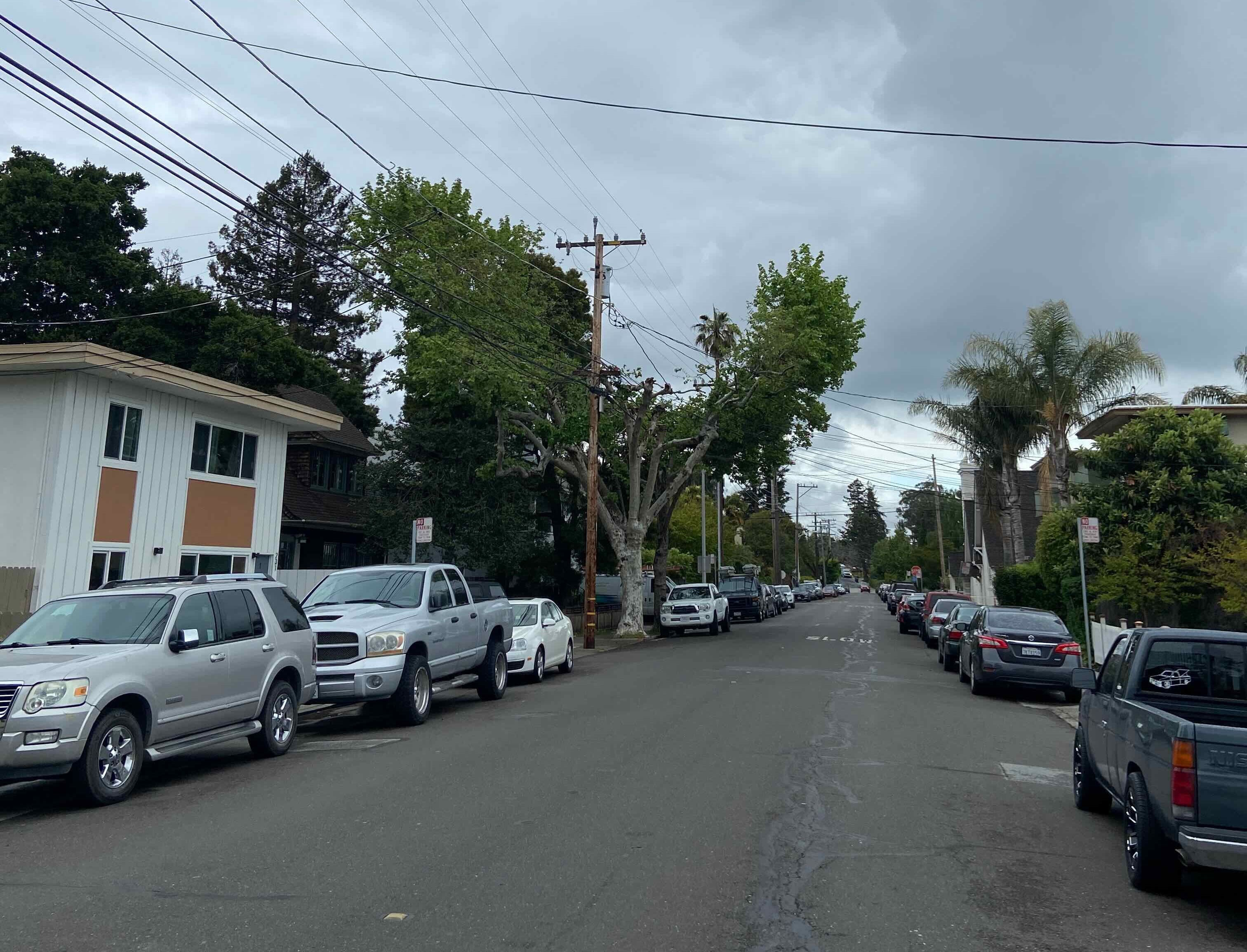
Things I do not spend time thinking about:
Gas prices. I am vaguely familiar with what gas costs right now ($5-8/gallon?). I couldn’t tell you within a dollar. When gas prices dominate the news cycle, I experience it the way I experience reports about the price of soybeans: information about someone else’s life. I recognize fuel prices are passed on to me, but it is genuinely not on my mind.
Parking. I have never circled a block in downtown San Mateo looking for a spot. I have never been late because I couldn’t find parking. I have never paid for a parking garage. I have never had the low-grade argument with my partner about whether to park here and walk or keep looking for something closer. I bike to the restaurant, lock up at the rack, and walk in.
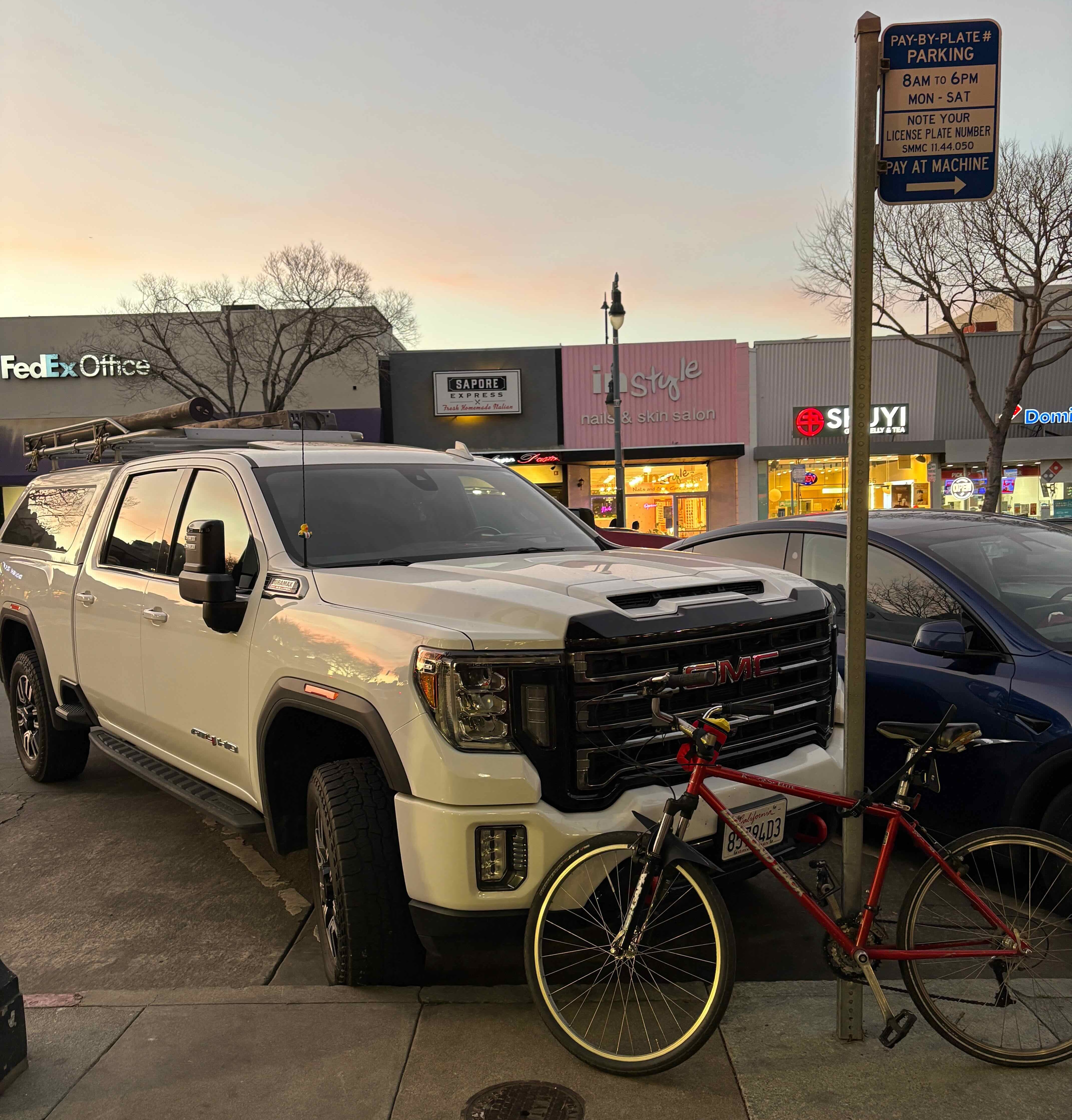
Insurance. I don’t comparison-shop auto insurance policies. I don’t get in accidents. I don’t worry about whether my rate went up. I don’t think about deductibles. I don’t carry an insurance card in my wallet.
Maintenance. I don’t do oil changes. I don’t rotate tires. I don’t experience anxiety over driving noises. I don’t drop my car off at 7am and figure out how to function for several days without it. I don’t get the text from the mechanic saying they found something else ($$$). My bike(s) needs a new chain every couple years and a brake adjustment occasionally. I do it myself in the driveway in twenty minutes.
Registration and smog. I don’t go to the DMV. I don’t think about the DMV. I couldn’t tell you what a smog check costs these days.
Traffic. I don’t check Google Maps before leaving the house. My “traffic app” is Transit which shows me the bus and train departure times near me. But mostly I walk or bike which is the most predictable travel times imaginable.
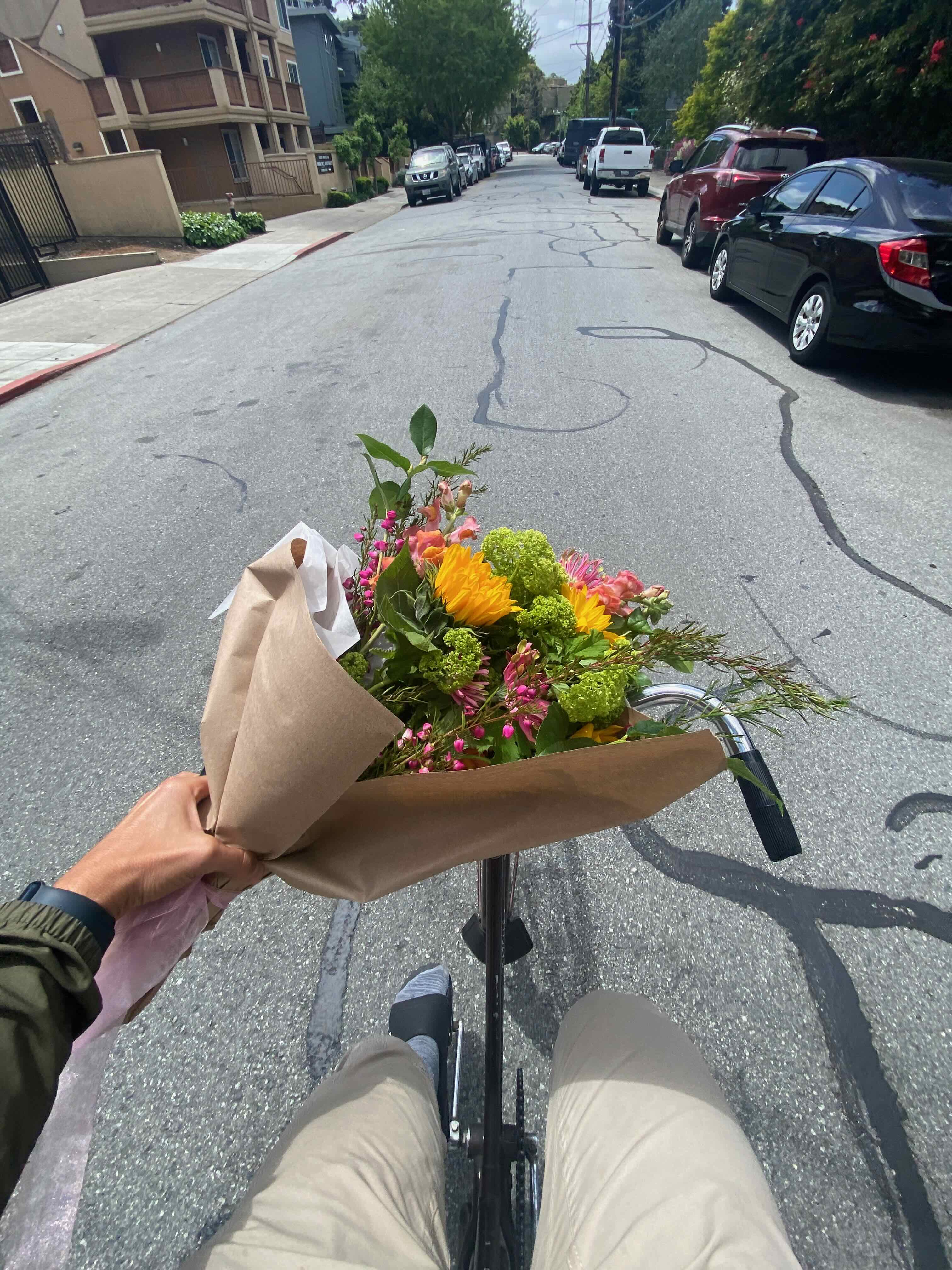
Car washes. It rains on my bike and then it dries. This is fine. I couldn’t tell you what a car-wash or detailing costs these days. $25?
The “check engine” light. The glowing icon on the dashboard means somewhere between $0 and $4,000 is about to leave your bank account. You won’t find out which until a stranger tells you–and do you really have time to go consult another stranger?
Each of these is small, but they are constant. They run in the background of your mind, and you may not notice their cost until you stop.
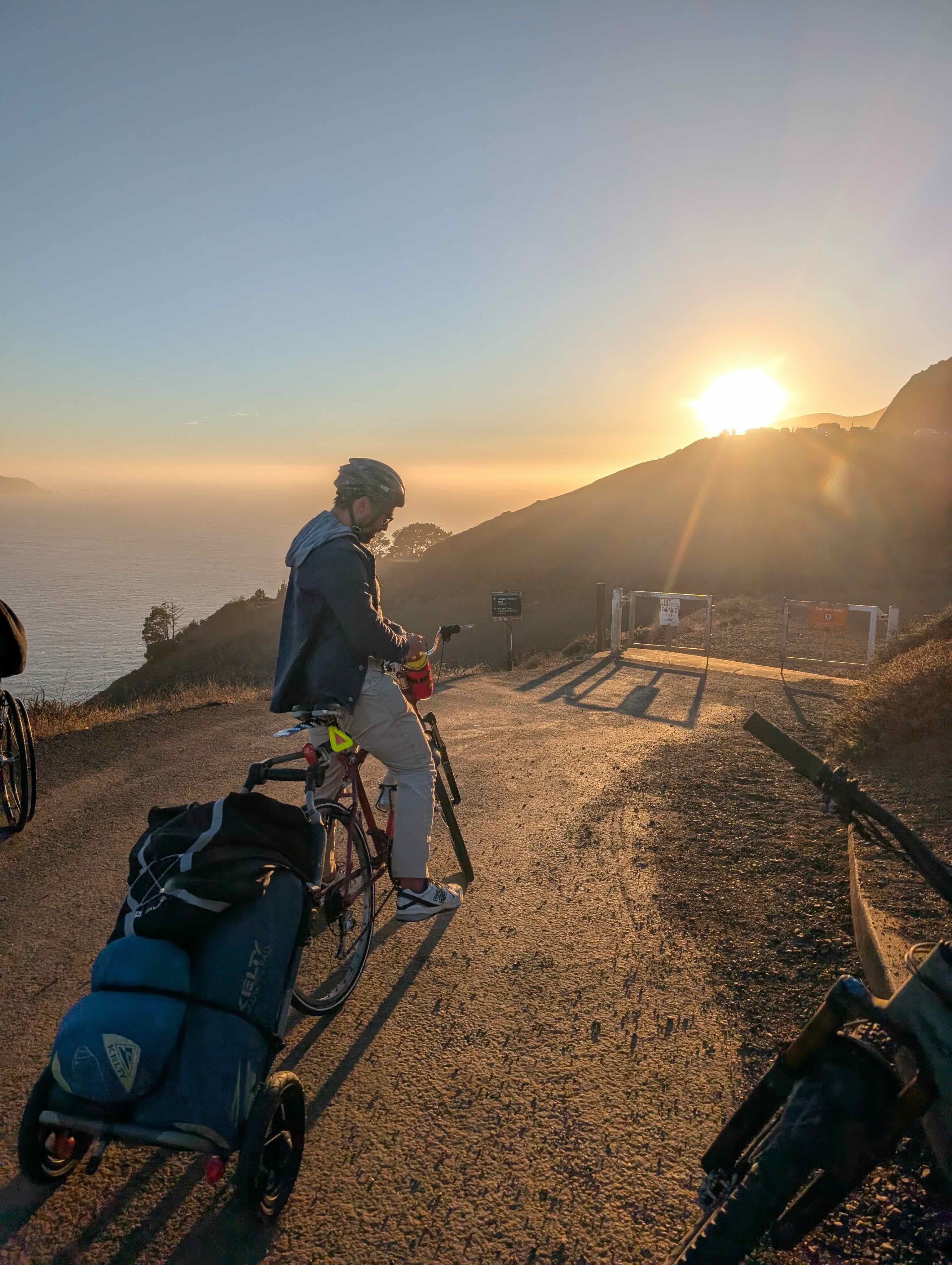
I can’t tell you what amount of space these thoughts cost, but I can tell you about what occupies my mind these days:
- I think about my wife & son.
- I think about who I might see on my bike ride.
- I think about the neighbor whose construction project is coming along nicely.
- I think about recipes for dinner.
These are not profound thoughts. But they are thoughts pertaining to the life I am living today–not to the maintenance of a machine that skips past it.
No single one hardship from my list is bad enough to question the aggregate costs of car-ownership.
Most Americans absorb the whole package: the insurance, the parking, the gas prices, the maintenance, the traffic, the registration, the anxiety.
These are the baseline cost baked into your “cost of living” equation. You stop noticing it the way you stop noticing a noise you’ve been hearing for twenty years.
I noticed when it stopped.
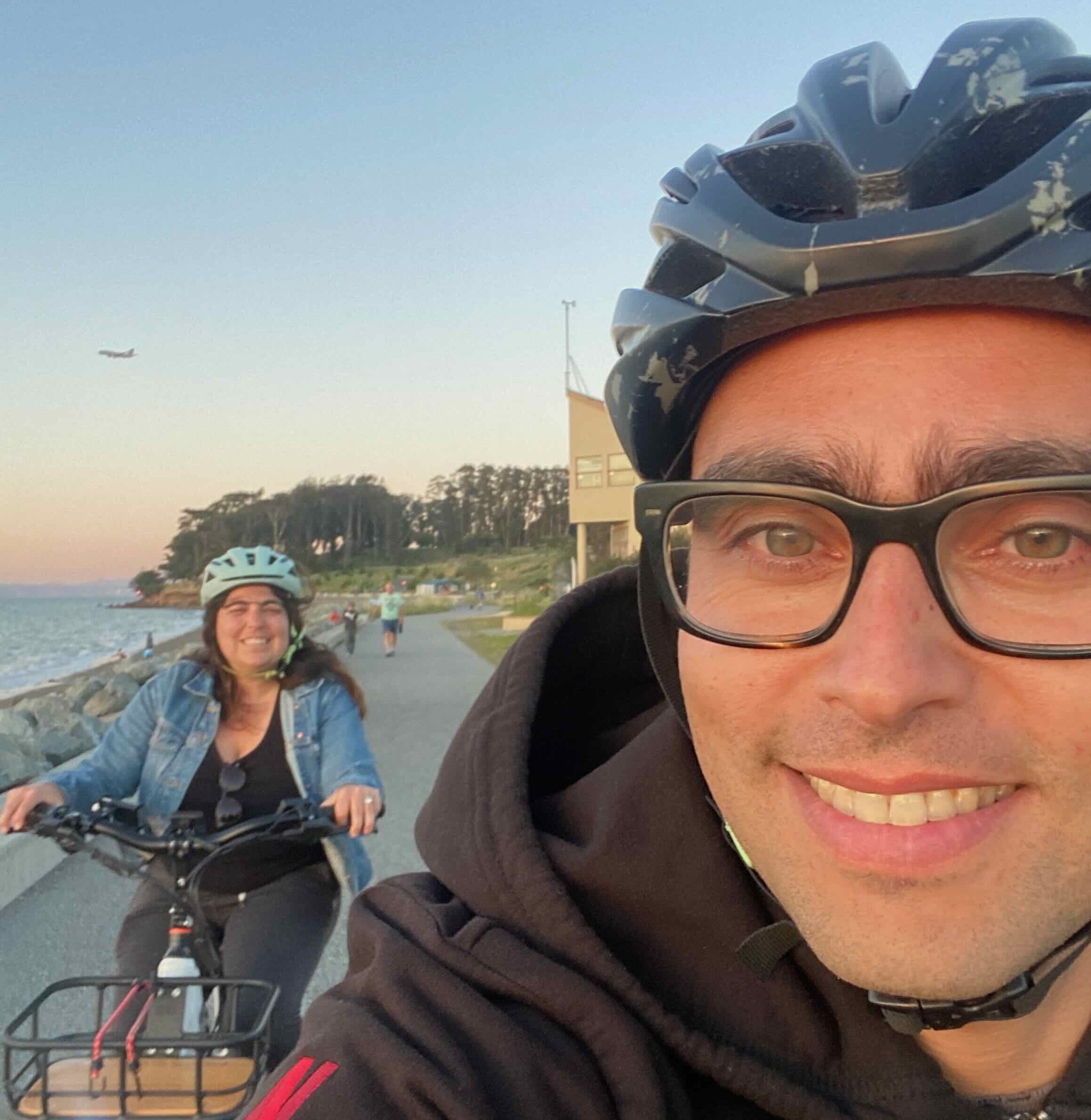
I’m not saying everyone should sell their car tomorrow–I understand the critical utility it provides to many.
My household still has one car, and my partner drives it. I’m not saying that owning a car is morally wrong.
I am saying it is expensive in ways that are difficult to grasp, and that most people have never experienced the alternative long enough to understand them.
The next time you’re idling in traffic, or on hold with your insurance company, or watching the mechanic’s estimate exceed the number you were expecting:
I want you to know that the feeling in your chest right then is not inevitable. It is not an obligatory cost. It is the cost of one specific machine that you have been told you need.
And the moment you begin to question that you are free.
Enjoyed this post? Get new posts via email