Essay · BICYCLE
The e-bike regulation gap is closing

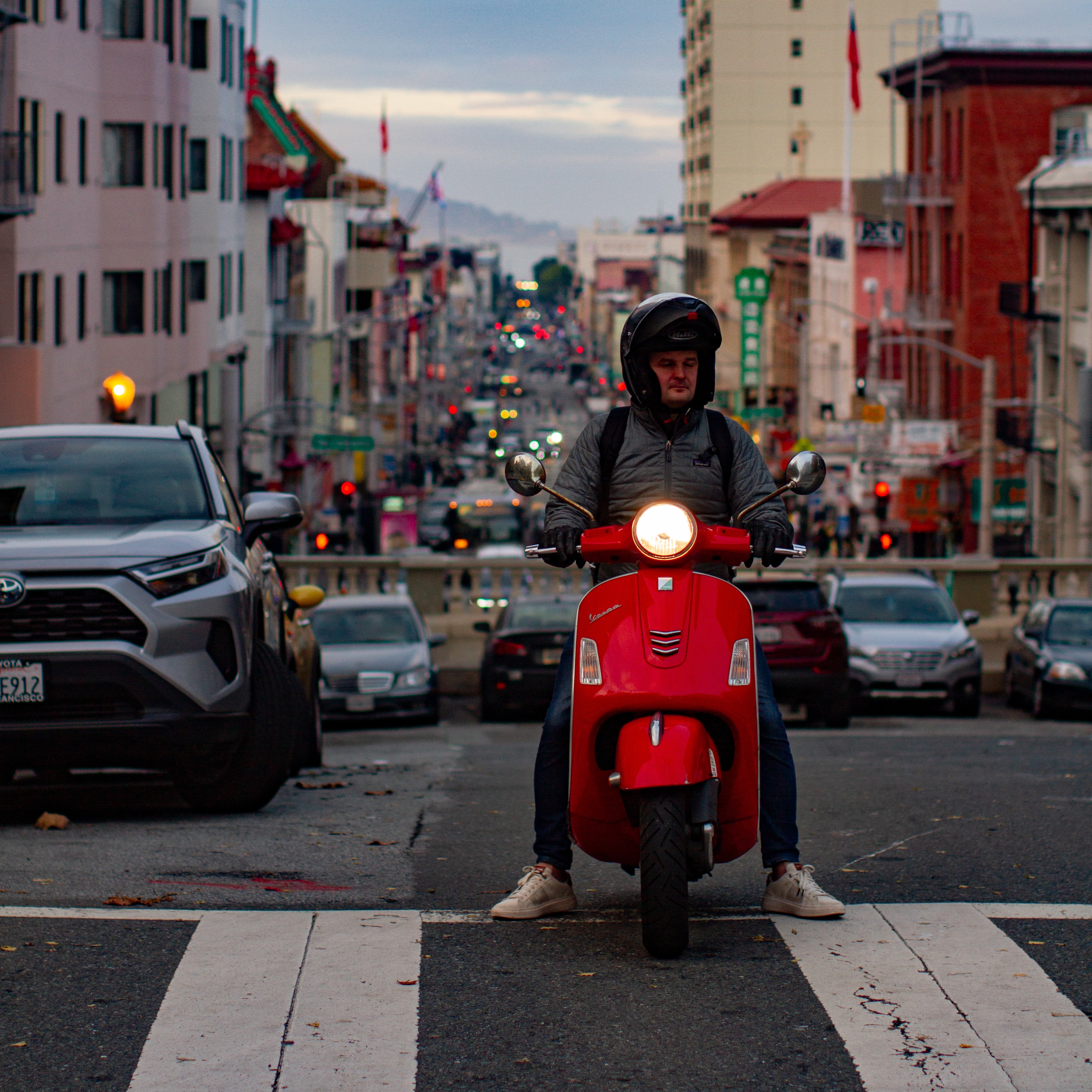
One of these needs a drivers license and license plate. The other does not:
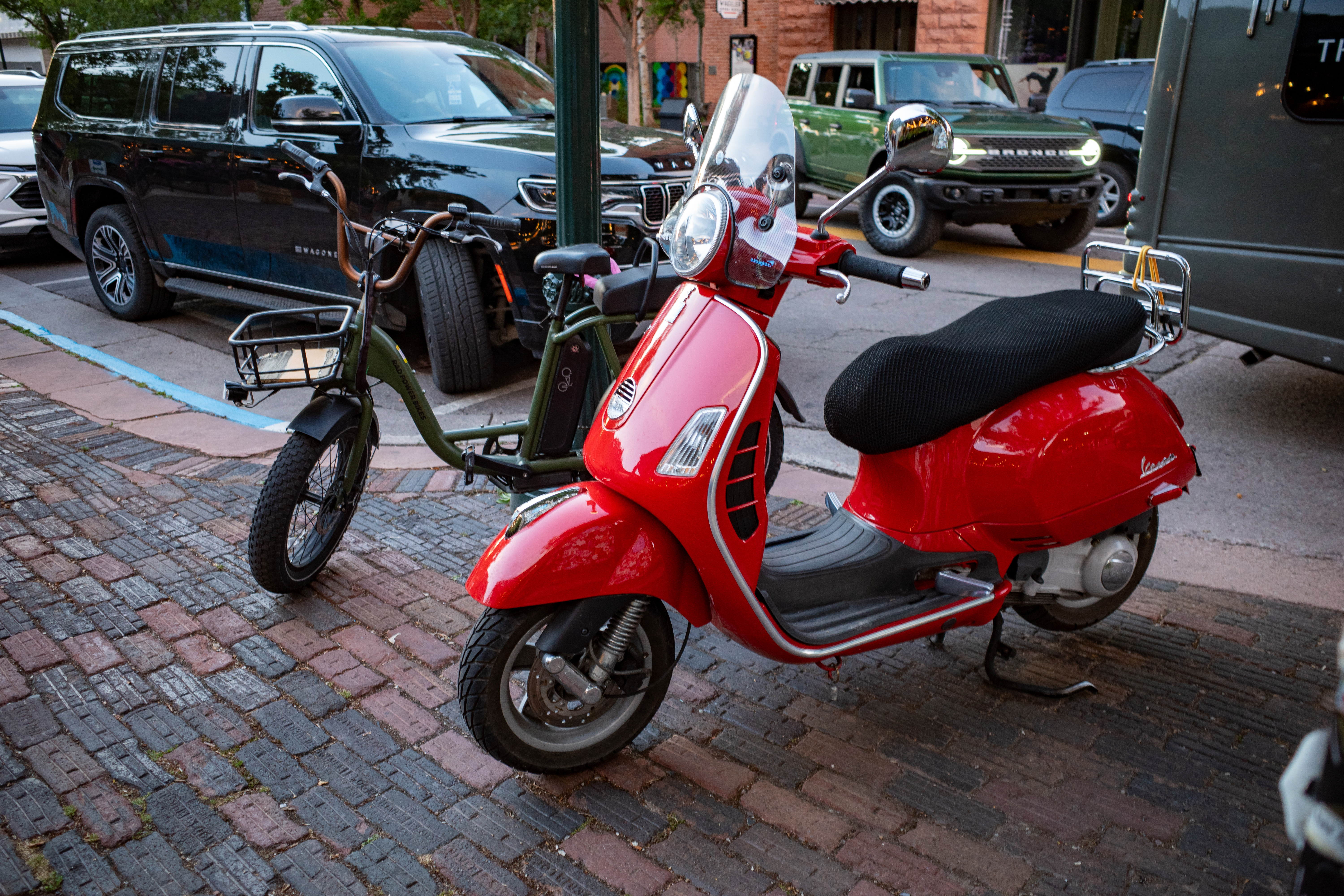
E-bikes have gone mainstream (1.7 million sold in the US in 2024), and US state e-bike legislation is struggling to keep up.
What comes next will determine whether e-bikes remain a viable car replacement or get regulated into irrelevance.
What’s at stake
Three things are true at once:
- The current framework is unsustainable. The regulatory gap between e-bikes and gas-powered two-wheelers was tolerable when e-bikes were all 20 mph pedal-assist commuter bikes. It is intolerable when retailers are selling 50 mph pedal-less motor vehicles to 13-year-olds under the “e-bike” label.
- New Jersey–style blanket moped treatment is a disaster for climate and cities. Requiring a driver’s license, registration, and insurance to operate a 16 mph pedal-assist bicycle destroys the mode-shift appeal of e-bikes, converting a car replacement back into a car, and re-opening the biased-enforcement problems California closed with AB 1909 in 2022.
- The choice is not “regulation vs. no regulation.” It is whether reform draws sharp, defensible lines — or reaches for the blunt hammer that treats everything electric as a motor vehicle.
My prediction for California
- Class 1 stays a bicycle. No license, no plate, no registration.
- Class 2 gets an age floor on throttles. Operators under 16 will be effectively banned from any throttle-equipped e-bike, but still no license plate, no driver’s license mandate.
- Class 3 gets a plate and a license. 28 mph pedal-assist is where the e-bike reaches moped performance and risk parity, and this is where the regulatory gap closes.
- No insurance mandates — Class 1, 2 or 3–but yes for e-motos (exceeding Class 3 power). CA doesn’t require insurance on <50cc mopeds. The hypocrisy to add insurance mandates for e-bikes when it doesn’t exist for equivalent internal combustion engine (ICE) scooters is absurd.
- The real enforcement fight shifts to e-motos and imports. Tighter manufacturer liability, import screening, and platform pressure on Amazon and Alibaba because that’s where the actual problem lives.
The endpoint: Class 3 becomes regulated roughly like a <50cc moped (mandatory license, plate, no insurance). Class 1 & 2 remain labeled “bicycles” with targeted age restrictions.
Why this matters if you care about getting people out of cars
No amount of mandates layered on e-bikes prevent the thing that actually kills cyclists: a 4,500-pound SUV making a right-turn across an unprotected bike lane. License plates on e-bikes are not a substitute for protected bike lanes, and nobody should let them be framed as one.
Every hour spent regulating a Class 2 commuter is an hour not spent regulating the Amazon/Alibaba pipeline that ships 50mph motor vehicles into the hands of middle- and high-schoolers.
There is a version of the next decade where California writes new e-bike laws that preserve frictionlessness for real bicycles, treat e-motos like the motorcycles that they functionally are, and go after the distribution problem at the source.
Or there is a version where California legislators regulate e-bikes as we know them out of existence.
Background: how we got here
The boom
A decade ago, California wrote the national playbook for e-bike law: three classes, 750W motor cap, 20 or 28 mph speed limiters, no operator license, no registration, no insurance. 46 other states followed.
The policy worked exactly as intended — keeping e-bikes legally indistinguishable from bicycles and letting a new mode scale without friction.
US e-bike imports hit ~1.7 million units in 2024 — up 72% year-over-year. California alone is ~$500M of that market. E-bikes outsell electric cars globally by a wide margin, and in the US they now outsell electric cars by unit volume. A growing share of American teenagers gets an e-bike before (or instead of) a driver’s license.
The asymmetry
Alongside legal e-bikes, a parallel category has exploded: vestigial (or no) pedals, 3,000–6,000 watt “e-motos” (Sur-Ron, Talaria). Sold online, capable of 50+ mph, ridden overwhelmingly by youth under 18. These are unregistered motorcycles — but in practice they are what most of the “e-bike” news coverage is actually about.
The physical gap between a Class 3 e-bike and a 50cc moped is narrowing. The regulatory gap has not moved. That gap is exactly why e-bike adoption scaled so rapidly, and why the pressure to close it is now coming from every direction at once.
What California is doing
SB 1271 (Min, signed Sep 2024). The big one. Reclassified any e-bike with a throttle as Class 2 (throttles now prohibited on Class 1 and 3). Criminalized aftermarket speed-mod kits. Required UL 2849 / EN 15194 battery certification for any e-bike sold, leased, or distributed in California starting Jan 1, 2026. Gave police clearer authority to impound sub-four-wheel vehicles that don’t meet the e-bike definition.
AB 2234 (2024). Authorized San Diego County jurisdictions to bar riders under 12 from Class 1 and 2 e-bikes.
AB 1778 (Marin pilot). As of July 2025: 16+ to operate a Class 2 in unincorporated Marin, helmets required for all ages.
AB 544 (2026). Rear red reflector or light required at all times.
AB 1942 (Bauer-Kahan, introduced Feb 2026). Would require DMV registration and a special rear license plate for every Class 2 and Class 3 e-bike in California. Currently in Assembly Transportation. Opposed by Bike East Bay, CalBike, and most active-transportation advocates; supported by parents, local officials, and law enforcement citing enforcement difficulty on modded bikes and e-motos.
SB 586. Creates an “Off-Highway Vehicle” classification for pedal-less, >750W, Sur-Ron-style two-wheelers.
Police departments across the state are now routinely confiscating e-motos from teens, and school districts are banning them from campus.
What the rest of the country is doing
Three states have broken from the 3-class framework.
New Jersey, Jan 19, 2026 (S4834 / A6235). All e-bikes reclassified as motorized bicycles. Every rider needs a driver’s license or motorized bicycle license (15+). Every e-bike needs DMV registration. Throttle e-bikes and 28+ mph pedal-assist bikes require liability insurance. Operators under 15 banned outright. The deadline to comply is July 19, 2026. The MVC has not finished building the registration system.
New York, NYC. Throttle e-bikes capped at 25 mph citywide; enforcement ramping against delivery riders.
Local bans. A growing list of cities and school districts have banned throttle e-bikes from specific corridors, campuses, or age brackets.
The New Jersey law matters because it is the template other states will copy. It is also catastrophically bad policy: it treats a 16 mph pedal-assist cargo bike used by parents to take their kids to school the same as a 45 mph Sur-Ron. The bicycle industry, parents, and advocacy community were blindsided by it.
Appendix: regulatory comparison
| Class 1 | Class 2 | Class 3 | Moped (CVC §406) | Motor-driven cycle (<149cc) | |
|---|---|---|---|---|---|
| Top assist speed | 20 mph (pedal) | 20 mph (throttle) | 28 mph (pedal) | 30 mph | 60+ mph |
| Effective max (modded) | 28+ mph | 28+ mph | 35+ mph | ~35 mph | factory |
| Driver’s license | None | None | None | M1/M2 | M1 |
| DMV registration | No | No | No | Yes ($23 one-time) | Yes, annual |
| Insurance | No | No | No | Not required | Required |
| Plate | No | No | No | Yes | Yes |
| Min operator age | None | None | 16 | 16 | 16 |
| Helmet required | <18 | <18 | All ages | All ages | All ages |
| Helmet standard | Bicycle | Bicycle | Bicycle | DOT (FMVSS 218) | DOT (FMVSS 218) |
If you want to do something about it: the California Bicycle Coalition, Bike East Bay and Silicon Valley Bicycle Coalition are tracking AB 1942.
Enjoyed this post? Get new posts via email