Essay · ADVOCACY
Lessons From 6 Years of Local Advocacy

I have been doing safe-streets, transit, and housing advocacy in San Mateo for about 6 years. Along the way I’ve written a fair amount about it, here and elsewhere.
Most of what I’ve actually learned came from showing up: to public meetings, to bike rides, to city survey groups.
These lessons are written for the version of me who began this advocacy journey in 2020, and for anyone in that position now.
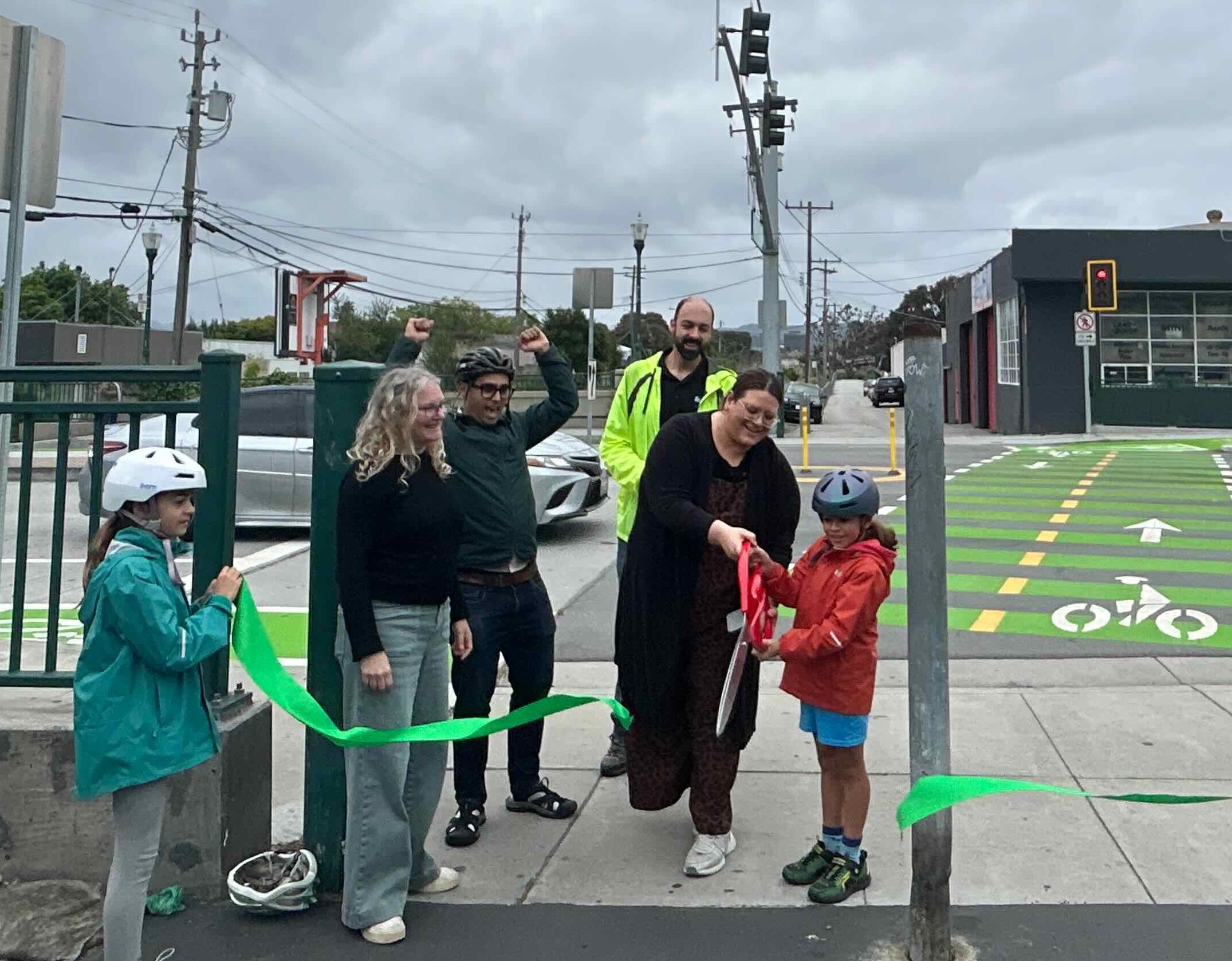
Slow streets > bike lanes
When I began advocating for safer streets it was after a radical lifestyle change brought about by COVID-19 and an abrupt and sustained work-from-home. This brought me into the bike coalition activism group, who had successfully advocated for a citywide “Bicycle Master Plan” network — building out the network segment-by-segment was the stated goal. Six years later I think I (we) had the wrong picture.
The thing that actually makes a street safe to walk on, bike on, sit next to, raise a kid near, and shop along is the speed of the cars. Not the presence of bike infrastructure, and not the width of the sidewalk. Not the trees, the benches, the wayfinding, or any of the other things planners reach for. The speed of the cars.
The relationship between vehicle speed and pedestrian fatality is one of the most replicated findings in road safety. A pedestrian struck at 20 mph has roughly a 90% chance of survival. At 40 mph, it inverts. Every other intervention is downstream of that curve. Build the most beautiful protected bike lane in the world next to a 45 mph stroad and you have built a pleasant place to die.

Slow streets build a bigger coalition than bike lane advocacy does:
- the parent worried about kids crossing to school
- the senior who can no longer judge closing speeds
- the homeowner whose backyard faces an arterial
- the restaurant owner whose patio nobody uses because of the noise
- the driver who lives on the street and would prefer not to be funneled through it at highway speed
These people will never unanimously agree on a bike lane. They will all agree on a slower street. Speed is the political solvent.
This realization shifted what I advocate for. My priorities now revolve around asking about lane widths, daylighting, raised crossings, signal timing, and speed. The bike network naturally follows.
Land use is upstream of infrastructure
The child who can walk to school doesn’t need a bike lane. They need a school within walking distance. The adult who lives a quarter-mile from the train doesn’t need a parking minimum at the station. They need a quarter-mile of housing that the city was willing to permit.
I spent my first 2 years of advocacy treating bike infrastructure as paramount. It is certainly a lever for behavior change, but it is not the most powerful one. The most powerful lever is what the city chooses to allow people to build and where, at what density, and with how much mandatory parking. Every bike lane I have ever fought for is downstream of those decisions. A perfect network in a city zoned for car-dependence produces a few brave commuters and a lot of empty paint.
The math is unforgiving: a typical suburban 100% single-family home neighborhood produces few walking trips because there is nothing to walk to.
The same household in a neighborhood with corner stores, a school, a coffee shop, and a bus stop within 0.5 mile produces walk-trips daily, often without thinking of them as transportation. The infrastructure doesn’t change the behavior, but the destinations do.
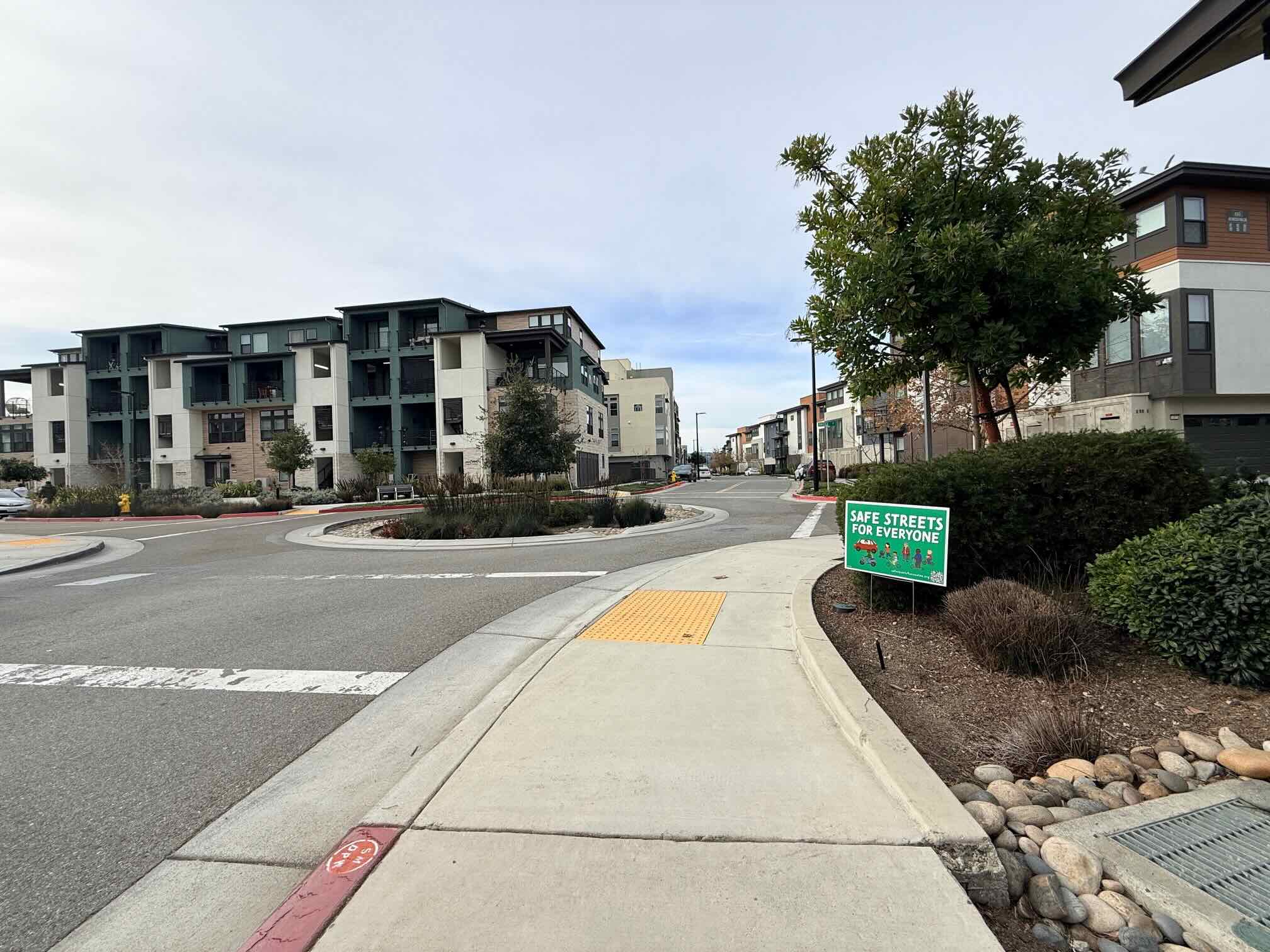
Parking minimums are the version of this most people don’t notice. Every required parking space costs somewhere between $25,000-$75,000 (or more) to build when you account for land, construction, and lost development opportunity, and that cost is baked into the rent of every apartment and every cup of coffee in the building above it. They don’t require those parking spaces in the hill towns of Cinque Terre, or central Amsterdam, or most of Tokyo, and those places are not economically impoverished for it. Those cities are among the most productive square footage on earth. The cumulative effect of parking minimums in a city like ours is to make the neighborhood larger, which makes everything farther apart, which in turn makes walking infeasible, which makes a car necessary, which justifies more parking. The bike lane painted through the middle of this loop doesn’t break it.
This is the lesson that requires tremendous patience. A bike lane can go in over a summer. A rezoning takes years, and the development that follows takes years more, and the behavior change that follows the development takes a generation. The advocate who only wants visible wins will gravitate toward paint. The prize is the kid who grows up in a neighborhood where they don’t have to ask their parents for a ride, and that kid is being shaped right now by what the city did or didn’t allow to be built ten years ago.
I still show up for bike lanes. I just know now that there are much bigger fights happening at the same time that need my advocacy too.
Seniors are the most underrated coalition
When I started, I wasn’t thinking much about the demographics of allies or opposition at all. I had a picture in my head of the persuadable audience — vaguely, a 30-something commuter, a parent with a cargo bike — and I worked from that. Six years later I think the demographic that matters most to the work is the one that picture left out: people in their seventies.
Seniors don’t dominate the online cycling discourse and the imagery the advocacy world produces — usually a Lycra-clad commuter or a young family on a Tern — does not feature them. But seniors are the people who actually show up to council meetings, who actually vote in off-year elections, who actually have time for the long arc of a roadway project, and who have personal credibility with other seniors in a way no thirty-something advocate ever will. The “age-friendly” community, as they prefer to be called, has been a steady collaborator on group rides and shared advocacy in San Mateo, and they have moved more than I have.
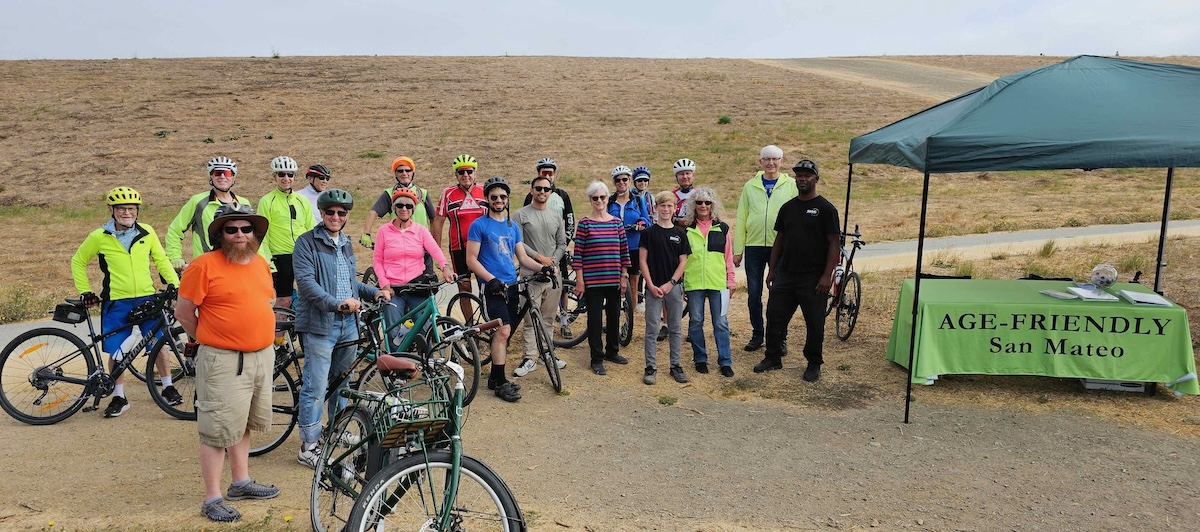
The case for centering them is also moral, not just tactical. The senior who can no longer drive safely is in a real bind almost no one is solving for. They have spent their adult lives in places designed exclusively around a car they can no longer operate, and the ramps off of driving are mostly grim: stop driving and lose access to groceries, doctors, friends, and dignity, or keep driving and become a danger to yourself and to everyone you pass. Walkable streets and frequent transit are not a lifestyle preference for this person. They’re an off-ramp from isolation.
In practical terms this changed how I show up. I hold space for their needs in my own public comments and conversations, acknowledging where motorized mobility is critical and not something that can be waved away. The advocacy world too often frames car-dependence as a choice that the right messaging can flip. For an 80-year-old with a bad hip and groceries to carry, it isn’t. The job is to build the streets and the transit that give them another option, not to scold them for the option they currently have.
Patience requires infrastructure
Roadway projects take years. The official process is slow, but the attention on any given project is fast. A meeting happens, a commitment is made, and within two weeks the room has moved on. If you are not the person holding the thread, no one is. And no one will tell you that the thread has dropped — they’ll just stop returning emails, and a year later you’ll wonder what happened to the thing you thought was moving.
The lesson is that patience by itself is not enough. Patience without a system is just waiting and forgetting. Vigilance and follow-up are required because the systemic cycle of these projects demands it, and because at a later date my own motivation and time budget will have shifted. Calendar reminders to my future self earmark an opportunity to keep pushing, or to re-calibrate my priorities if the project no longer warrants the energy. Every commitment from staff or a councilmember gets a follow-up date attached. Every email that doesn’t get a reply gets a reminder set for two weeks out. Every council meeting produces a short list of items to track, with dates.
The reason this matters is that the people working against you — the status quo, the agenda items that are easier to shelve than to resolve, the staff member who didn’t reply and assumed the issue was no longer live — are all working on a longer clock than you are. The project that quietly disappears from the work plan is the default outcome. The project that gets built is the one that someone outside the building kept reminding everyone about, for as long as it took.
Mode-switching is the most underrated form of direct action
Riding the bus. Biking to the grocery store. Walking the kid to the park instead of driving. Each of these is a small political act with immediate personal returns, and I undervalued how much of my advocacy was downstream of doing them.
When you stop driving for a trip you would have driven you are voting with the only currency that local government and local business actually count: trips.
All of the following are built on observed behavior, not stated preferences:
- the traffic engineer’s models,
- the retailers decision of where to sign a lease,
- the transit agency’s service planning,
- the city’s parking projections
The survey where you said you’d ride a bus if it came every 15 minutes does not move the needle.
The day you actually take the bus does.
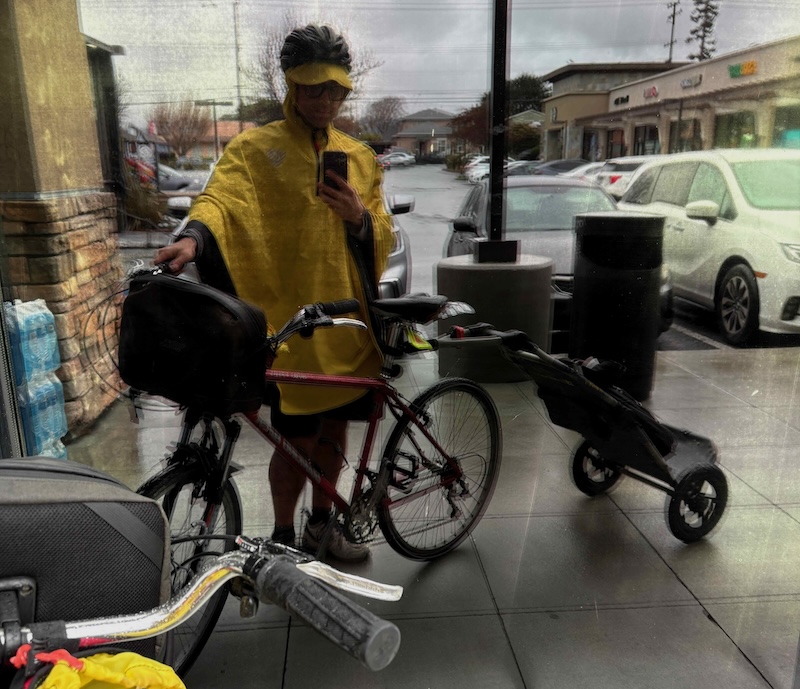
The personal returns came faster than I anticipated:
I save money. I’m in better shape than I was when I drove everywhere. I know my city in a way I never did from behind a windshield — which blocks have shade in August, which have gusts of southbound wind vs. those with without, which intersections have the long signal cycles, which corner store has the good instant coffee, which neighbor is out gardening on Saturday mornings.
None of this was visible driving. The texture of a place reveals itself at walking and biking speed and stays hidden at any other.
The friendships are the part I would not have predicted. The regulars at the bus stop, the parents at the bike rack at school pickup, the neighbors who recognize the cargo bike before they recognize me — these are weak ties that the car-dependent version of my life simply did not generate. Some of them have become strong ties. None of them would exist if I were still in a car for those trips.
I will not tell anyone they should do this. The pitch I would make instead is that the people who have done it report things they did not expect to find — money, health, friends, a city that suddenly feels theirs — and almost no one I know has tried it and gone back.
Closing
These are five lessons I didn’t have when I started. There will be more, and the next version of this post is probably 3 years away.
The work itself hasn’t changed — car dependence, housing scarcity, and unsafe streets are still the things I’m working against - but my understanding of how to actually move them has evolved and will continue to do so.
If you are starting now then you don’t need to learn these the long way that I did - read it in full!
Enjoyed this post? Get new posts via email