Essay · TRANSIT
Buc-ee's Is Better at Placemaking Than Your City

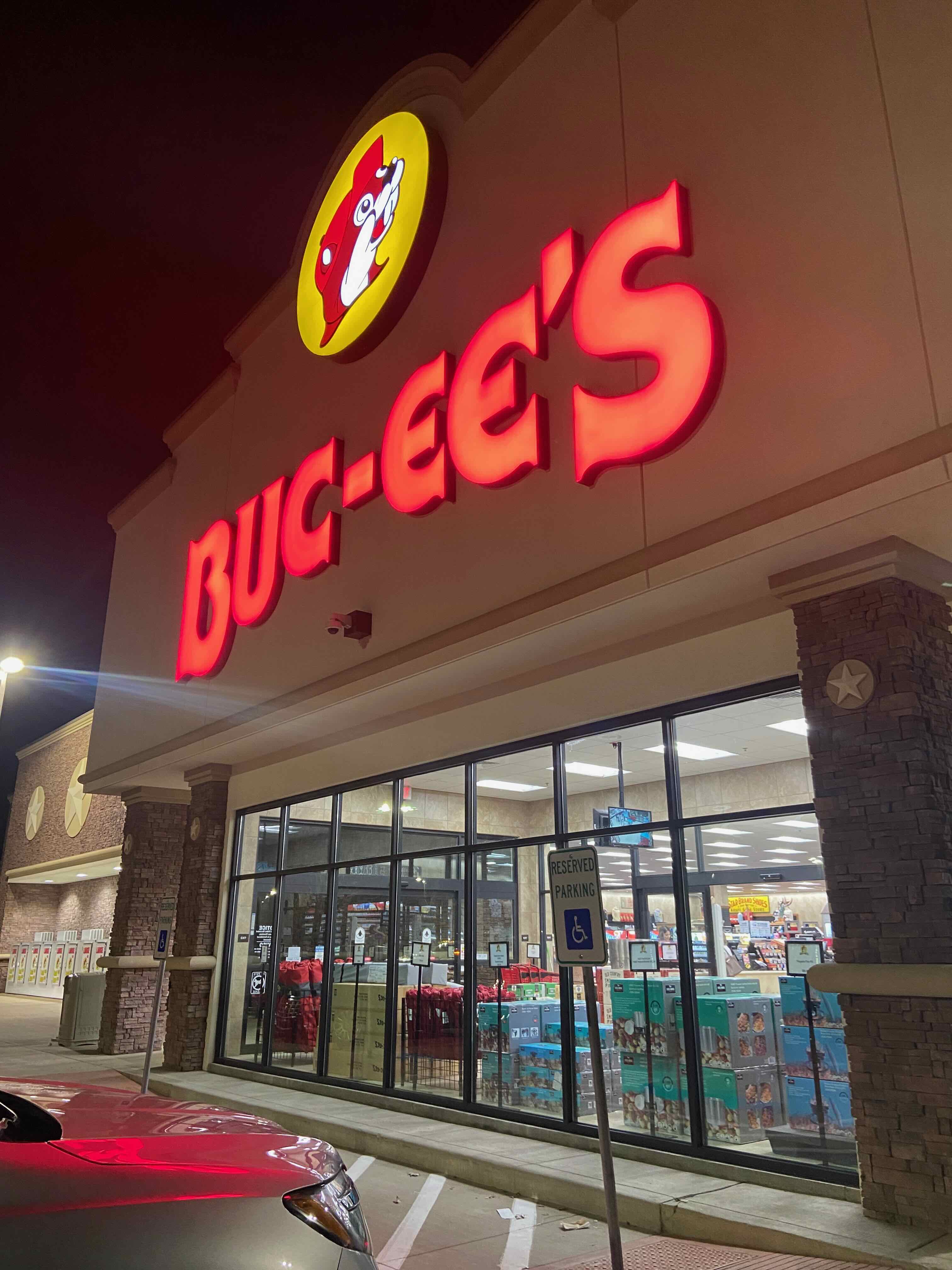
I want to be upfront about something: I go to city council meetings to protect bike lanes. I volunteer on a feedback committee for a bus agency. I use the phrase “induced demand” in casual conversation. I am exactly the kind of person whose eyes are supposed to bleed at Buc-ee’s.
For the uninitiated: Buc-ee’s is a Texas-born chain of highway travel centers that have become, improbably, a genuine American phenomenon.
We’re talking 74,000 square feet. A hundred-plus gas pumps. Bathrooms that have won national awards. A beaver mascot with the brand recognition of a mid-tier Disney character.
People with otherwise normal judgment will drive an hour out of their way to stop at one. They post TikToks, buy the merch, and go back over and over again.
I visited the Royse City, Texas location. Royse City is a town of about 25,000 on I-30, roughly 35 miles east of Dallas, that exists largely because of the highway running through it.
It is not the kind of place urbanists travel to for inspiration (I did it to visit to family).
I came away with something I did not expect: genuine intellectual respect.
Not for the car dependency it serves (that part is as bad as you’d imagine, and we’ll get there).
But rather respect for the specific, deliberate, and largely unspoken placemaking mastery that Buc-ee’s applies to their properties.
Urbanists talk endlessly about placemaking: how to create spaces that feel alive, welcoming, memorable.
Amsterdam is visited and celebrated, walking and biking is praised. We ban cars from downtowns.
And then we come home to bus stops with no shelter and no public bathrooms for miles.
Buc-ee’s, a gas station, is doing several things better than us. Here’s an honest accounting.
The Bathroom, Which Is Not a Small Thing
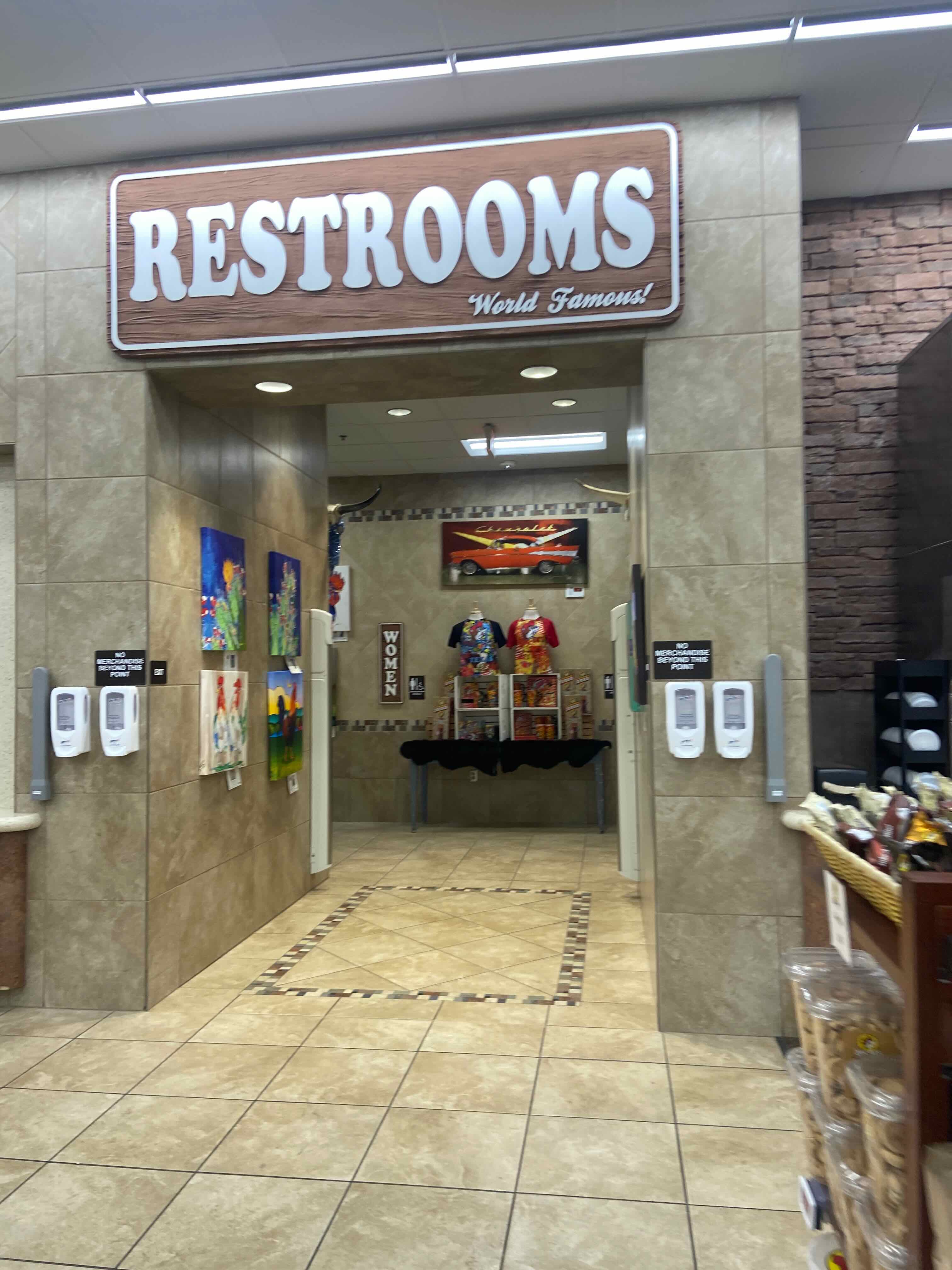
Let’s start here, because Buc-ee’s does.
The restroom entrance is announced with a sign the size of a doorway: RESTROOMS — World Famous!
In 2012, Buc-ee’s won the Cintas “Best Restroom in America” award.
They have dedicated bathroom staff trained in sanitization rotation protocols, earning $20+ an hour.
The founder, Arch Aplin, has described his vision for Buc-ee’s as “a happy, Texas version of Grand Central Station”.
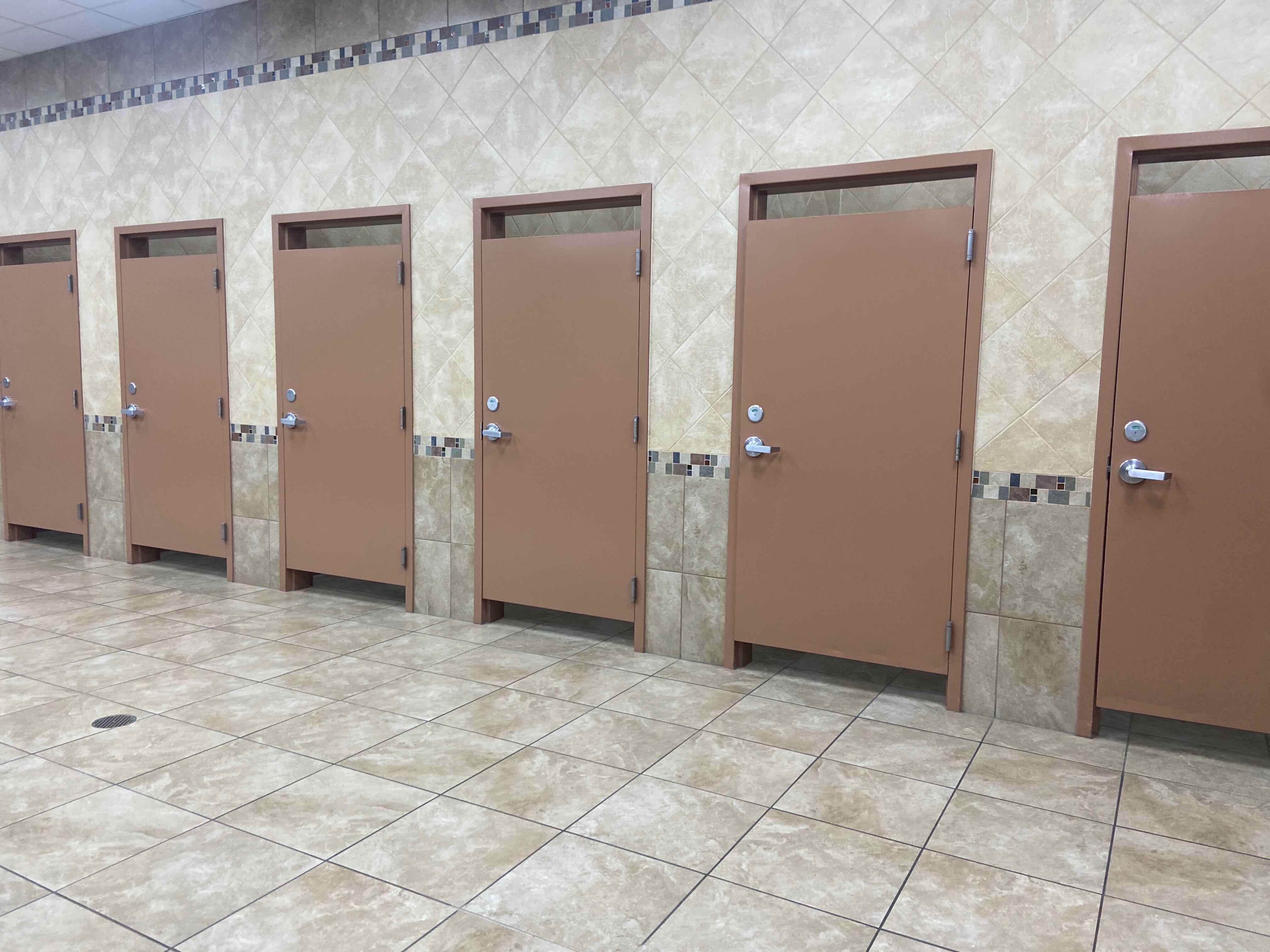
The stalls have full-height doors, not the standard American public restroom garbage ones with a gap at the bottom large enough to make eye contact with a stranger
Actual floor-to-ceiling, hotel-style privacy. The tile is clean. The grout is clean. There’s art on the walls in the corridor leading in.
I stood in there longer than strictly necessary just to admire the rarity of a comfortable communal bathroom.
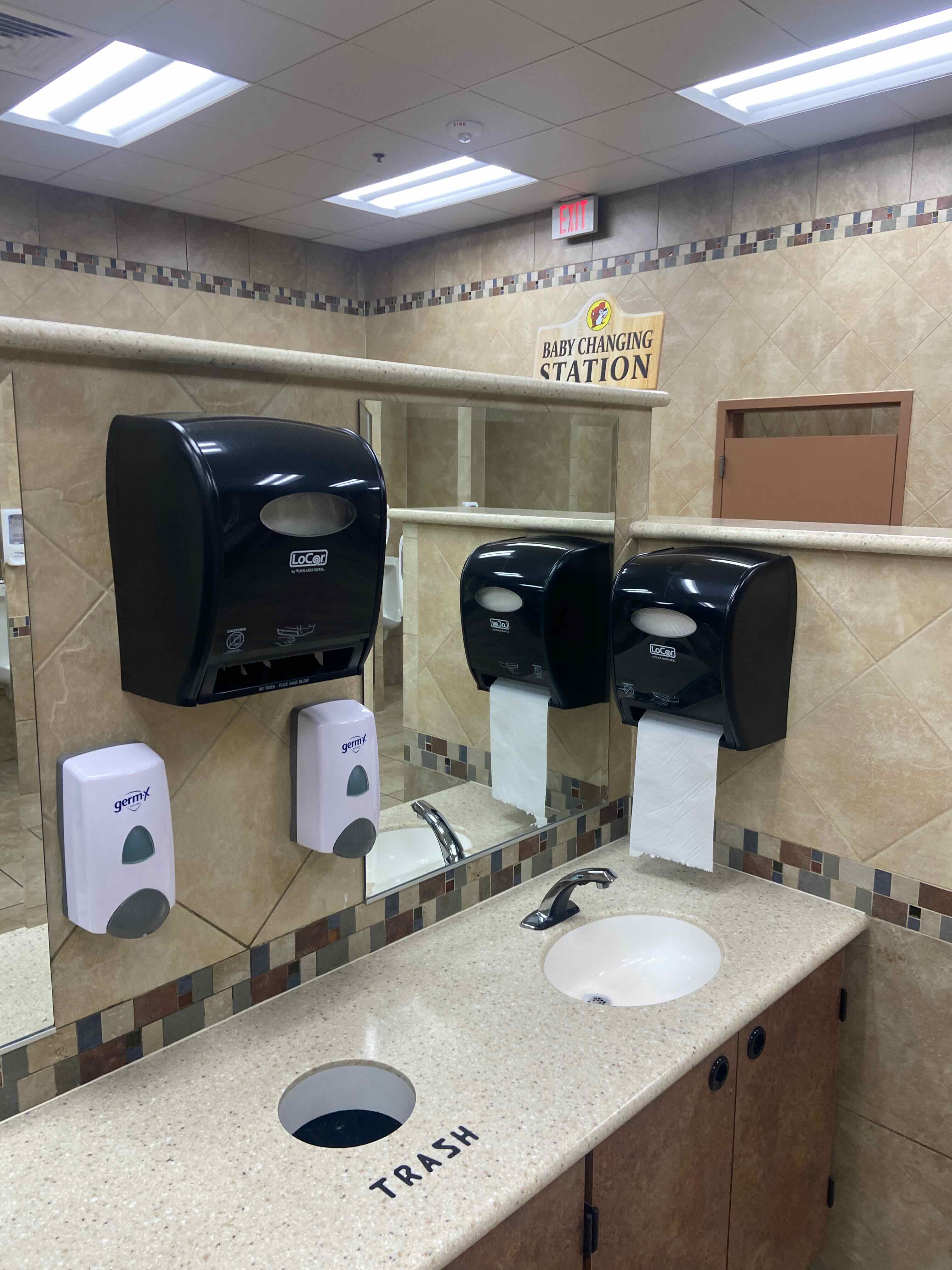
The sink area has redundant everything: two soap dispensers, two paper towel dispensers, a trash opening labeled “TRASH” cut directly into the counter so there’s no ambiguity about where anything goes. It is, functionally, a system designed not to fail. If one dispenser runs out, you are not stranded. This seems like a low bar, and it is, and yet.
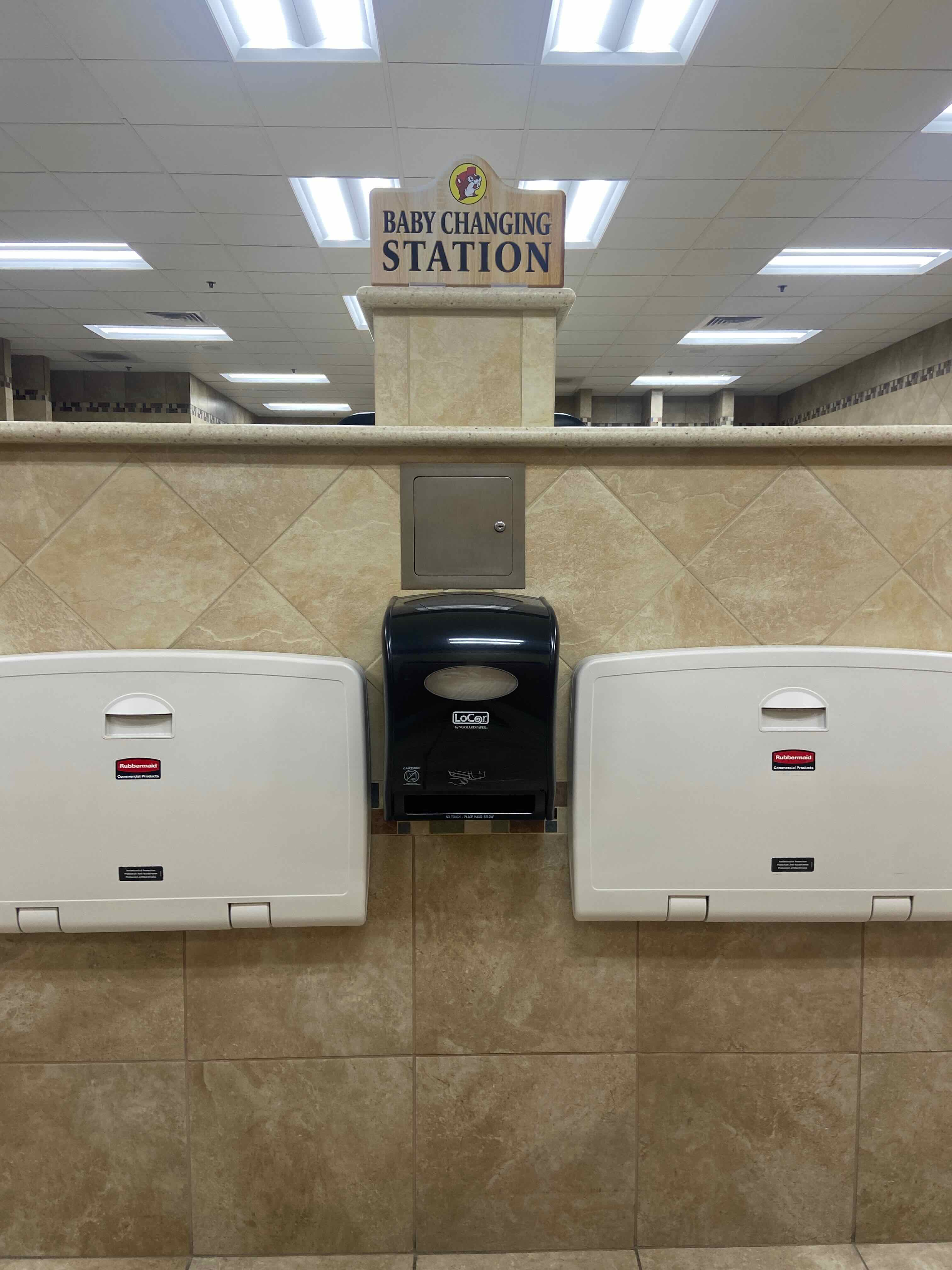
There are two baby changing stations. Side by side. In a dedicated alcove. With the beaver logo on the sign above them.
I have changed diapers on the parking lot ground behind a furniture store. Buc-ee’s is not that.
The existence of two clean, accessible changing tables at a highway stop is not a luxury.
It is a decision someone made to take families seriously as users of this space.
Here’s the thing about bathrooms:
They are the single most reliable indicator of whether a space respects the humans in it.
A good bathroom says: we thought about you being here. We anticipated your needs. We staffed accordingly.
A bad bathroom (or worse: a locked one) says the opposite.
Most American public infrastructure including transit stations that urbanists celebrate fails this test constantly.
Buc-ee’s passes it because failing it would cost them customers.
The incentive structure is different, and the outcome is different. That’s worth sitting with.
A Few Other Things They’re Getting Right
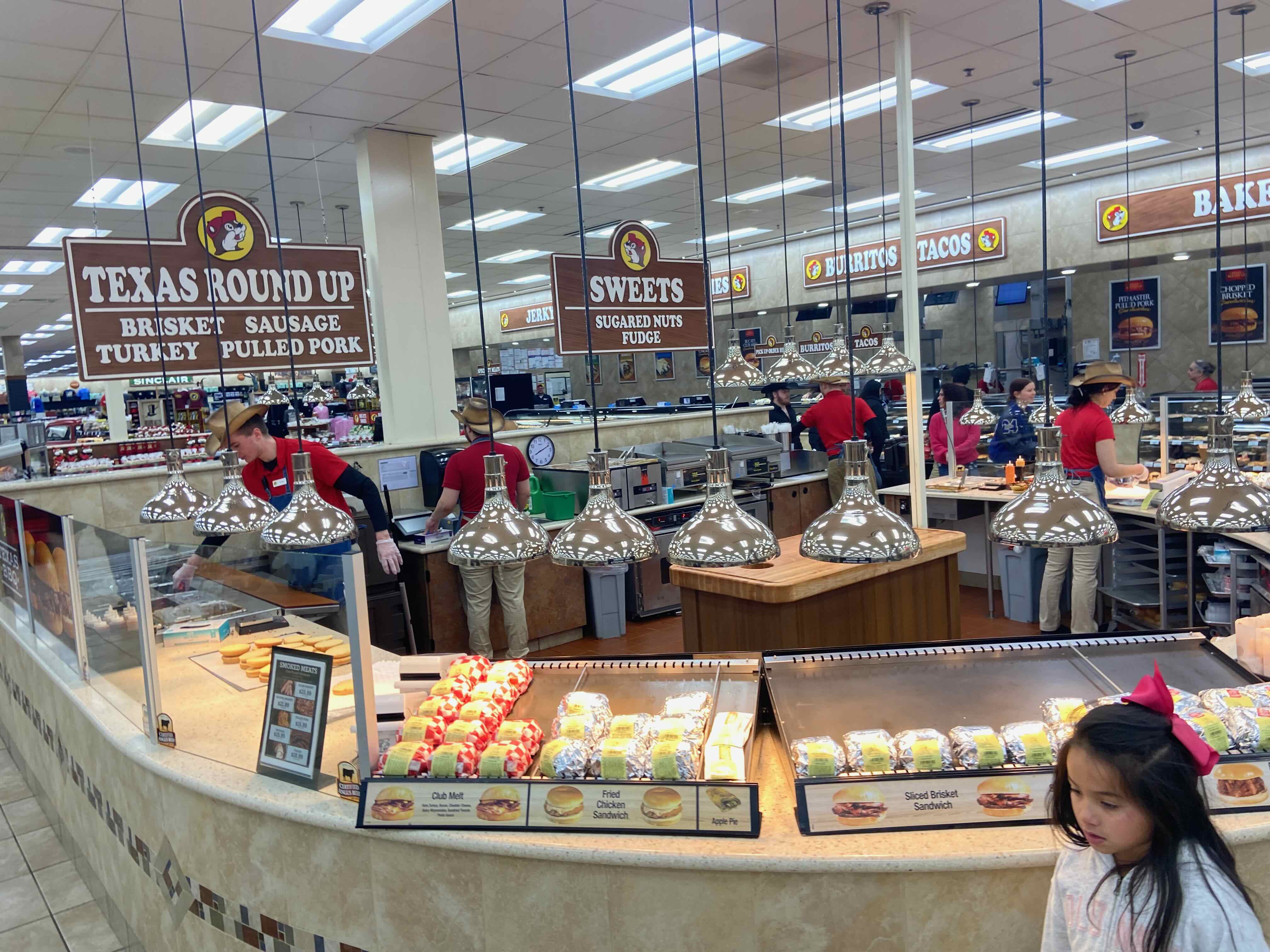
Wayfinding as hospitality. Department signs run the length of the food hall wall:
- JERKY
- CHICKEN & FRIES
- BURRITOS & TACOS
- BAKERY
They’re large, consistent, and visible from across the store. You are never confused about where to go.
This sounds trivial until you’ve gotten lost at a transit station due to non-existent signage.
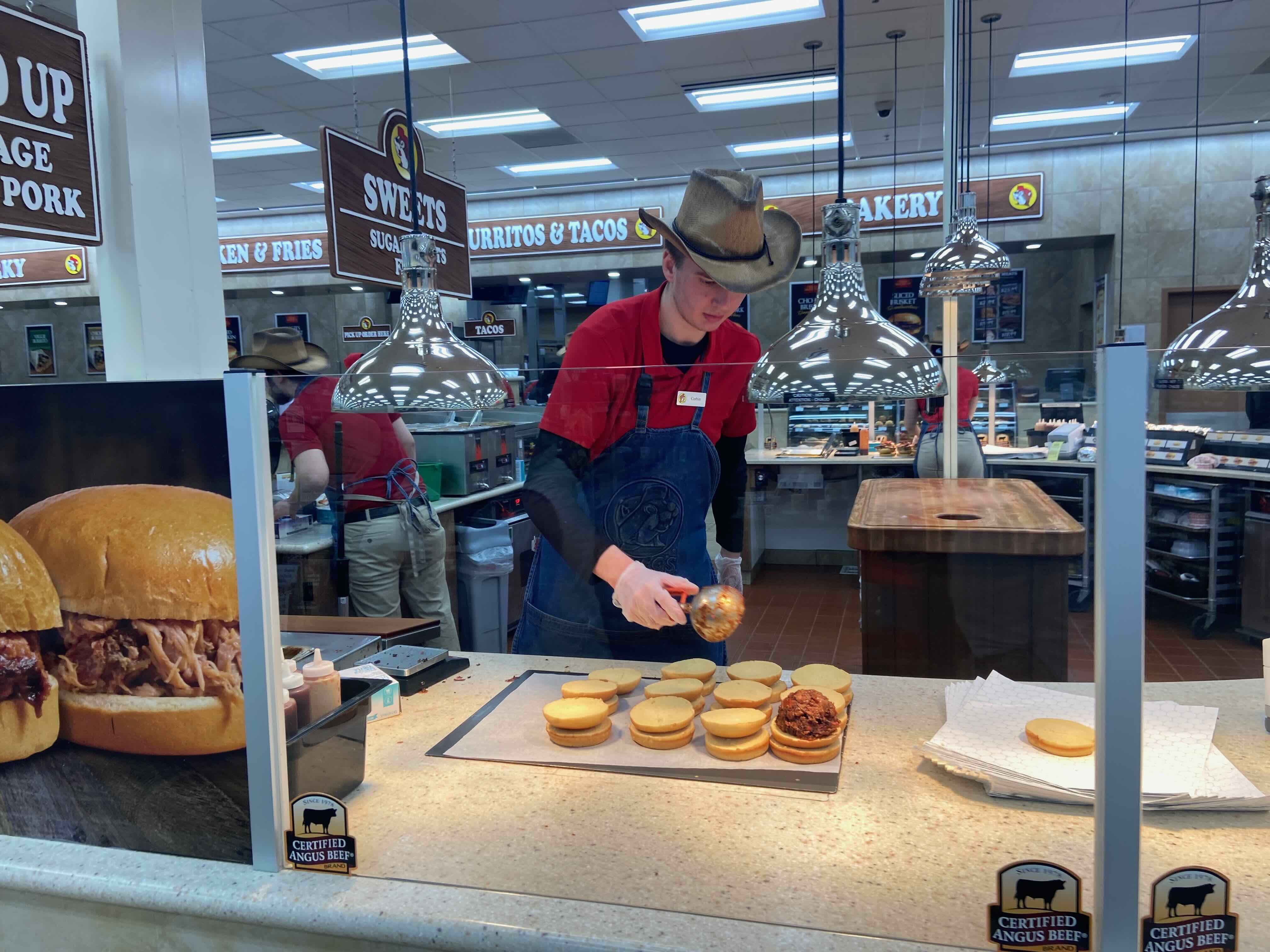
Abundance as a design philosophy. A teenager in a Buc-ee’s cowboy hat and branded denim apron is hand-assembling pulled pork sliders next to a “Certified Angus Beef” sign, at a gas station, off I-35.
Most transit and retail design optimizes relentlessly for the minimum viable experience.
Buc-ee’s goes the other direction and people drive an hour out of their way because of it.
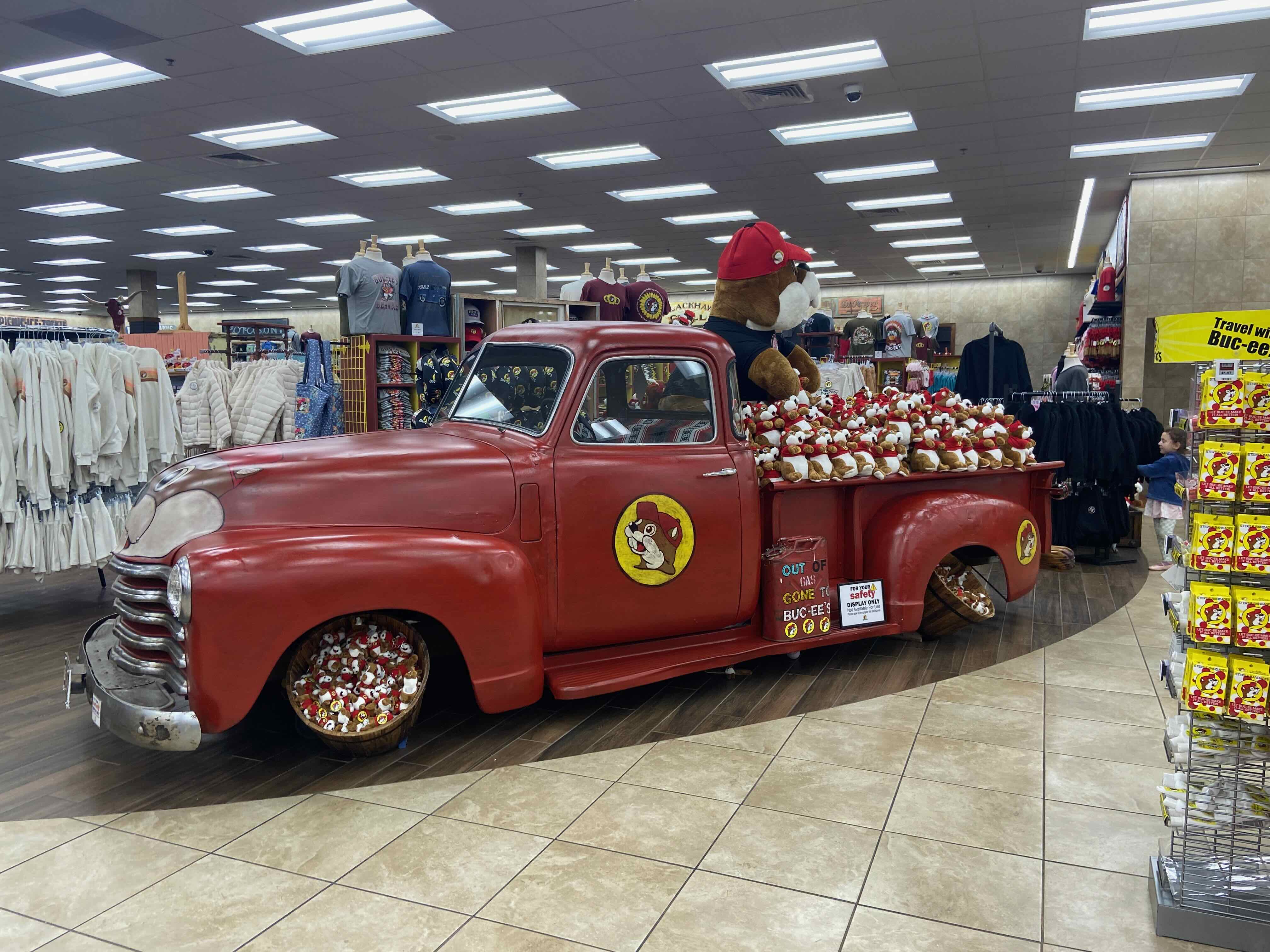
Delight is infrastructure. There is a lowered 1950s Chevrolet pickup, painted Buc-ee’s red with the beaver logo on the door, parked inside the store, loaded with plush stuffed animals, with a giant beaver mascot sitting in the bed. It serves no transactional function. It exists to make you stop, look, and feel something — the same reason a good plaza has public art, the same reason a well-designed market has a focal point. Most gas stations have a hot dog roller. Buc-ee’s has a beaver truck. The gap between those two choices is the gap between a space and a place.
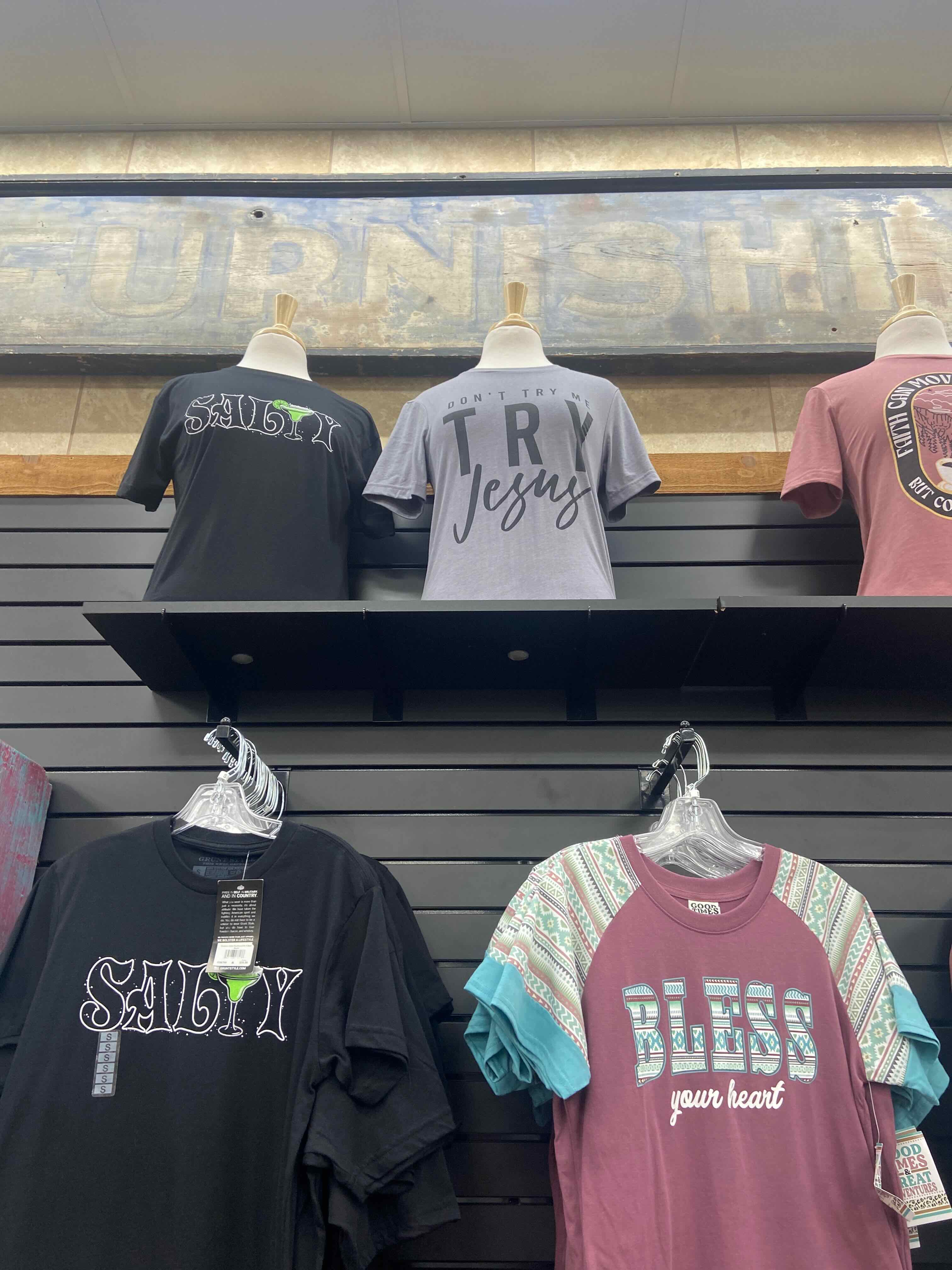
They know exactly who they’re for. “Don’t Try Me, Try Jesus.” “Salty.” “Bless Your Heart.” Three shirts, same rack, aimed at three completely different people who all feel seen. Buc-ee’s doesn’t achieve pluralism by being neutral — it achieves it by being extremely specific about multiple different someones simultaneously. This is harder than it looks, and most public spaces never figure it out.
The Contradiction You Can’t Design Around
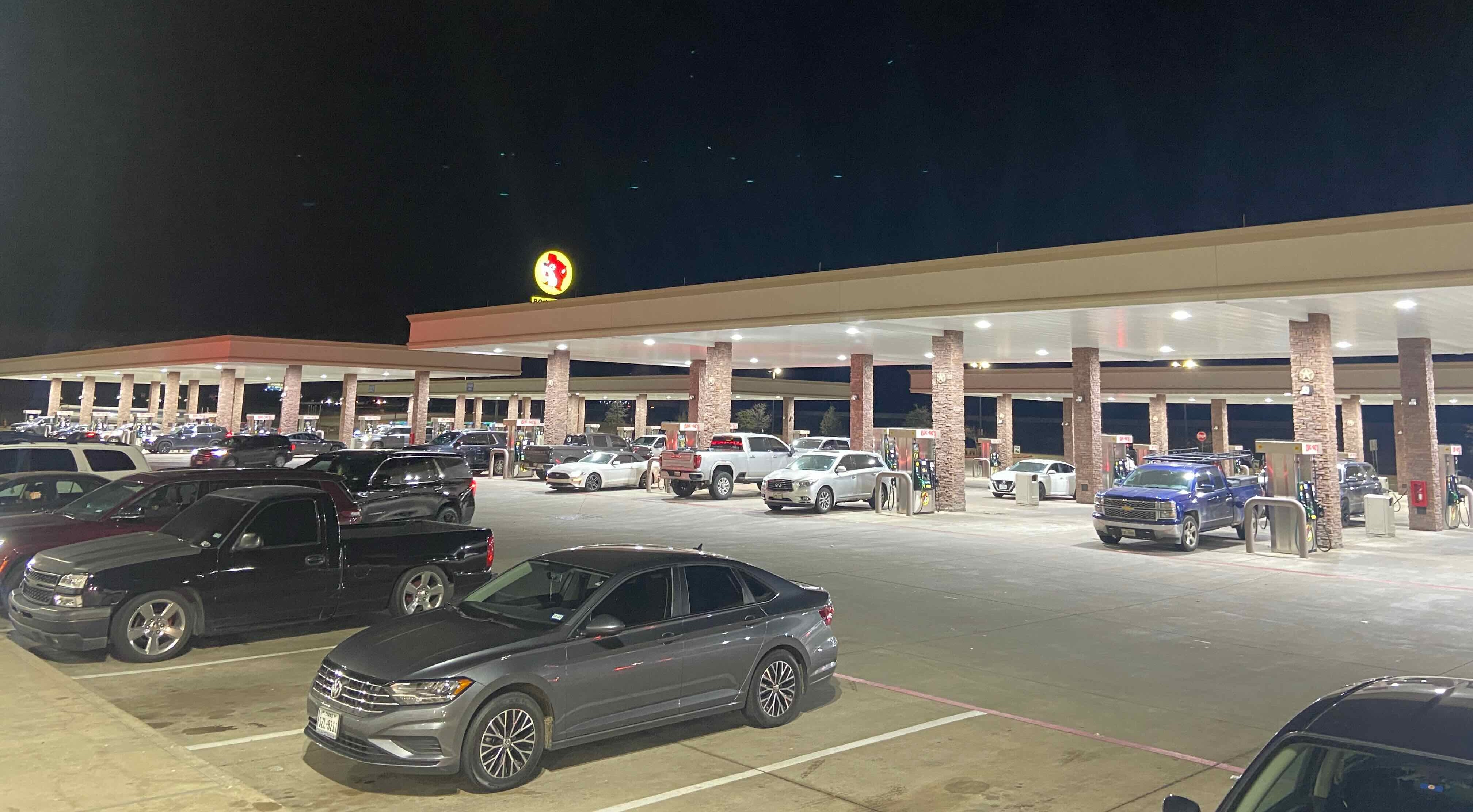
Nobody biked here.
Buc-ee’s sits on seventeen acres. The pump canopy alone covers the footprint of a city block.
The parking lot is a sea of asphalt that glows like a sports stadium at night.
The design excellence we’ve been discussing exists entirely in service of car dependency.
Every single person who patronizes Buc-ee’s does so arriving by a car from a highway in a landscape with no sidewalks and no alternative.
The beautiful bathroom is a reward for driving.
The cowboy hat employee is making you a sandwich because driving on a Texas interstate is genuinely terrifying and you deserve a sweet and fatty treat.
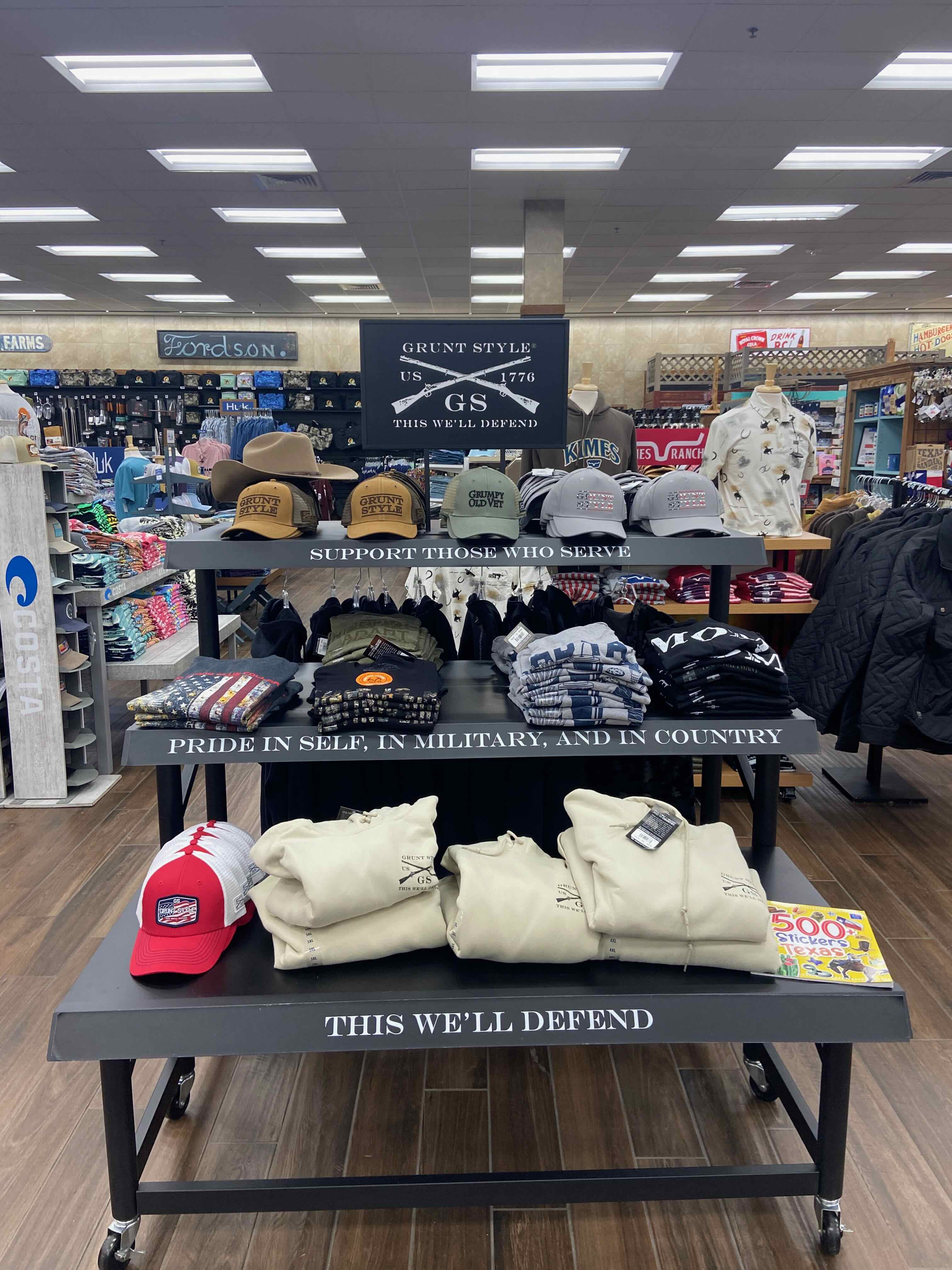
And while we’re being blunt: Buc-ee’s isn’t a neutral marketplace. It has a point of view.
The Grunt Style display is an intentional reflection of their customer demographic.
Buc-ee’s is extraordinarily good at reading its real audience and serving them without apology.
That’s partly what makes it work, and it’s worth being clear-eyed about what that audience looks like and what it values.
This is not Copenhagen.
I don’t think the lesson here is “build Buc-ee’s in cities.”
A 74,000-square-foot car-dependent retail campus is a disaster in land-use terms.
The lesson is narrower and far more embarrassing than that.
The lesson is that Buc-ee’s holds itself to a standard of cleanliness, wayfinding, hospitality, and delight and applied it to a gas station because they had a financial reason to care about the experience of being in their space.
Our public bathrooms have users too (or they would have users too, if we unlocked them).
What’s our excuse for failing to compete with Buc-ee’s?
Enjoyed this post? Get new posts via email