Essay · TRANSPORTATION
Most People Who Ride Bikes Have No Idea How to Shift Gears

If you’re a cycling advocate, you probably learned to shift gears so long ago it feels like breathing. But the share of cyclists who can do the same is almost certainly much smaller than our community tends to assume.
So roughly what percentage of people who know how to ride a bicycle also know how to shift gears?
Nobody has directly surveyed this. We track the rate of bicycle ownership, how often people actually use a bike, infrastructure investment, and injury statistics.
We have not ever asked at scale: “do you actually know how to use your bicycle’s gear shifter?”
Let’s estimate from what we do know.
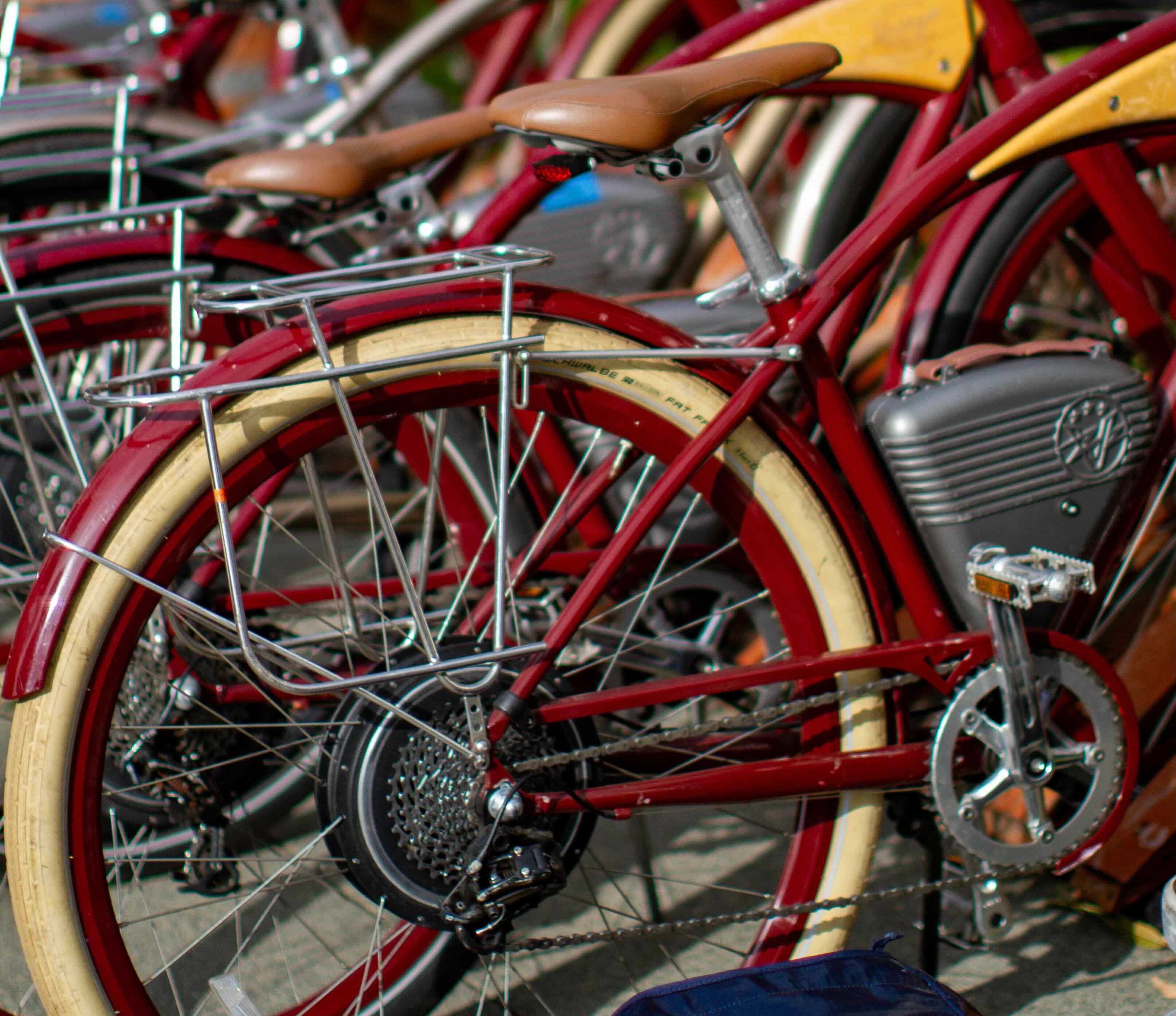
Single-speed bikes are the global norm
A 2022 Ipsos survey of more than 20,000 adults across 28 countries found that about 63% of adults globally say they know how to ride a bicycle — but only 42% report owning one, and just 14% on average use a bike for a short neighborhood trip.1
That tells you most of the world’s cyclists are occasional riders and that occasional riders are far more likely to be riding simple, cheap bikes.
This matters because the global bicycle market is dominated by bikes for transportation and not for sport.
A peer-reviewed study in “Nature Communications Earth & Environment” found that China alone accounts for roughly two-thirds of global bicycle production.2 Chinese utility bikes — the kind that have moved hundreds of millions of people across Asia for generations — are predominantly single-speed. India, the world’s second-largest producer, has a similar profile. A separate Johns Hopkins study tracking bicycle ownership across 150 countries estimated at least 580 million privately owned bicycles worldwide, with India and China accounting for a disproportionate share.3
Even in the Netherlands most bikes are “slow, heavy utility bicycles rather than road and mountain bikes.”4 The classic Dutch “Omafiets”, which makes up the bulk of that enormous fleet, is traditionally single-speed.5
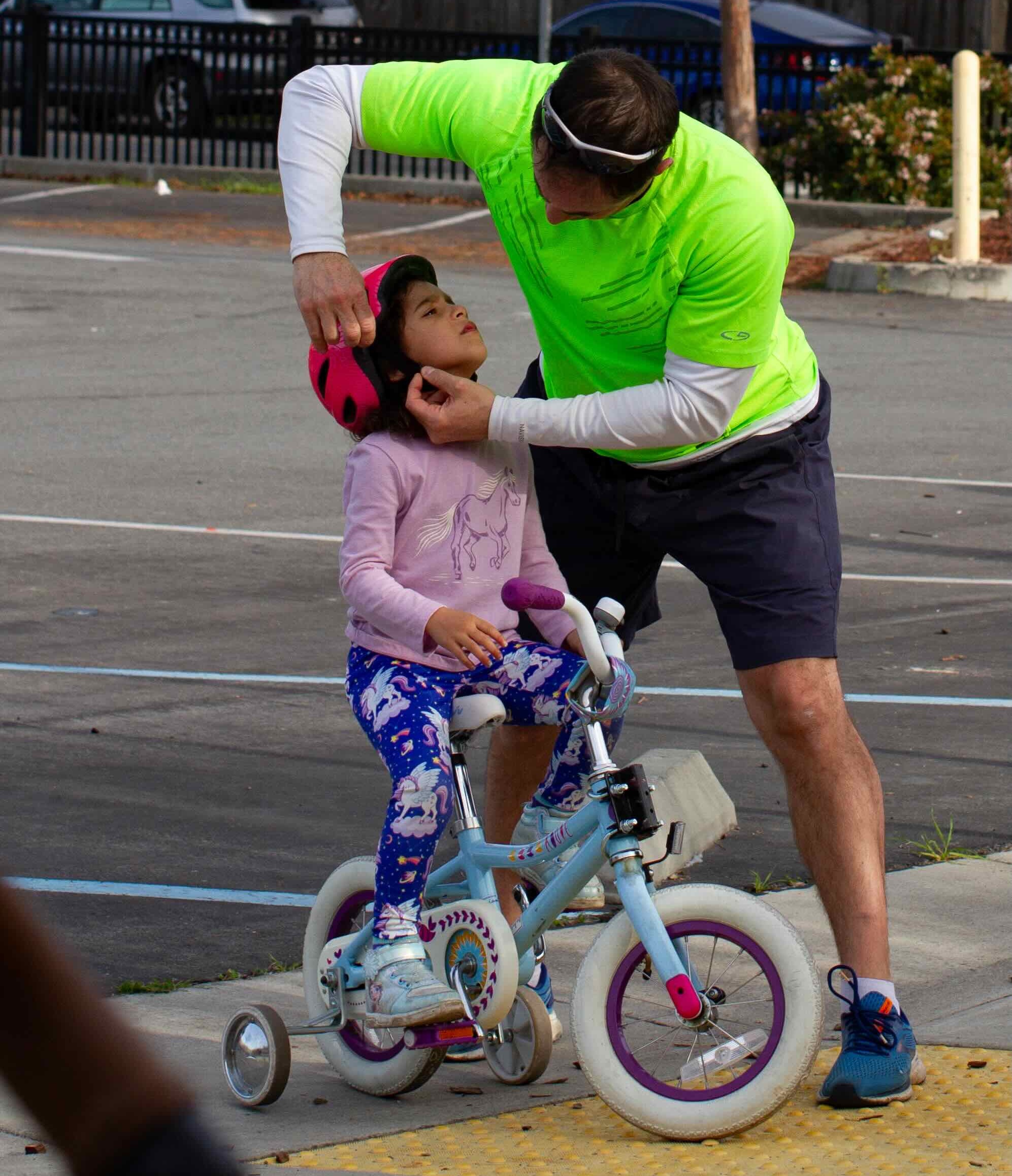
And then there are children’s bikes. In the United States, kids’ bikes accounted for 57% of all bicycle units sold in 2023. The vast majority of those are single-speed with coaster brakes. A child who learns to ride on one of those bikes and never upgrades has simply never had the opportunity to learn gears.
Owning a geared bike doesn’t mean you know how to use it
Now consider the people who do ride geared bikes. Plenty of them leave the shifter alone for most or all of a ride. Maybe they got a used bike and nobody explained the gearing. Maybe they tried shifting gears once, the chain made an alarming noise, and they never tried again. Maybe they just grind up hills in the wrong gear because it’s never been a problem they were aware could be solved.
If the bar for “knowing how to shift gears” is simply “can physically move the shifter,” that’s probably most geared-bike riders.
If the bar is “shifts deliberately — choosing a gear based on terrain or effort level” — which is what most of us mean when we say someone knows how to shift — a more honest estimate is probably less than half of regular geared-bike riders.
The bottom line
There’s no concrete number here, because no one has measured it. But when you add together the world’s single-speed riders, the children who learned on coaster-brake bikes and never graduate, and the geared-bike owners who use their shifters haphazardly, the share of all cyclists who can deliberately and intentionally use gears is likely a minority.
It’s fair to say the true share lies somewhere between a 25-50% depending on geography and how you define “knows how to use gears.”
For a US or Western European audience the number is higher. Globally, it’s probably lower. Either way, it is almost certainly not a majority.
Does this matter for advocates?
PeopleForBikes’ 2022 Bicycling Participation Study found that more than half of American kids under 14 rode a bicycle at least once in the previous year — but that participation rate drops to 42% among 15–17 year olds, and keeps falling through adulthood. The steepest cliff happens right at the age when riders typically transition from simple single-speed kids’ bikes to adult geared bikes.
No study has isolated gear-shifting competency as a cause of that dropout, but it’s a plausible and underexamined contributor. A rider who inherits a used 7-speed from an older sibling with no one to explain what the shifters do is encountering a machine that feels harder and less intuitive than the bike they grew up on.
That friction is compounded by the fact that most advocacy programs, bike education, and cycling marketing assume basic gear literacy which likely accelerates dropout.
This extends to infrastructure design itself. A protected lane over a highway overpass or hill is a genuine achievement — but it’s only usable by someone who knows how to shift into an easier gear to make the climb. Advocates who fight for that infrastructure and then point a new rider toward it without any gear education are setting them up for exactly the kind of defeated and sweaty experience that ends the cycling experiment. We can build the right infrastructure and still lose the rider if we’ve skipped a step.
Every rider who stops cycling in their mid-teens is one fewer person building the political constituency for safer streets, one fewer commuter shifting mode share, one fewer body counted in the ridership numbers we use to justify infrastructure investment.
If gear-shifting competency is a barrier — even a partial one — then treating it as a non-issue quietly harms the goals we’re trying to achieve.
Getting parents to swap car trips for bike trips is a harder sell if they’ve never figured out why their bike is so hard to pedal uphill.
Reaching new cyclists doesn’t end with handing them a bicycle and seeing them ride down the street.
It requires closing the gap between “can ride a bike” and “rides a bike happily up a hill with cargo next to vehicle traffic”–and to stop assuming those are the same thing.
A closing thought: the explosive popularity of electric bikes with a hand throttle and/or pedal assist may affirm this estimation about the global bicycling population’s gearing familiarity.
Ipsos. “Cycling Across the World.” Global Advisor survey of 20,057 adults across 28 countries, conducted March–April 2022 ↩
Shan, X. et al. “Historical patterns and sustainability implications of worldwide bicycle ownership and use.” Communications Earth & Environment, Nature, 2022 ↩
Oke, O. et al. “Tracking global bicycle ownership patterns.” Journal of Transport & Health, 2015. Summarized via ScienceDaily: ↩
“Cycling in the Netherlands.” Wikipedia. ↩
“What is a Dutch-Style Bike (and Why Are ‘Omafiets’ So Popular)?” Discerning Cyclist. ↩
Enjoyed this post? Get new posts via email