Essay · TRANSPORTATION
The Bay Area pays more to bail out highways than its transit tax would cost

On Nov. 3, voters in Alameda, Contra Costa, San Francisco, San Mateo and Santa Clara counties decide on a 14-year sales tax to keep BART, Muni, Caltrain and AC Transit running. Their federal income taxes also bail out the nation’s highways, and from 2028 the Bay Area’s share of that bill will be bigger than anything the transit tax would raise.
The tax is half a cent on the dollar, a full cent in San Francisco, and most of the money would go to running the 4 agencies. SPUR estimates it would cost someone earning up to 80% of the area’s median income $7 a month.
Since 2008 the federal government has spent more from the Highway Trust Fund than it collects in gas and truck taxes. Congress has refilled the fund from general revenue 10 times instead of raising the federal gas tax, and the Congressional Budget Office projects the highway account will run dry again in 2028.
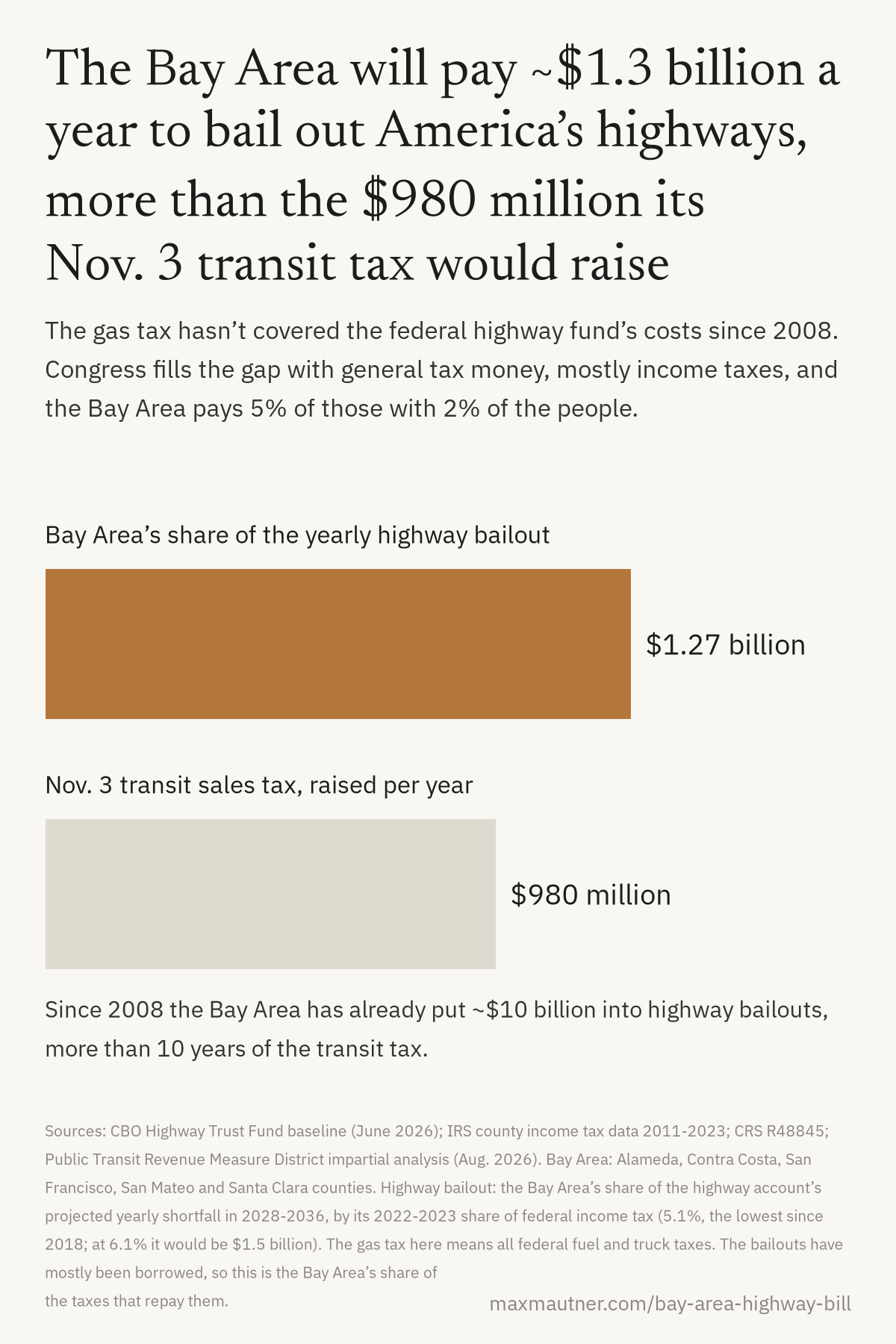
Most general federal revenue comes from income taxes, so I assigned the Bay Area a share of each transfer, and of CBO’s projected shortfall through 2036, equal to its share of federal income tax that year in IRS county data. Congress borrowed most of the money, so this is a share of the debt Bay Area taxpayers carry.
Congress also pays for new trains, buses and stations from the trust fund’s transit account. It put $60 billion of its general-fund transfers into that account, and Bay Area agencies receive part of the money. I left the transit account out of the charts, which count only highway money.
A gas tax would spread the same bill by driving instead. Kansas City has 3 times as much road per resident as Los Angeles, and each time Congress refills the fund from general revenue, it moves part of the cost of roads like Kansas City’s onto counties that drive less and earn more.
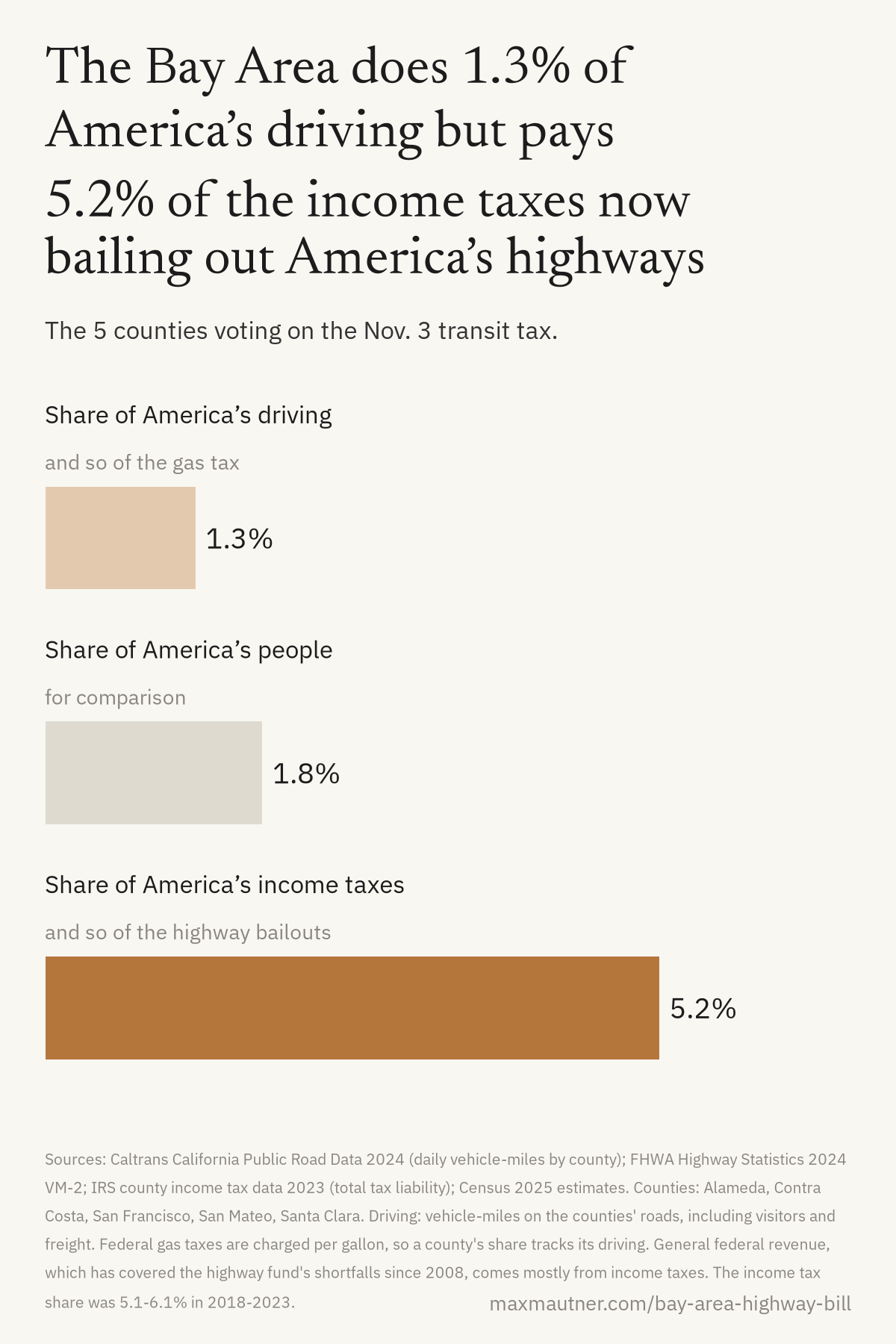
California receives less than its population share of federal highway formula funds, according to FHWA, and the Bay Area’s share of the highway bailouts is ~3 times its share of the population.
None of the 10 transfers went to a Bay Area ballot. Congress decides on the next one in the highway bill it has to pass by Dec. 11, when the current extension expires: another transfer from the general fund, or a gas tax or per-mile fee that charges drivers for highways. Bay Area residents can tell their members of Congress which they want before that vote.
| County | Members of Congress (district) |
|---|---|
| San Francisco | Nancy Pelosi (CA-11), Kevin Mullin (CA-15) |
| San Mateo | Kevin Mullin (CA-15), Sam Liccardo (CA-16) |
| Santa Clara | Sam Liccardo (CA-16), Ro Khanna (CA-17), Zoe Lofgren (CA-18), Jimmy Panetta (CA-19) |
| Alameda | Lateefah Simon (CA-12), Aisha Wahab (CA-14), Ro Khanna (CA-17), Mark DeSaulnier (CA-10) |
| Contra Costa | Mark DeSaulnier (CA-10), John Garamendi (CA-8), Josh Harder (CA-9) |
| All 5 | Senators Alex Padilla and Adam Schiff |
Pelosi serves until the winner of San Francisco’s Nov. 3 race to replace her is sworn in, so she votes on the Dec. 11 bill. The House has a lookup by address for anyone unsure of their district.
The transit tax passes with a simple majority of votes cast across the 5 counties on Nov. 3.
The charts are generated by this code, which lists every input and its source.
Enjoyed this post? Get new posts via email