Essay · BICYCLE
The Scooter and the Bike

Most adults consider bicycling a serious transportation option–maybe not every day or for all trips, but actors ride them in popular movies and TV.
But suggest that someone ride a scooter to work? You’ll probably get an odd look!
Before I go further, I want to clearly define “scooter”. By scooter, I mean an un-motorized two-wheel kickscooter, the type you might have had as a child and forgotten about for decades or until you became a parent or aunt/uncle:
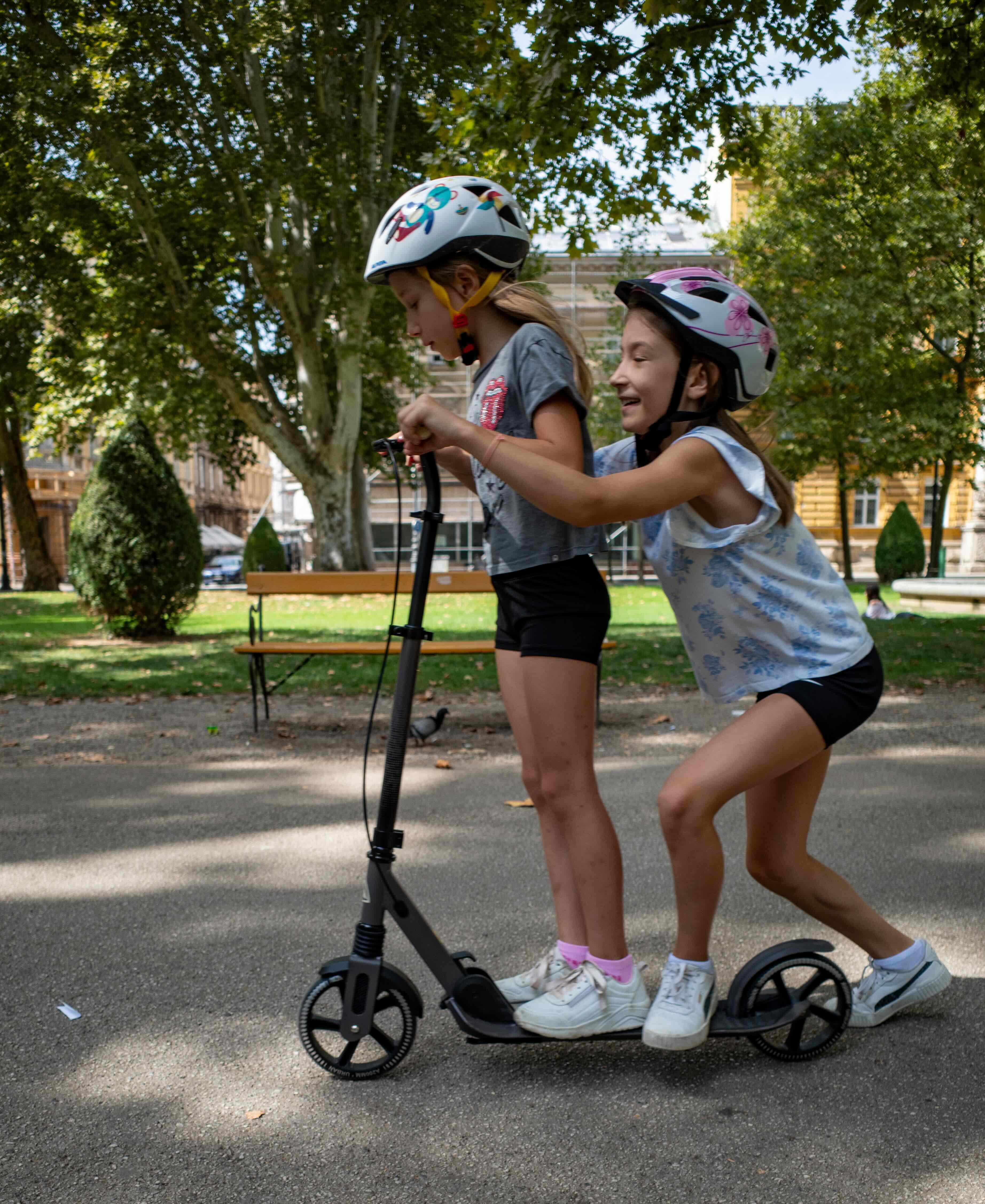
While both the scooter & the bicycle are used for transit I compare the two in this post in order to explore what it would take to get more people out of cars.

Who can actually ride a bike?
Riding a bicycle requires internalizing dynamic balance where the bike only stays upright when it’s moving. Keeping the bike (and rider) upright requires a constant series of small steering corrections that happen largely subconsciously.
This dynamic balance is a learnable skill, but it is also an ability that can be lost (or never gained) through disability.
New bike riders also have to unlearn a human instinct: when a bike starts to tip left, the correct response is to briefly steer left (countersteering), which feels completely wrong until it doesn’t.
This is a “cliff” in the learning curve and while most people clear the cliff it takes hours to days to do so. Adults learning to ride a bike later in life find it meaningfully harder than children.
In spite of this cliff, roughly 94% of American adults know how to ride a bike.
Of them, maybe half know how to shift gears.
Who can actually ride a scooter?
The scooter’s total addressable market is approximately everyone. If you can walk then you can ride one.
The learning curve is nearly flat. One foot is always available to touch the ground, there’s no counterintuitive reflexes to develop.
Most people achieve basic competency on a scooter within minutes.
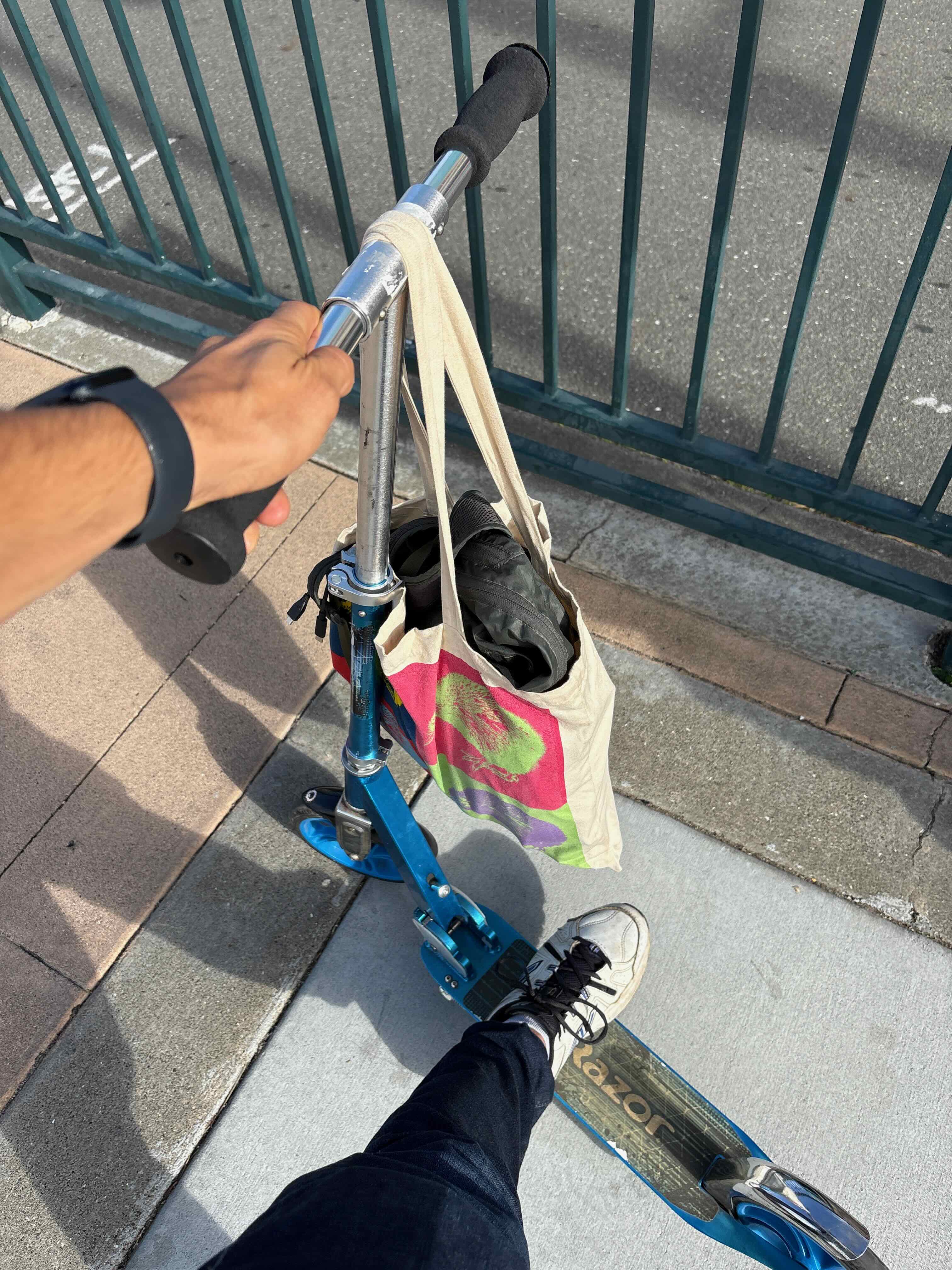
Even without riding the scooter, it can be the most simple combination of mobility aids: walking stick + shopping cart!
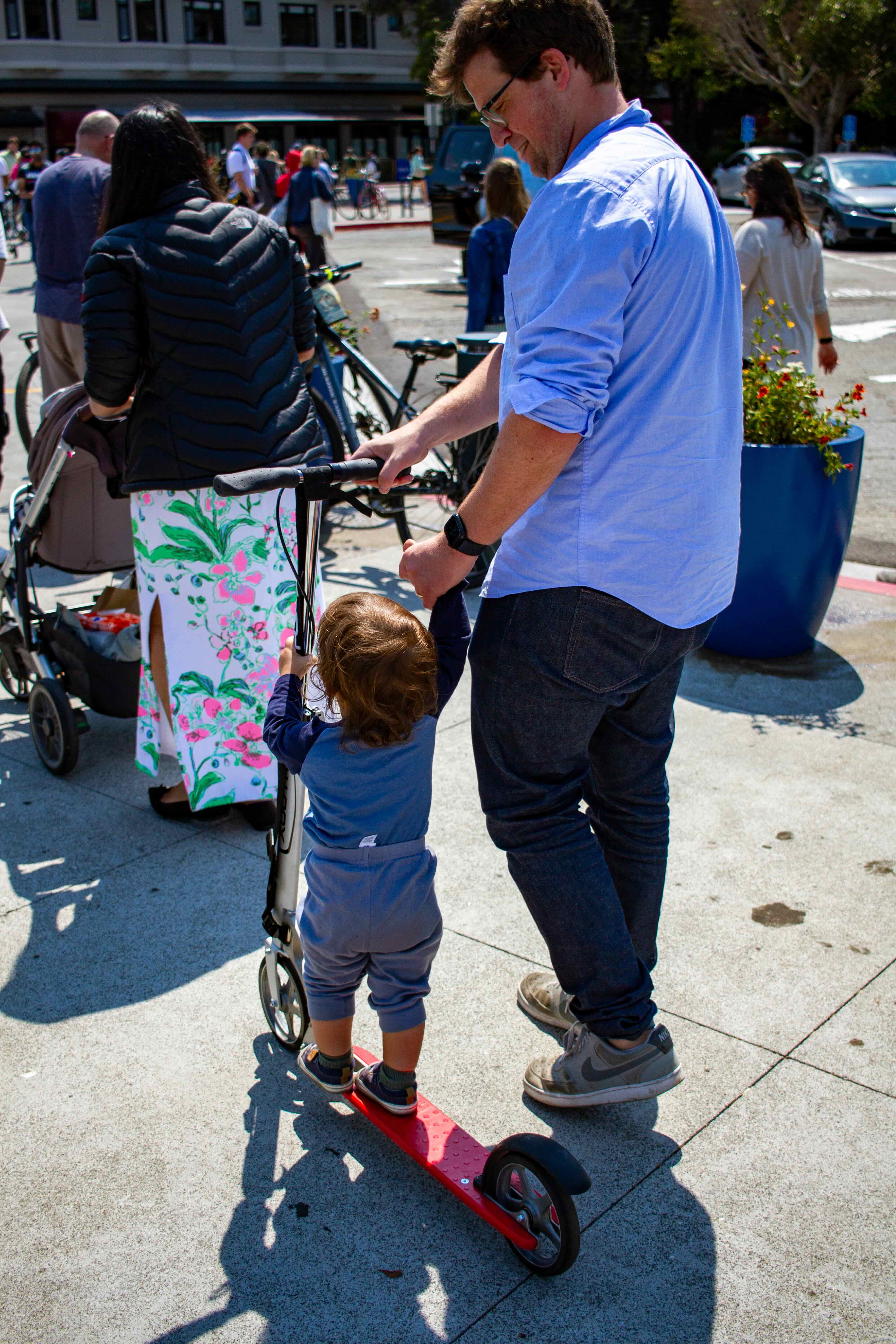
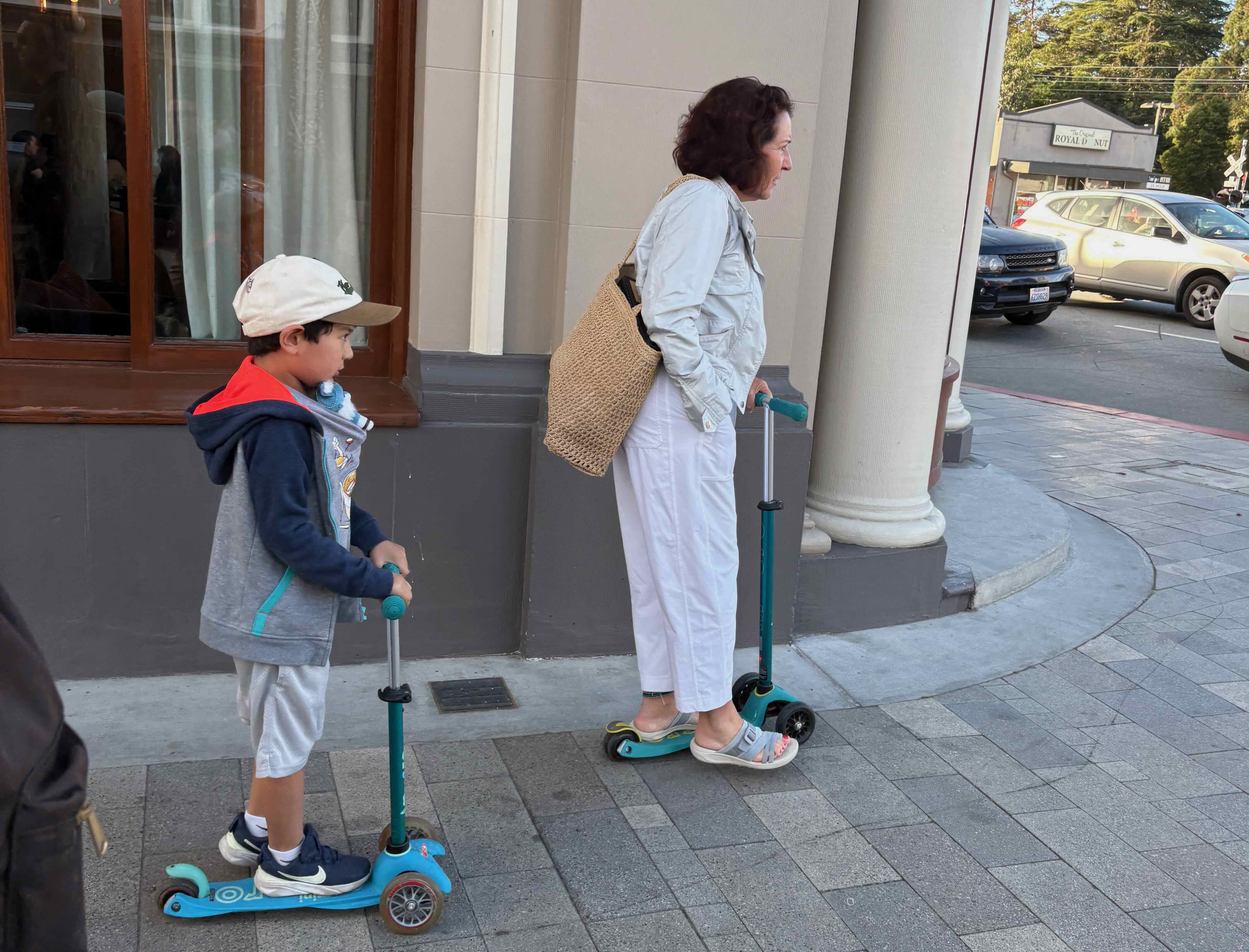
Or even an improvised stroller:
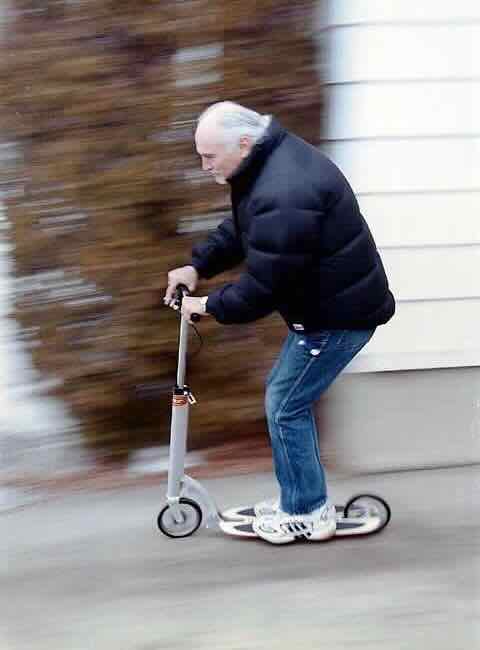
When we discuss all ages transportation options the kickscooter delivers:
But the bicycle is more efficient
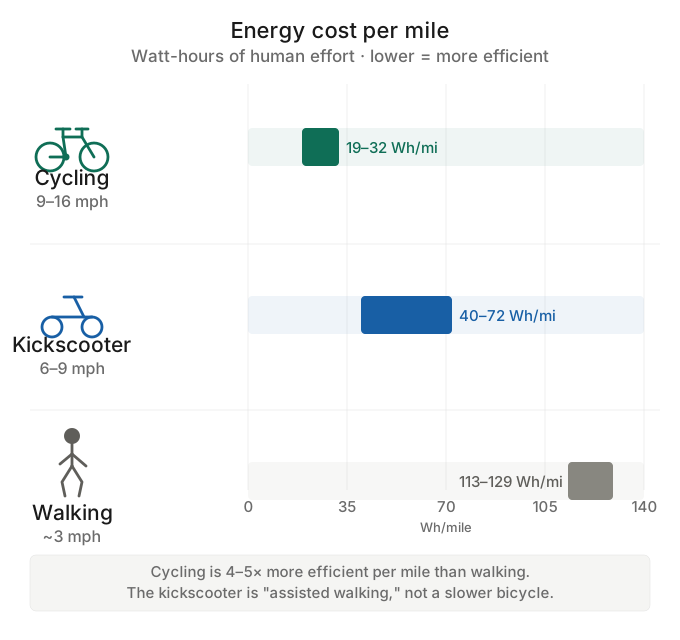
The bicycle is the most energy-efficient vehicle ever built. A cyclist traveling at 15 mph expends roughly 19–32 watt-hours per mile (Wh/mile) of forward progress. A scooter rider at 10–12 mph uses roughly 40–72 Wh/mile. Walking runs around 113–129 Wh/mile.
The bicycle is about 2–3x more efficient than scooting, and 4–5x more efficient than walking. Riding a scooter is essentially assisted walking.
These measures of efficiency matter a great deal for how we think about consumer choice and realistic range. A commuter on a bike can realistically cover 10–15 miles with moderate effort. On a scooter, the practical range for most people is probably 2–4 miles before fatigue sets in.
The scooter is a short-range device.
The practical picture
Beyond physics, the day-to-day comparison breaks several ways:
| Kickscooter | Bicycle | |
|---|---|---|
| Purchase cost | $100–$400 | $400–$1,500+ |
| Weight | 10-12lbs | 20-30lbs |
| Maintenance | Basically none | Tires, chain, brakes |
| Portability | Folds; fits under a desk or in a trunk | Requires parking or storage (folding options) |
| Transit compatibility | Excellent — carry on any train or bus | Mixed; some trains & buses |
| Theft risk | Low — take it with you or drop it on the ground | Real — requires secure lock + infrastructure |
| Hill performance | Poor | Good (and improves with fitness) |
| Weather | Poor | Medium (fenders + clothing) |
| Range | 2–4 miles comfortably | 10–15 miles comfortably |
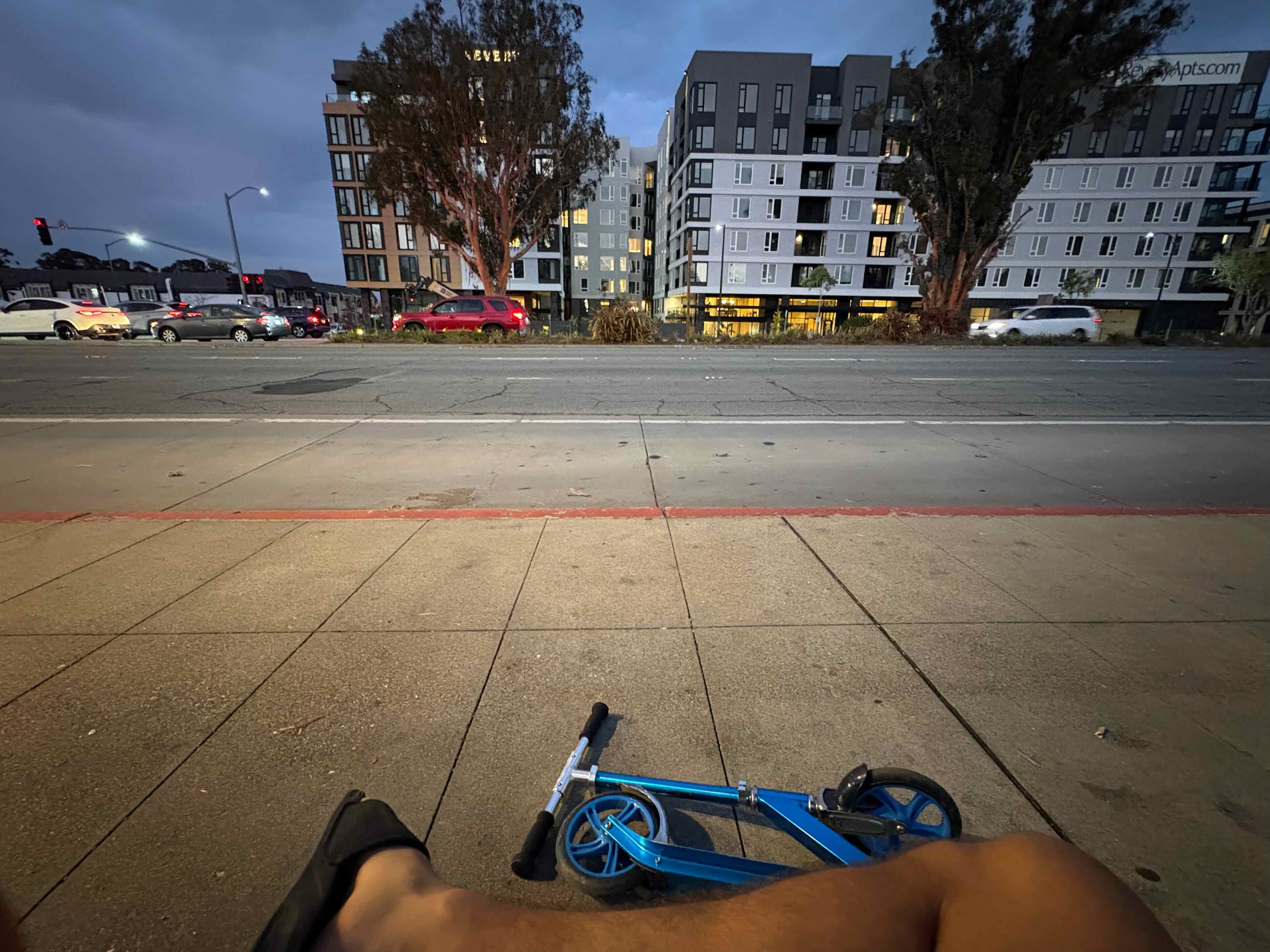
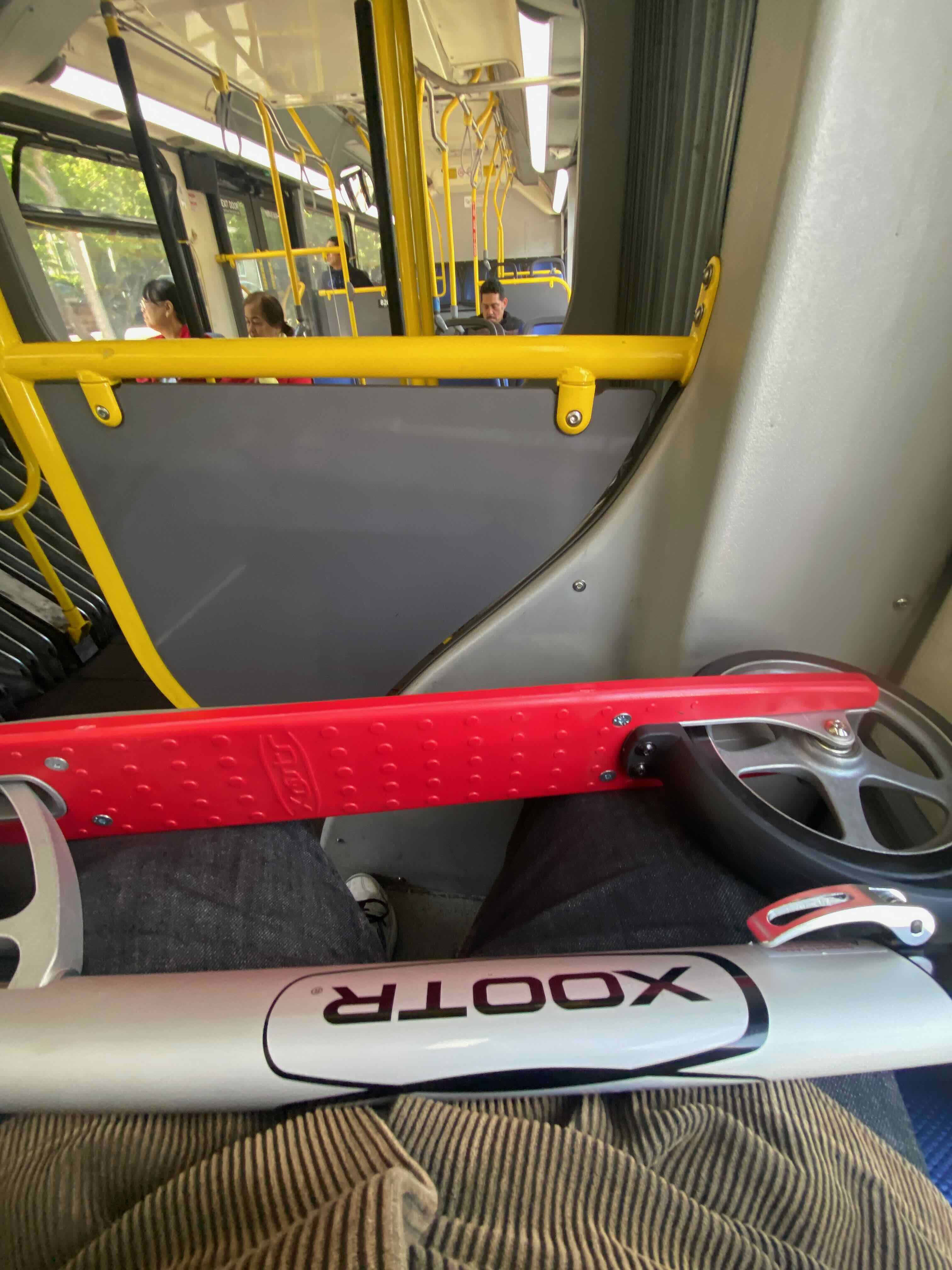
The scooter’s portability is underrated in the advocacy conversation. A folded kickscooter can go anywhere its rider goes — on the train/bus, in a rideshare, into a meeting. You don’t need to carry a lock and their cheapnes makes them less of a theft target.
This makes the humble kickscooter an under-estimated tool for transportation. The person who scooters to the station, boards a train, and scooters to the office has solved the last-mile problem without any infrastructure dependency beyond the train itself.
Motors change everything
Electric bikes have dramatically expanded the bicycle’s total addressable market by neutralizing hills and distance which are the two things that most reliably defeat new riders.
E-scooters close much of the efficiency gap with bikes and extend range significantly, though they reintroduce higher cost and servicing/maintenance headache.
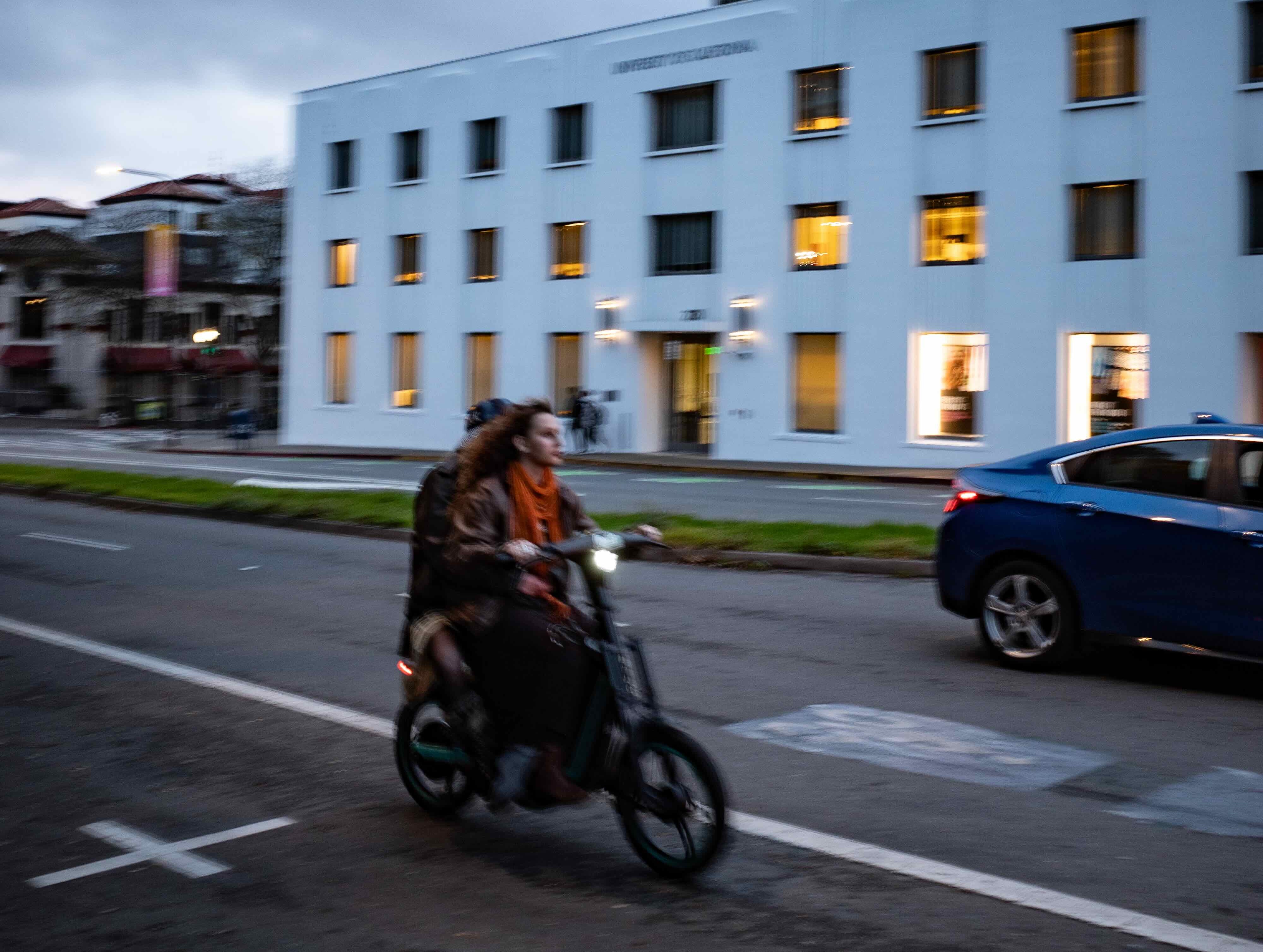
The shared e-scooter boom of 2018–2022 introduced millions of people to the (motorized) scooter form factor who had never considered it.
The electric versions of both bikes and scooters deserve their own lengthier blogpost — while this post is intentionally scoped to the un-motorized versions.
How cities can encourage their use
The kickscooter and the bicycle require the same infrastructure: protected lanes, traffic calming (slowing peak car speeds).
The scooter’s lower barrier to entry means it reaches people that the bike doesn’t: people who never learned to bike, people who are ultra-constrainted on storage/space.
The bicycle is the better long-term ride: more range, more cargo capacity, better with hills, lower effort.
Ultimately, cities and communities benefit when they embrace the economic firepower and public health benefits of active transportation–but data and anecdotes require building grassroots momentum and understanding of the facts:
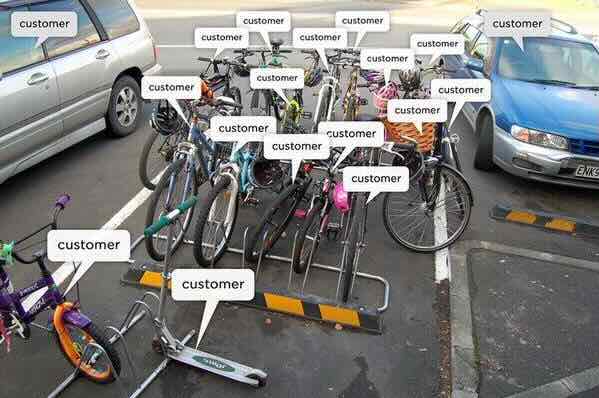
The goal is to get people out of cars and meeting each other in their community — and different people need different onramps.
Enjoyed this post? Get new posts via email