Essay · MOBILITY
A scooter is cheating, a cargo bike is rude, the car is fine

The Scooter
I still remember using an electric scooter for the first time and feeling a strong sense of guilt and physical laziness as I effortlessly glided over the concrete.
With a few hours of distance from that first scooter ride it dawned on me that I was feeling a guilt and laziness that I didn’t feel when driving a car.
Specifically, it felt like I was violating several norms at once:
- “the roadway is for cars”
- “the bikelane is for bikes”
- “effortlessly transporting yourself outside of a car is lazy”
These norms are both self-imposed and societally imposed.
Societally: drivers find a small, twitchy and fast e-scooter rider to violate their norms of understanding around what to expect in the roadway. It also may offend their norm at having to share roadway space with non-cars that are smaller and slower than they are used to traveling.
My own mind associated the sensation of being outside in public on the open roadway–air flowing through my (helmeted) hair–with a bicycle ride. A key difference being that a bicycle ride involves my leg muscles and exertion powering me to my destination. As bicycling was my reference experience, I could not help but judge e-scootering as physically lazy.
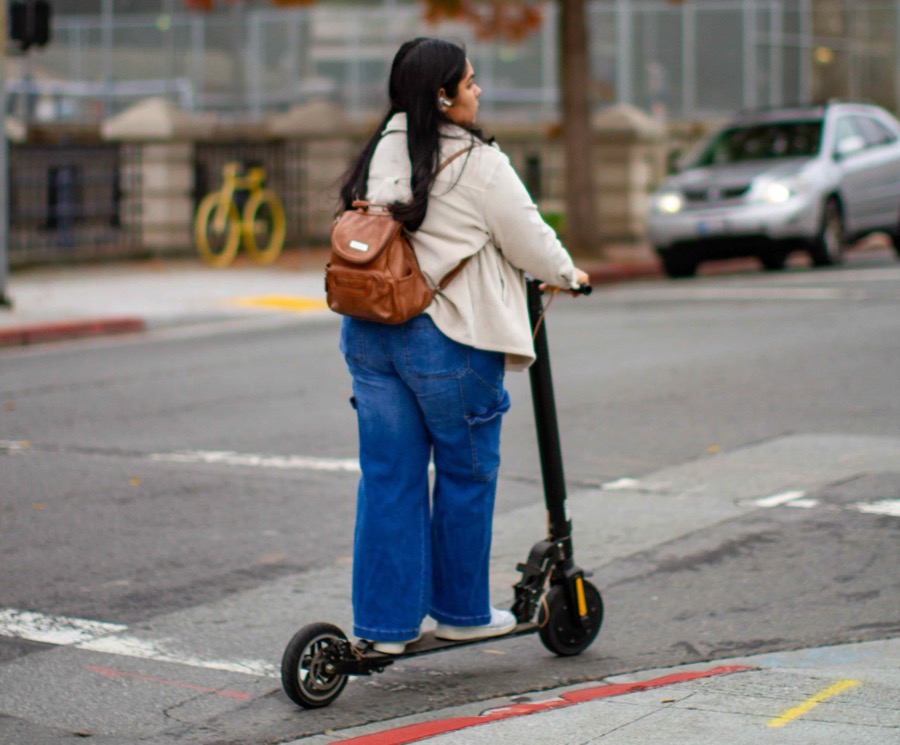
Feeling guilt is entirely self-imposed though! Nobody was standing next to me saying “you’re cheating”. In fact I encountered very few people on that first scooter ride at all!
And ultimately: why is riding a 2-wheel motorized device to your destination any more lazy than driving a 4-wheel motorized vehicle to your destination?
The Cargo Bike
With time I set aside e-scootering as a transportation choice for me.
I found the small wheels and standing position to be too physically dangerous for my tastes, and I also found the trips I would use an e-scooter for were eliminating the desirable physical exercise I would got from walking or bicycling to the same destination.
However I did not sit idly on walking and biking as I used to: I picked up a cargo bike, loaned to me by a friend.
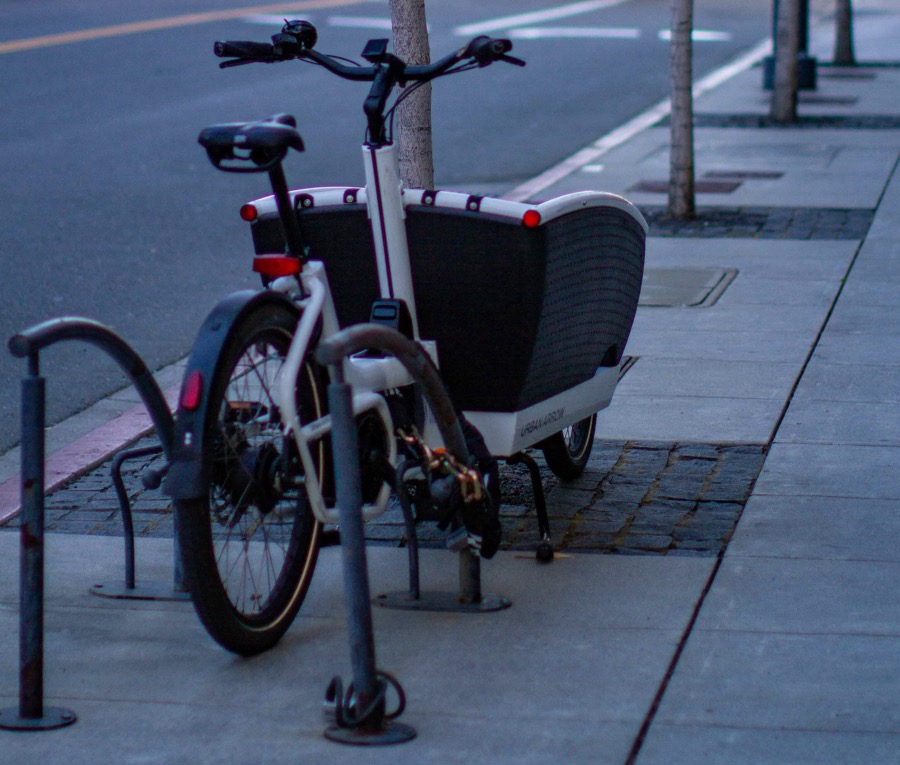
Taking the cargo bike out for rides introduced another norm violation:
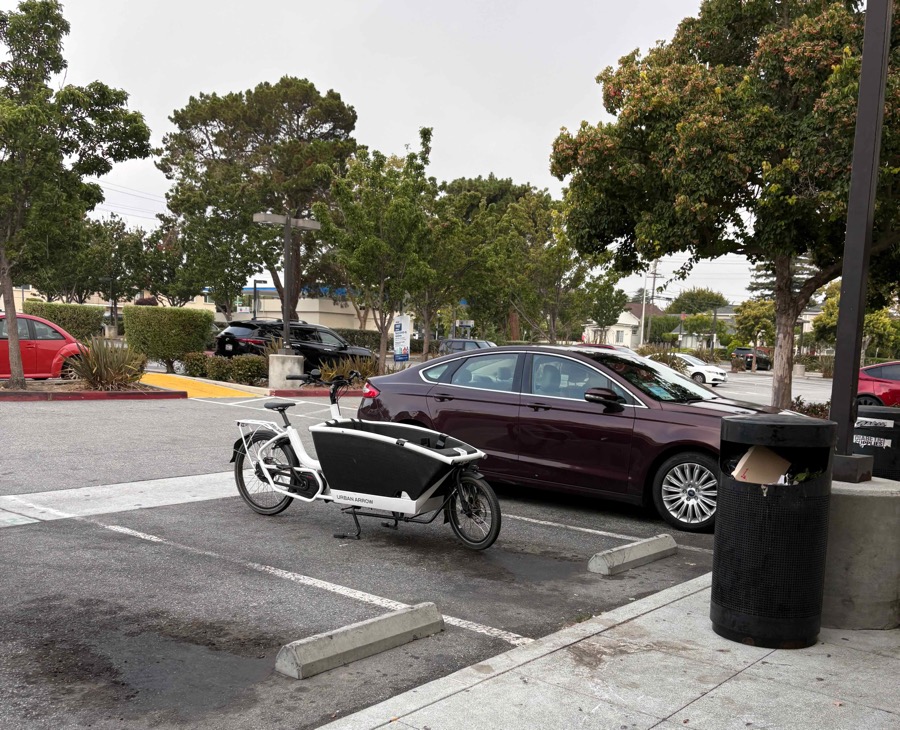
It is so big! But in spacial terms it is maybe 1/4 the footprint of the average of a car.
It is so heavy! But in terms of weight is maybe 100 pounds vs. a 4,000 pound average weight of a car.
I felt self-conscious as I navigated the streets a little less nimbly in the wide canoe than I would ordinarily with my “ordinary” bicycle.
I feared being a “space hog” on the road and that drivers would be more likely to menace me as I competed with them for more roadway space.
I also competed with them for parking space.
The Car
Both the e-scooter and the cargo bike triggered in me a feeling of discomfort based on a deviation from a norm–but it was not based on the vehicles’ absolute size, speed, or impact.
That seems backwards: operating actually big and dangerous vehicles is the invisible norm, and the stuff that’s small and safe is uncomfortable because it’s rare.
What would it take to make driving feel out-of-the-norm?
- Have drivers regularly walk or bike the same corridors they drive.
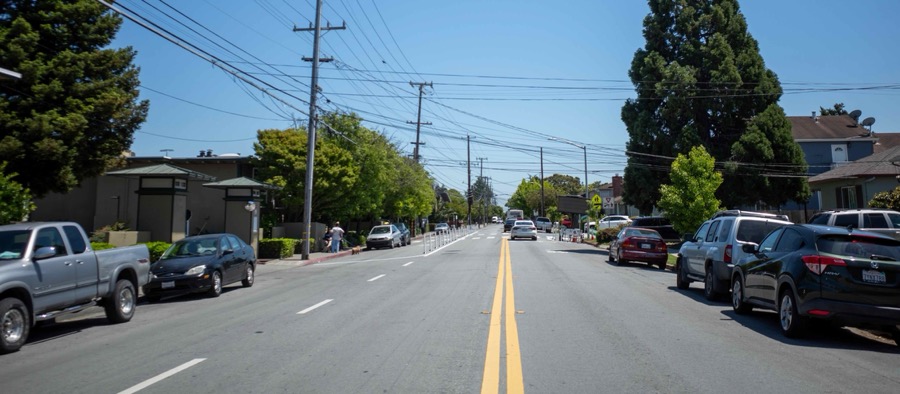
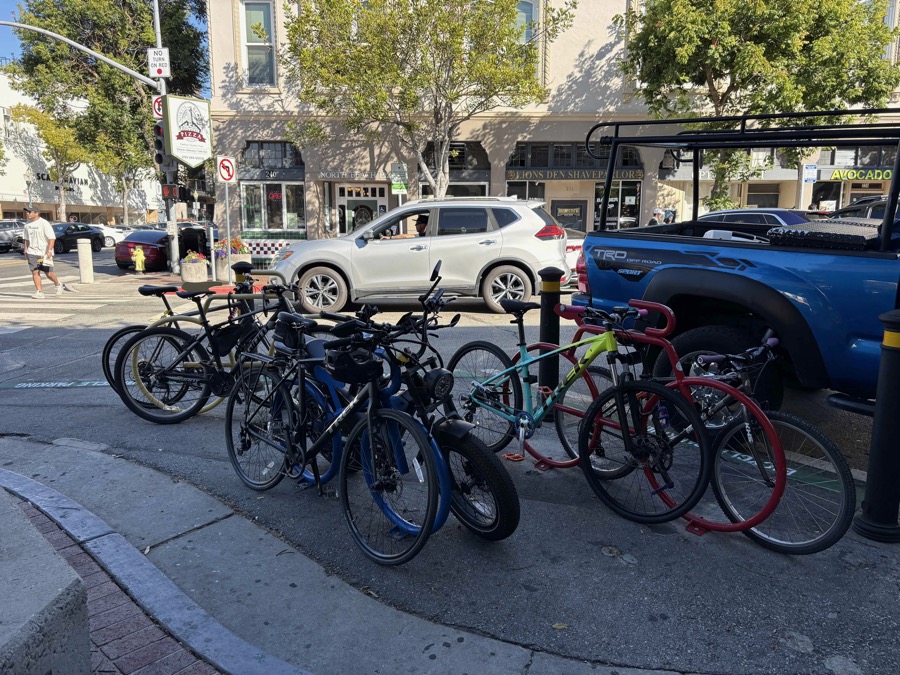
- Chalk or cone off one car-parking-space area and show how many bikes, or how many square feet of café seating, fit in it
- Surface the alternative at the moment of driving: “this would be a 9-minute walk”. Quantifying converts breaks the norm.
- Price what’s currently free or flat-rate: metered parking, congestion pricing. Buffet pricing gets ignored; the same way an open bar produces more drinking vs. a per-drink tab.
- Narrow lanes, elevate crosswalks, add street trees close to the curb–change the physical environment so the vehicle stops matching its surroundings. Driver behavior “improves” because the street no longer signals a car here is prioritized.
- Name the norm violation: “crash” not “accident”, “subsidized parking” not “free parking”, “car storage” instead of “parking.” “Manspreading” succeeded at naming a spatial behavior and course-correcting through shaming.
The exercise for me is very real, it isn’t a drivers’ training program, it’s my own commute.
From an absolute time perspective, the bike ride to the train station is faster than the drive.
Enjoyed this post? Get new posts via email