Essay · MOBILITY
A stop sign for $1,000

Over the course of several months I had captured 3 photographs of crash aftermath at a single intersection, encountered while biking to and from downtown San Mateo.
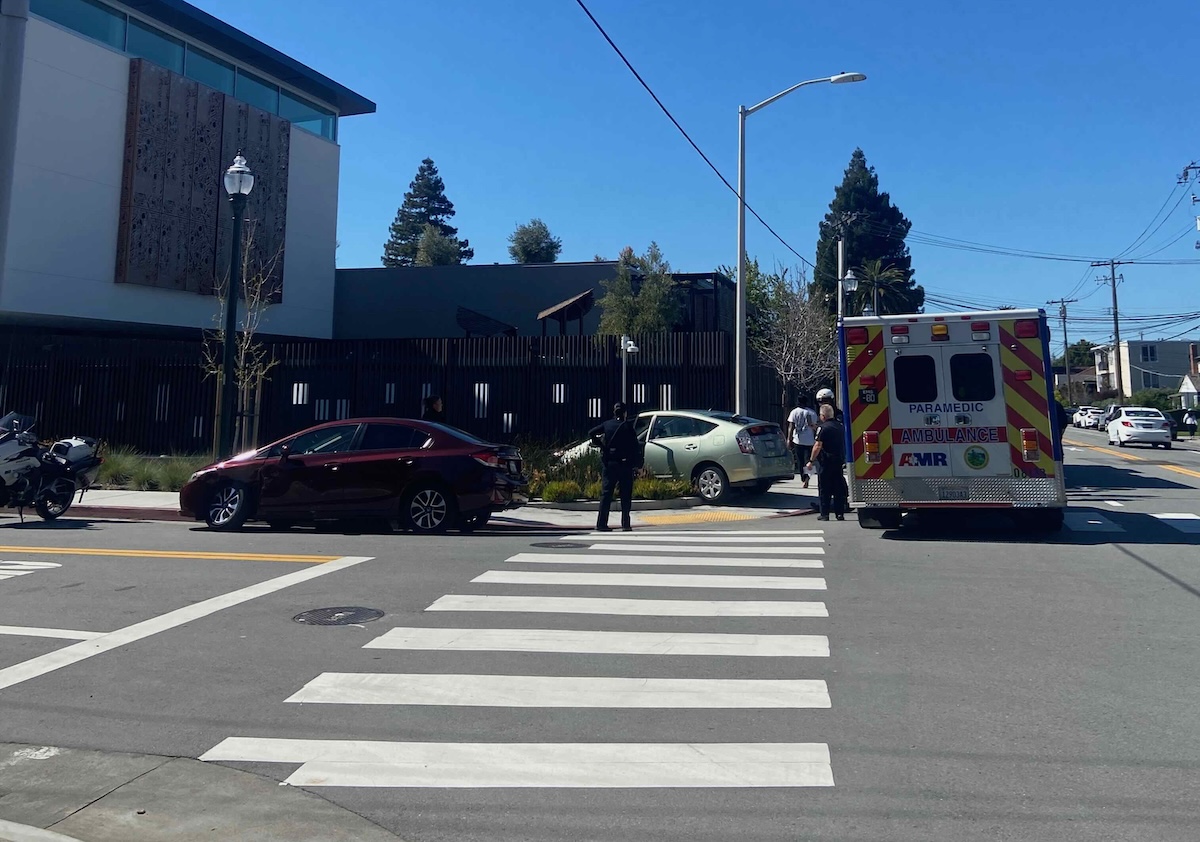
A few months later, a hit-and-run driver struck an electric scooter rider at that intersection in the middle of the day. 2 days later I sent Public Works an email, giving them notice of “dangerous condition of public property.” The message restated what the city’s own adopted documents already said: Monte Diablo is a designated bike boulevard in the Bicycle Master Plan, North San Mateo Drive carries Class 2 bike lanes in both directions, and a preschool sits on the northwest corner. I embedded my 3 photos to illustrate the point.
Giving this type of notice doesn’t obligate the city to do anything. Under Government Code §835, a city is liable for injury from a dangerous condition of its property only where it had actual or constructive notice in time to have done something about it. Constructive notice is arguable and gets fought over in the discovery phase of lawsuits. But a dated email with photographs attached sitting in the city’s own records makes it very real, which is what a plaintiff’s attorney goes looking for after someone is hurt. What the notice changes is the city’s exposure if that intersection produces a serious injury next year.
I didn’t do this alone–I recruited neighbors to send their own emails. One of them runs the preschool, and he’d shared with me that students hear vehicles colliding with each other from their playground over the fence. He also shared that he had provided emergency care to a person before ambulances could arrive at the intersection. I suspect my email wasn’t as effective as his.
Public works replied to me in 3 days. The intersection would be reviewed under the city’s “Quick-Build” program, which staff described as facilitating roadway projects from concept to installation faster than the 12-24 months a standard capital project takes. The staffer was forthright about the queue for these projects, and that there were over a dozen similar requests, limited staffing, and to expect ~6 months to study and install anything.
That “Quick-Build” program has no visible public existence. There’s no webpage on the city website, no discoverable budget line in published city materials, no press coverage (which is a shame!).
Nearby San Francisco runs a Quick-Build program with a named webpage and its funding sources printed on it. San Mateo’s exists in staff email and the verbal record.
Moving to the front of the opaque list of a dozen means something else moved back. My friend who works on these campaigns with me raised this zero-sum issue after I BCCed him on my email: with fixed staffing and funding, prioritizing one request slows another, and advocates may be selecting winners rather than increasing how much gets built. Writing the email cost me an evening and evaluating it cost a traffic engineer weeks, so the ratio is bad and gets worse the more people do it. That is also why I never followed up with staff on my request for the program’s project list. The records would have made this a better piece of writing, but staff time spent producing the list for me would have come out of the next intersection.
2 more collisions happened while the intersection sat in that queue, on March 24 and June 19. I photographed both and forwarded both. The driver of one of the cars told me she was going the speed limit. On June 23 the city wrote back naming its 2 Quick-Build priorities: an exclusive pedestrian signal phase at 17th Avenue and El Camino Real, and an all-way stop at Monte Diablo and N San Mateo Drive. The first had finished, and mine was now first in the queue.
A 62-year-old woman was struck and killed in the marked crosswalk at 17th and El Camino on January 23, 2026. Caltrans reprogrammed that signal on June 1. El Camino is a state highway, so the city’s top Quick-Build priority was a project the city did not “build” at all. The second slot (mine) went to an intersection with no fatality on record, on the strength of photographs a resident took on the way to work.
The signs went up on September 11, 2026, 178 days after the notice. That is the original ~6 month estimate.
I never asked for a stop sign, the city’s public works staff picked the treatment. The city’s Local Roadway Safety Plan prices converting a 2-way stop to all-way stop control at $500 per sign and assigns it a 50% collision reduction factor. Installation took a few hours. My estimate of the hard cost is ~$1,000.
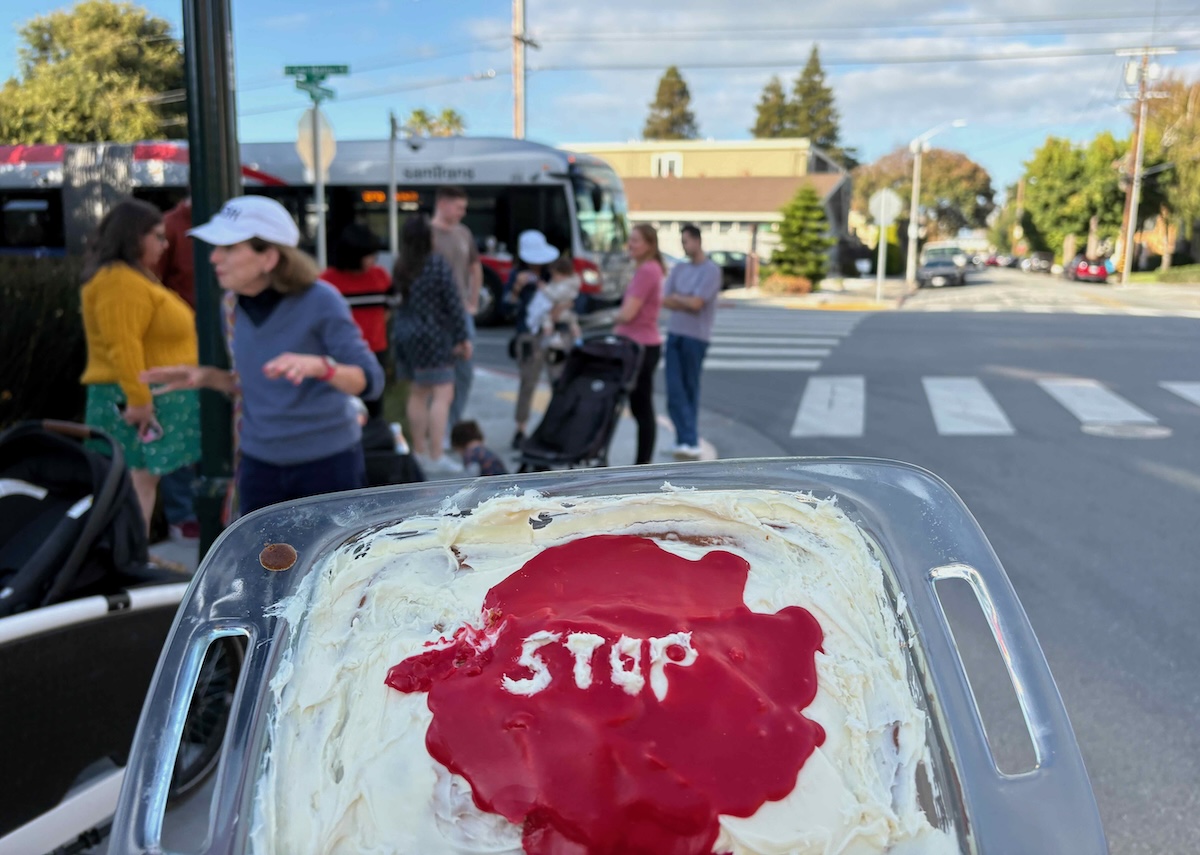
Every email I sent the city went out with ~14 neighbors BCC’d, so the whole multi-month exchange was legible to them while it was happening. I BCC my friends and neighbors to “lead by example”–showing how to do this so others might do this type of thing too.
I first found out when the stop signs went in because one of the neighbors who I was BCCing texted me with a message of gratitude. I hopped on my bike with my camera and went out to capture the changes made at the intersection and appraise how it felt different.
It then dawned on me: I should organize a party at the street corner. I sent out text messages, emails, Facebook messages. 15 people came, and I brought sidewalk chalk for the kids and a “stop sign” cake:
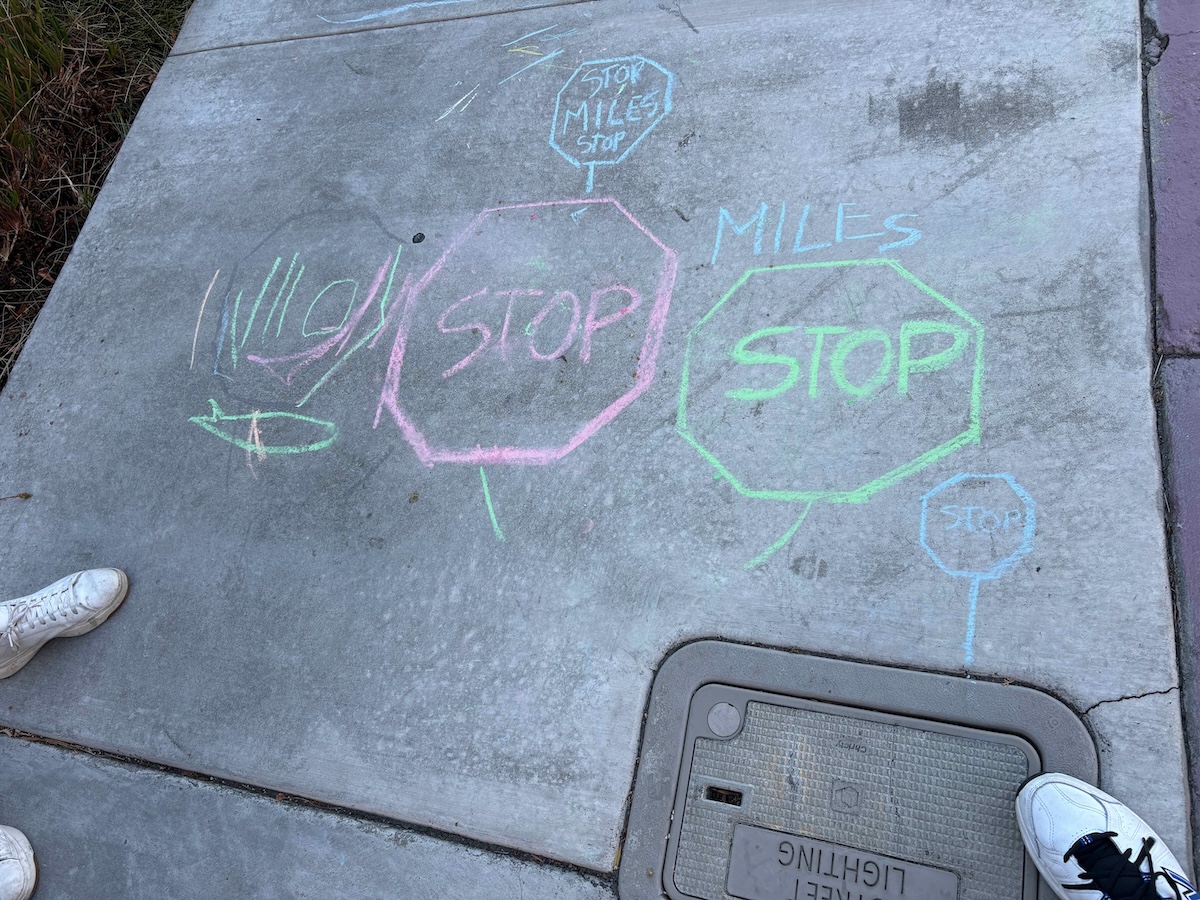
The intersection sits on the border of 2 council districts, so I invited both councilmembers and both came! Staff describe the program as Council-established, so a budget vote of the council paid for it.
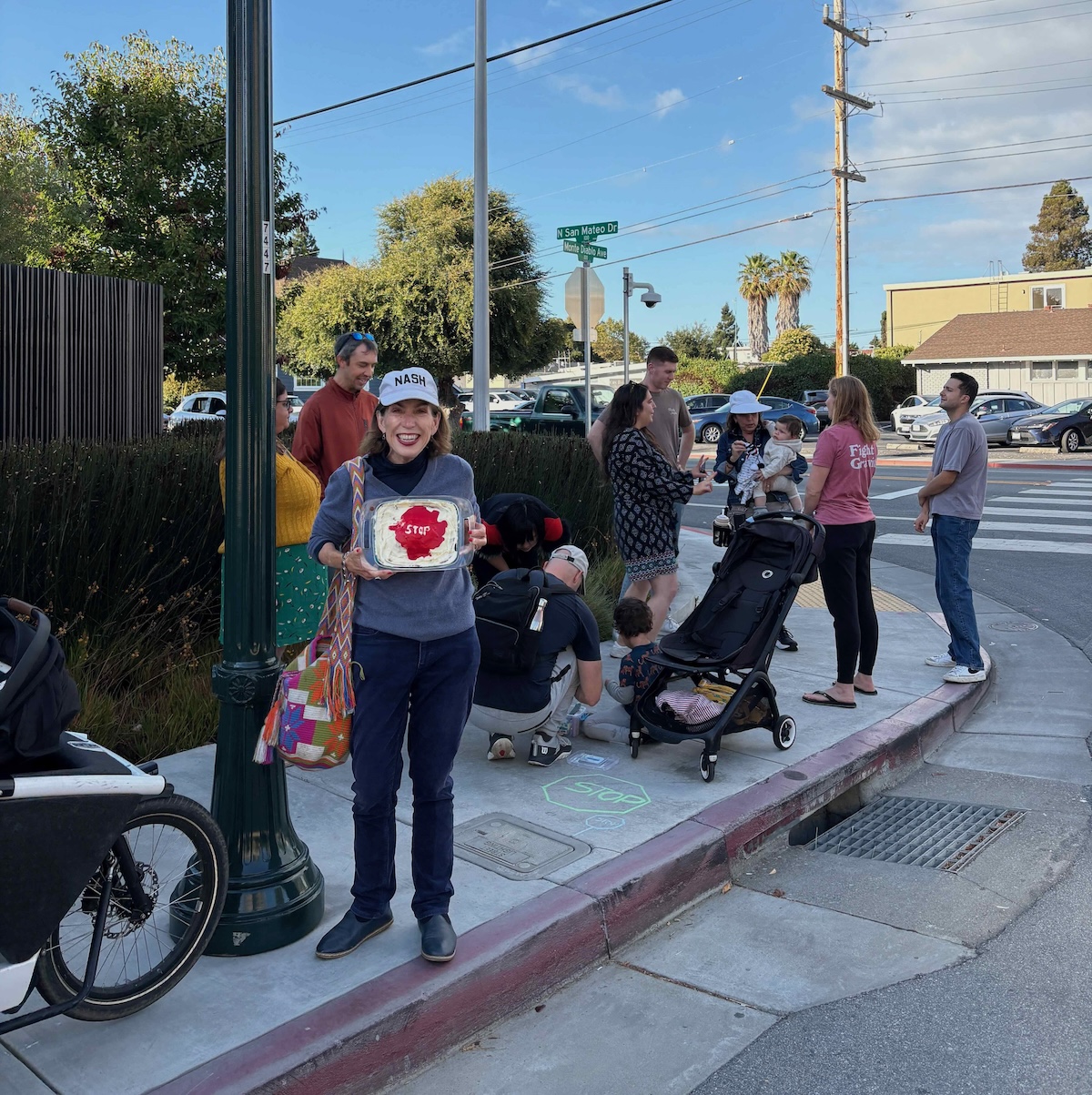
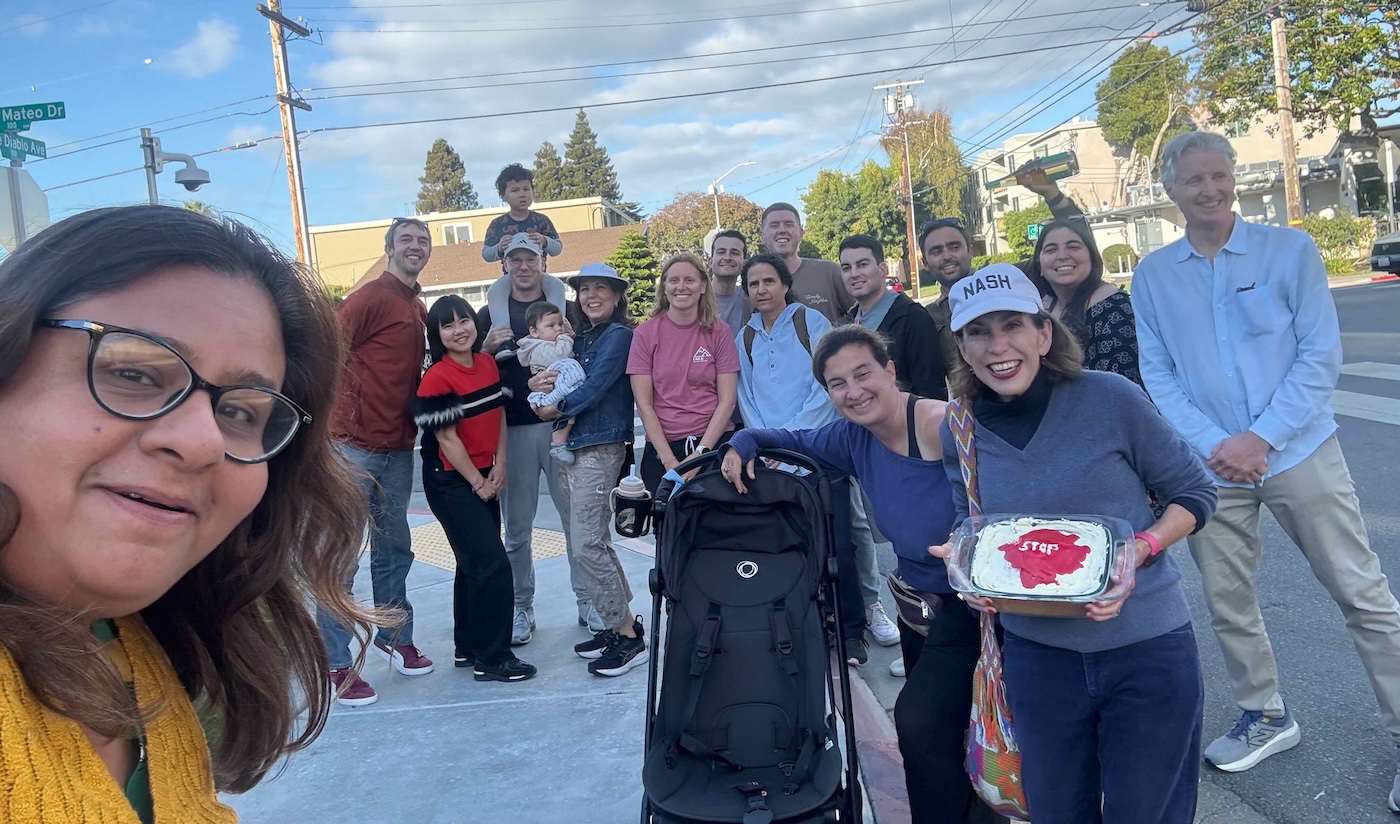
After the celebration, I sent a thank-you email to the traffic engineering staff by name, including photos from our party. Sending an email costs $0.
Enjoyed this post? Get new posts via email