Essay
Small acts

I didn’t file my first 311 ticket, a request to my city’s non-emergency line, until my mid-30s. I asked public works to paint an unmarked crosswalk, and 2 years and 9 months later the city had painted crosswalks at 2 intersections and installed flashing beacons at both, more than I’d asked for.
I was ecstatic. A neighbor or two even called it “Max’s crosswalk.” My family still crosses there safely on the way to the grocery store and farmers market, along with thousands of other people each year.
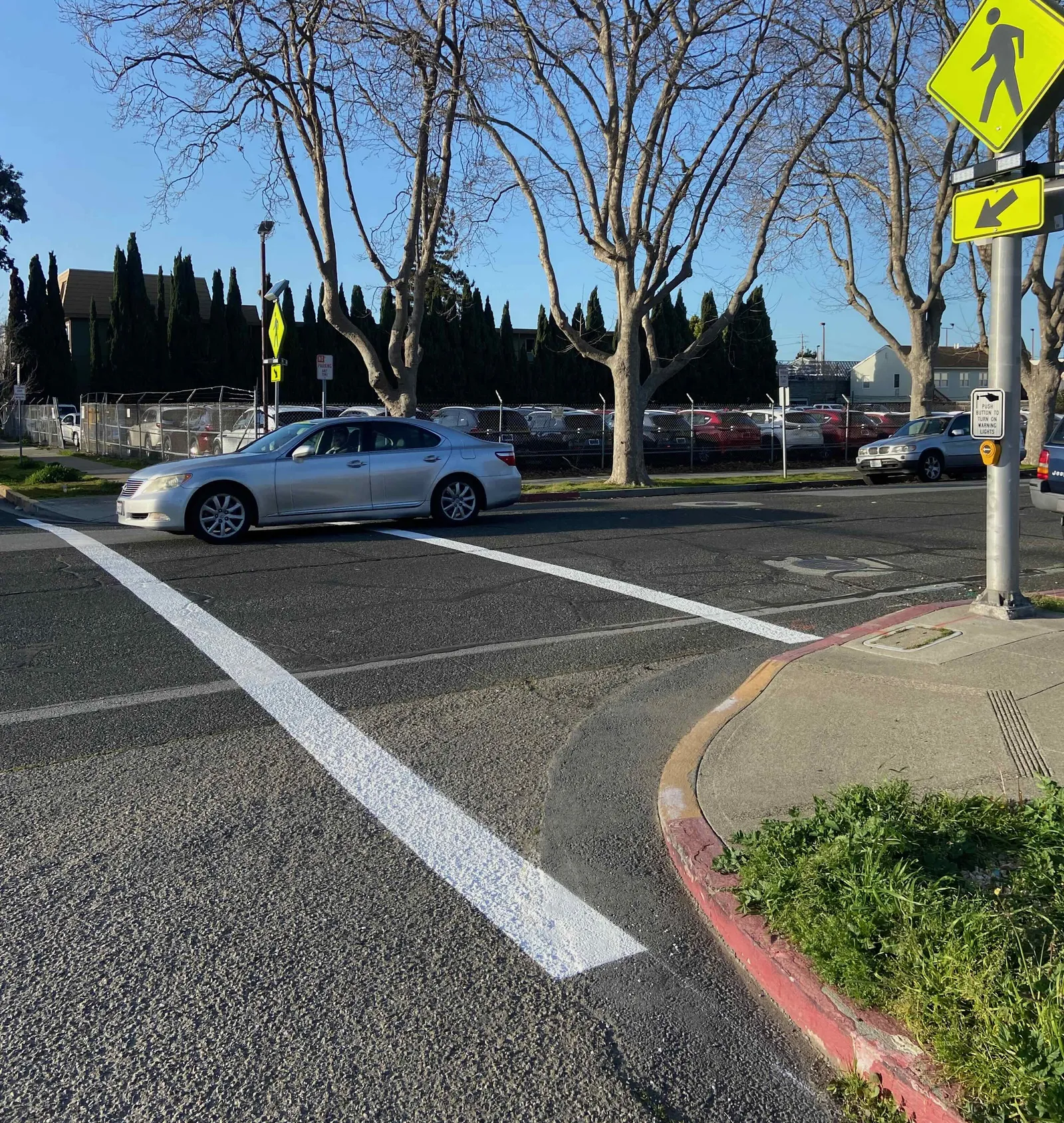
The ticket passed through 3 stages before any paint went down:
- First, public works scheduled a count of how many people crossed at the unmarked crosswalk.
- Next, once the count cleared the city’s minimum, an engineer drew up options. Requiring a minimum is nuts: far more people crossed after the crosswalk was painted, so a count taken beforehand misses most of the people it would serve.
- Finally, the engineer recommended painting crosswalks at 2 intersections instead of 1, plus flashing beacons that pedestrians switch on with a push button to warn drivers.
Then came the longest wait. The city didn’t have enough beacons in stock, and like cities everywhere during the pandemic, it waited months for them to arrive in the mail.
The crosswalk also spans the border between 2 cities, which as I recall slowed things down further.
Even a win that drawn out kept me filing requests. For the bike racks downtown I went to the city council instead of public works, and the mayor took it up after 2 emails.
Bike rack installation request
It started with a single email to the city council and a photo of bikes locked to street trees because there were no racks to lock them to.
The mayor replied in under 24 hours(!) and wrote “…we can discuss with staff.”
That same day the mayor forwarded me a reply from public works that misunderstood my request for bike racks and inflated it into a study, a survey of merchants and the loss of car parking, all put off to “future planning”:
“Adding more e-bike parking will require a study to determine the needs and most suitable locations. This might involve removing some existing street parking and spaces in parking lots, which could affect downtown businesses. As part of future planning, the City can assess the e-bike parking needs in the downtown area and perhaps conduct a survey of merchants to better understand the situation.”
The mayor still reassured me: “I will definitely monitor this and see what we can do.”
I replied:
“I am confused by his response because I hadn’t mentioned e-bikes, requesting a study, or converting existing car parking to bike parking. I know it’s difficult to manage my expectations here, but is the only path forward here a study? Is there any way imaginable to circumvent this costly process?”
The mayor wrote back and ended with this:
“I remember seeing thousands of bikes parked together In Copenhagen and was just amazed. We do need a solution.”
I thanked the mayor, agreed “We’re not that far off from Copenhagen!” and attached more photos of bikes locked to street trees.
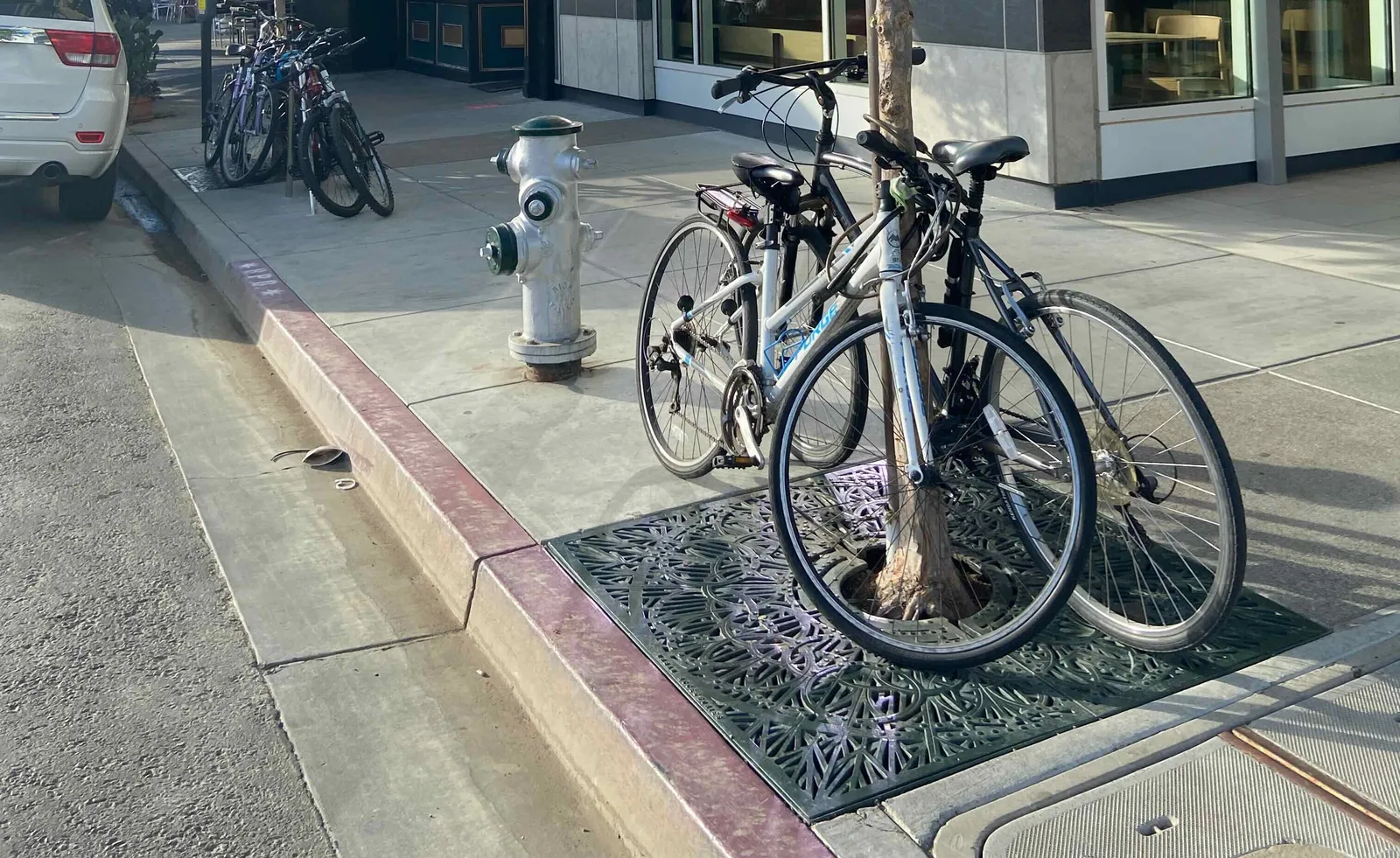
I got this amazing response:
“Thank you Max. Love the photos. Bike parking maps going out tomorrow. Promise to advocate on this and to circumvent and deliver more parking. Maybe we can use the former parklet orange barriers to create some space.”
Under 6 months later the city installed the racks:
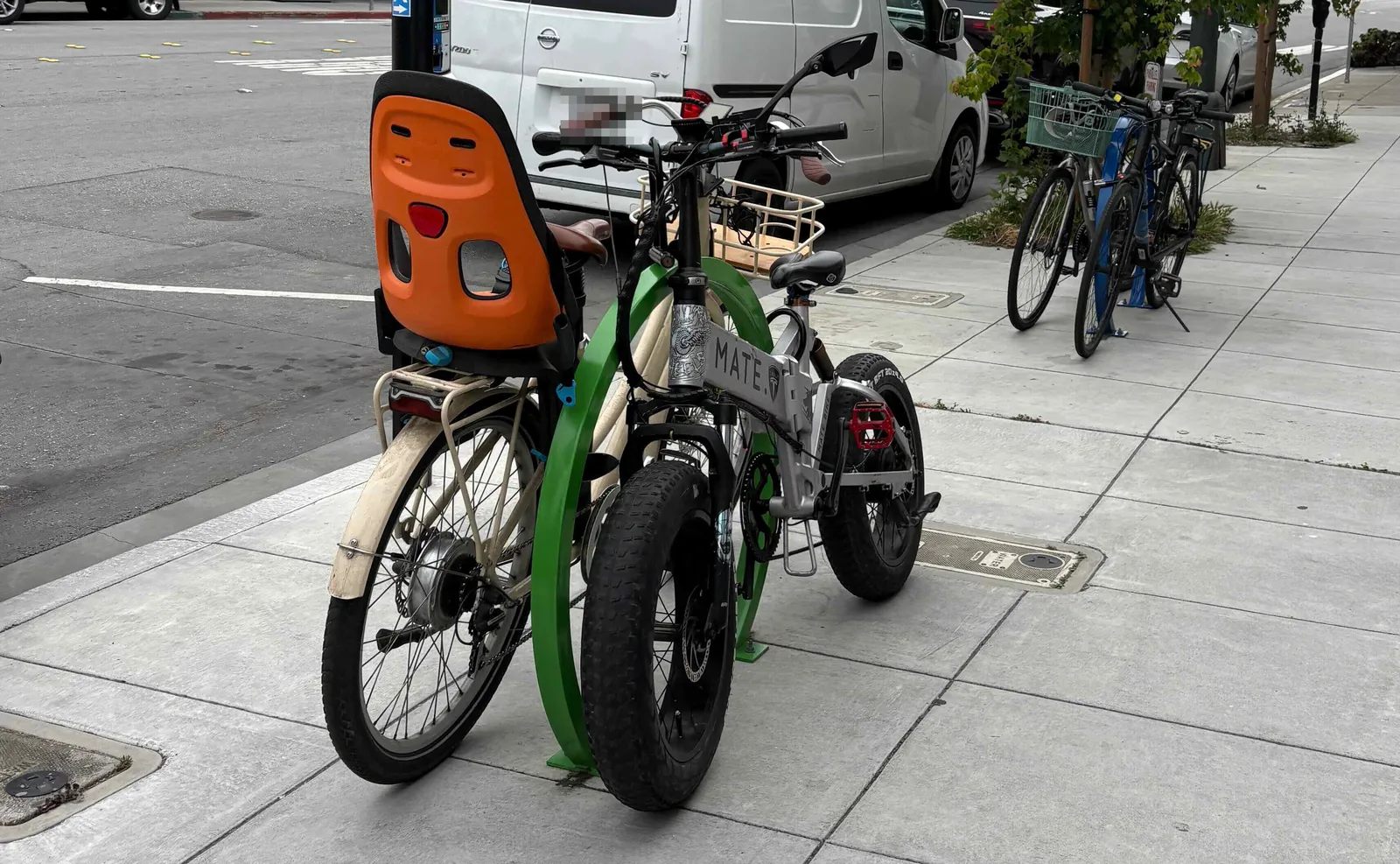
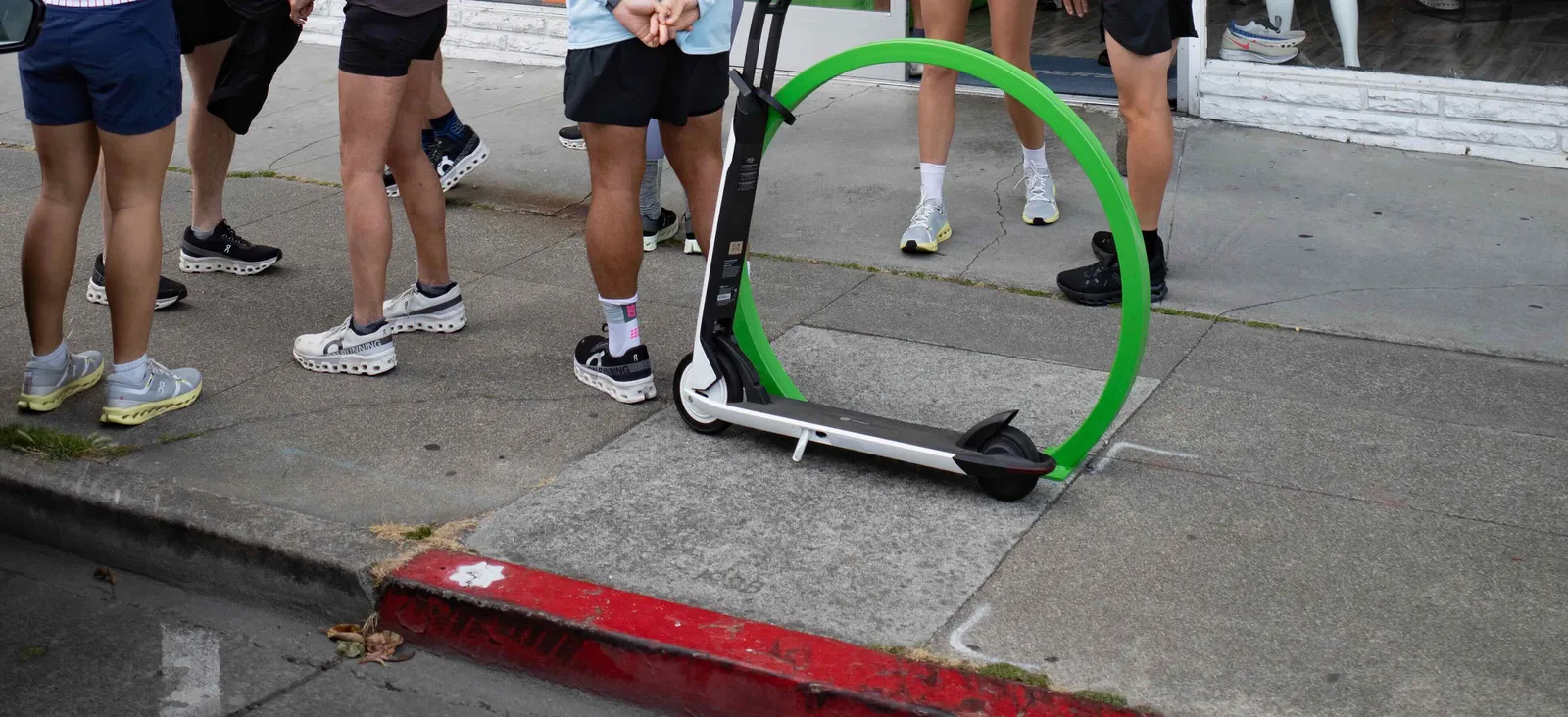
Then I wrote to thank the council:
“Thank you so much for the added bike parking in front of [shops downtown]. All are local merchants my wife and I love patronizing (photos attached). The money that we save by biking downtown goes directly into our budget for spending with local merchants (and local sales tax revenue!). Keep up the great work on making [our city] more bike-friendly, it’s looking good! 👍”
Here is the basic playbook:
- Identify a problem and photograph it.
- Decide who to ask: city staff through 311, or the council, which can push staff to make it a priority.
- Ask in writing so there’s a paper trail, and explain why it’s worth doing.
- Follow up. If the answer is a study, ask whether a study is the only way forward.
- Escalate with more evidence and more voices: neighbors, merchants and anyone else who would use it, so the request stands out against everything else competing for attention.
- Thank them when it’s done, with photos of it in use.
Enjoyed this post? Get new posts by email.