Essay · BUDGETS
Burlingame's city government collects 1.7x as much revenue per resident as San Mateo's. Here's what it spends it on.

San Mateo votes Nov. 3 on Measure H, which would raise the city’s sales tax by a quarter point, 25 cents on a $100 purchase. San Mateo and Burlingame both charge 9.625% today, each including a quarter-cent tax of its own, so a yes vote would make San Mateo’s rate 9.875%, the higher of the 2. The city estimates the tax would raise ~$7 million a year, ~$67 per resident, though shoppers who live elsewhere would pay part of it.
The city’s own 10-year forecast has the general fund running a deficit every year and its savings falling below zero in 2033. I live in San Mateo and suspected that the city government of Burlingame, the neighbor to the north, collected more revenue per resident, without knowing how much more or why, so I read the 2 cities’ audited books side by side.
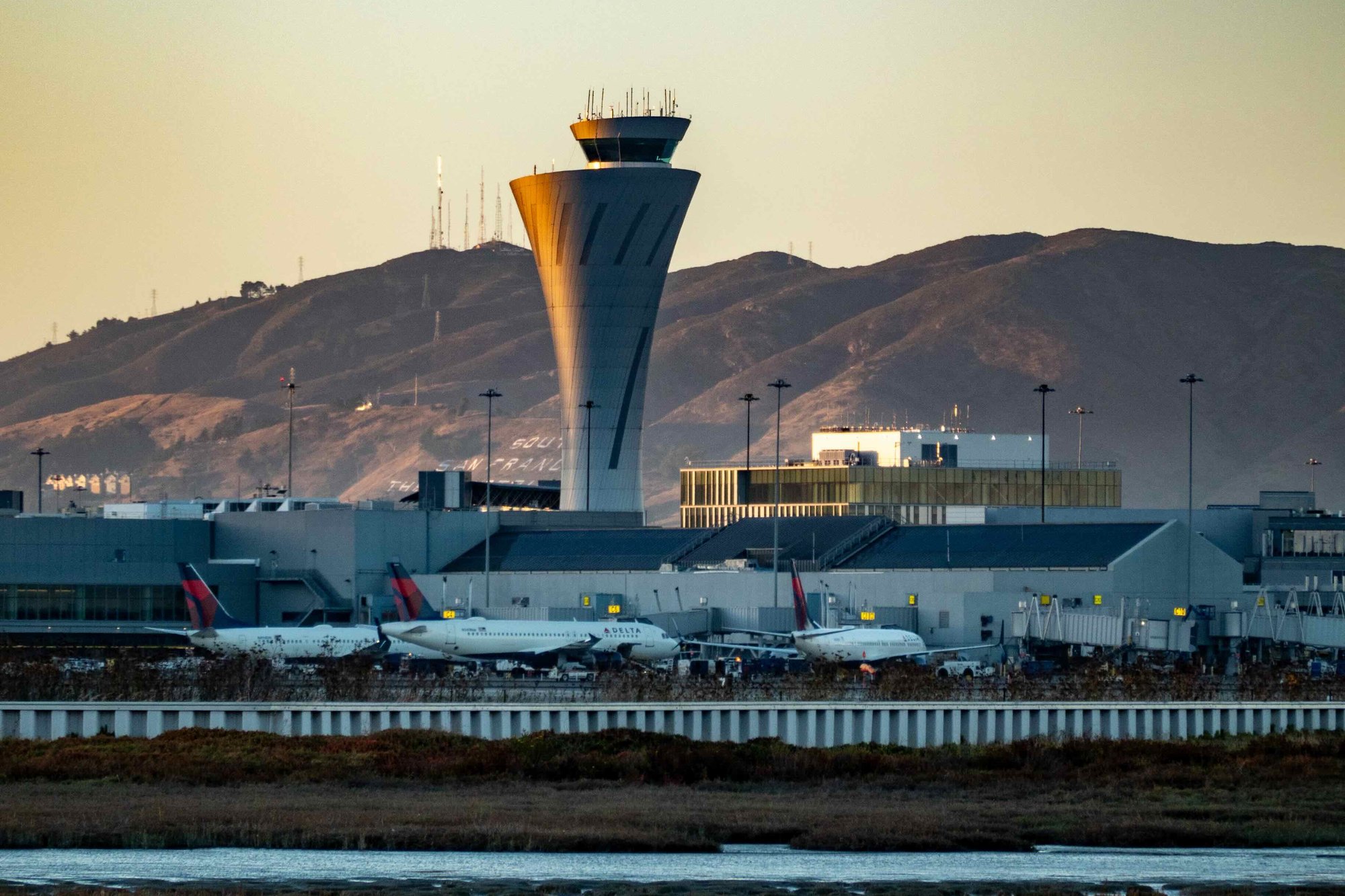
Most of the $1,253 per resident by which Burlingame’s revenue exceeds San Mateo’s is paid by visitors and businesses. Nearly half comes from the 12% tax guests pay at hotels in Burlingame, near SFO. San Mateo’s own hotel tax fell by nearly a quarter in the 2 years after the Marriott hotel in San Mateo closed, according to the city, while Burlingame’s rose ~10%.
Property and sales taxes account for most of the rest of that difference: per resident, homes in Burlingame are assessed ~34% higher than in San Mateo and commercial property more than twice as high, while car dealerships and leasing companies generate 26% of the city’s local sales tax.
When COVID-19 shut down most travel, Burlingame’s hotel tax fell ~80% in 2 years and its total tax revenue fell 32%, against 6% in San Mateo, according to each city’s annual financial reports.
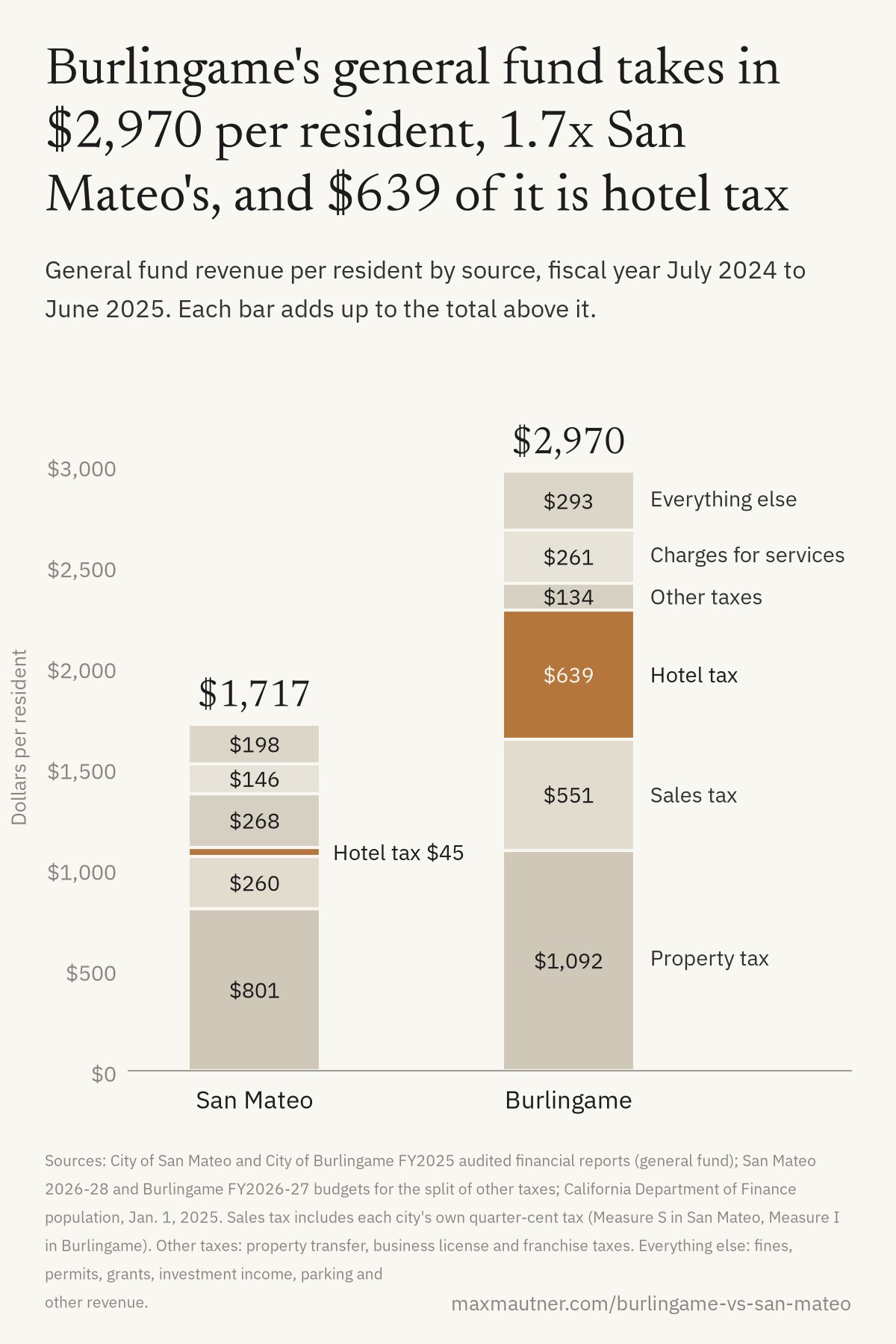
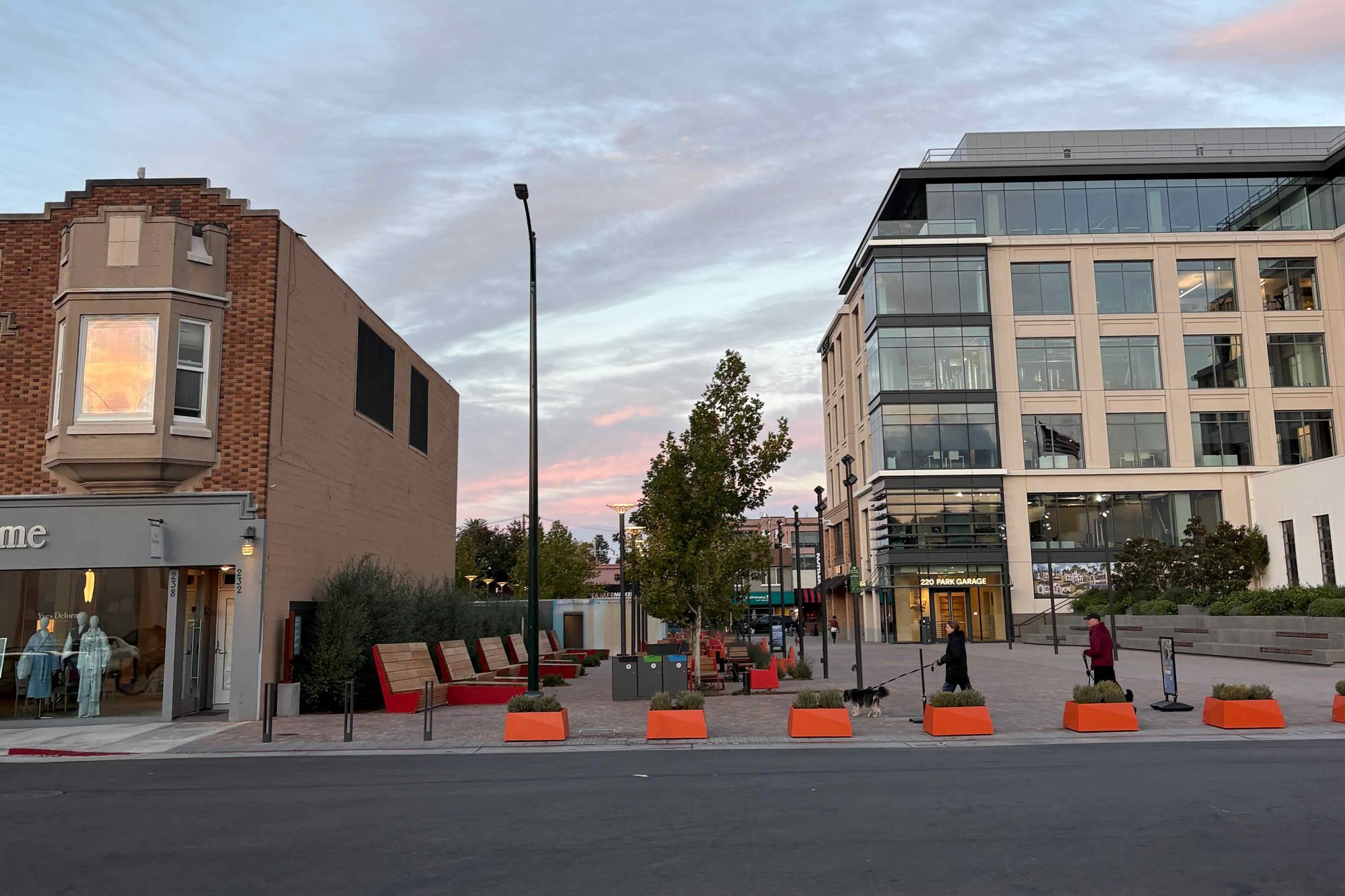
In the year that ended in June 2025, Burlingame’s general fund spent 1.75x as much per resident as San Mateo’s, all of the difference in revenue and a little more. Much of it goes to things residents can see: a parks crew that also tends twice as many city trees per resident, along with the medians and downtown planting, and projects like the Town Square on a former downtown parking lot, a renovated Cuernavaca Field and the bonds for its new Community Center.
A US Forest Service study of Portland, Ore. found that street trees in front of and near a house added 3% to its sale price, as much as 129 more square feet of living space would, and raised the prices of neighboring houses too. Under Prop 13, a California house is reassessed at its sale price when it sells, so a higher price raises its property tax from then on.
Burlingame’s library is used 2.2x as heavily per person as San Mateo’s, at nearly the same cost per visit, in federal library data.
San Mateo is ~20% denser than Burlingame, so each mile of its streets is shared by more residents: ~4.1 lane miles per 1,000 people to Burlingame’s ~5.4 in MTC’s regional pavement survey. It is the same arithmetic that gives Kansas City 3x as much road per resident as Los Angeles, and Burlingame also budgets more to maintain each mile.
Fire stations follow the same arithmetic. Each has to sit within a 4-minute drive of the homes it covers, and the 2 regional fire departments space their stations nearly the same distance apart. San Mateo’s fire department, which also serves Belmont and Foster City, has ~1.7x as many residents per square mile as Burlingame’s, which serves Hillsborough and Millbrae, so each of its stations serves ~1.7x as many people. Burlingame’s streets and stations also serve a workforce nearly as large as its population.
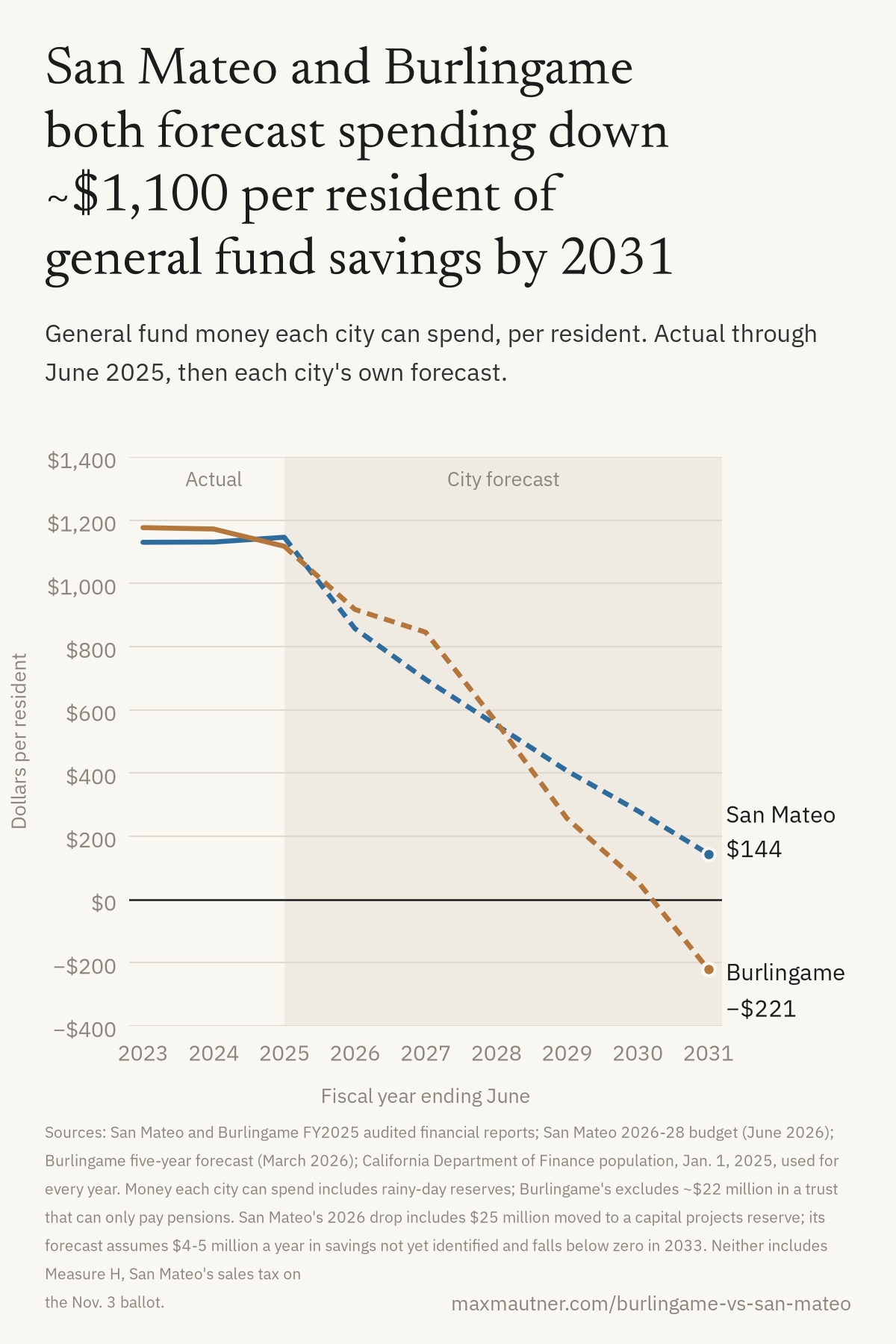
From 2028 to 2031 both cities expect to spend ~8% more than they take in each year. In Burlingame’s forecast, the day-to-day budget stays in surplus and the city runs short because its council moves ~$10 million to $13 million a year into building projects. San Mateo’s budget comes up short before the city moves any money to projects, and that is after counting $4 million to $5 million a year of savings the city hasn’t identified yet.
Burlingame’s council can close its gap by building less. San Mateo’s gap is in day-to-day services, and Measure H, which needs a simple majority on Nov. 3 and has no end date, would cover nearly half of it. Whatever the vote, the City Council decides in each budget how much of the remaining gap to close with cuts or other revenue and how much to draw from savings, and its own budget has the general fund falling below the city’s 15% contingency reserve by 2031.
Burlingame’s city government collects more revenue per resident because travelers fill hotels in Burlingame near SFO and businesses there pay more in property and sales tax, and it spends all of it. Its residents get more city trees, a busier library and new public places for the money, and the rest pays for the extra road and fire coverage that a less dense city needs for each resident.
The charts are generated by this code, which lists every input and its source.
Enjoyed this post? Get new posts via email