Essay
Speed and red light cameras save lives. They survive politics only when the tickets are fair.

Cameras that ticket speeding and red light running cut deaths and injuries on the streets where they operate. Their impact is so direct that turning them off brings the deaths back. In spite of their life-saving powers, they still lose in political fights, and the objections that win the fights are mostly not about safety. They are about who pays the citations, where the money goes and where the cameras are placed. Each of those objections has a fix, and California has already written the fixes into law.
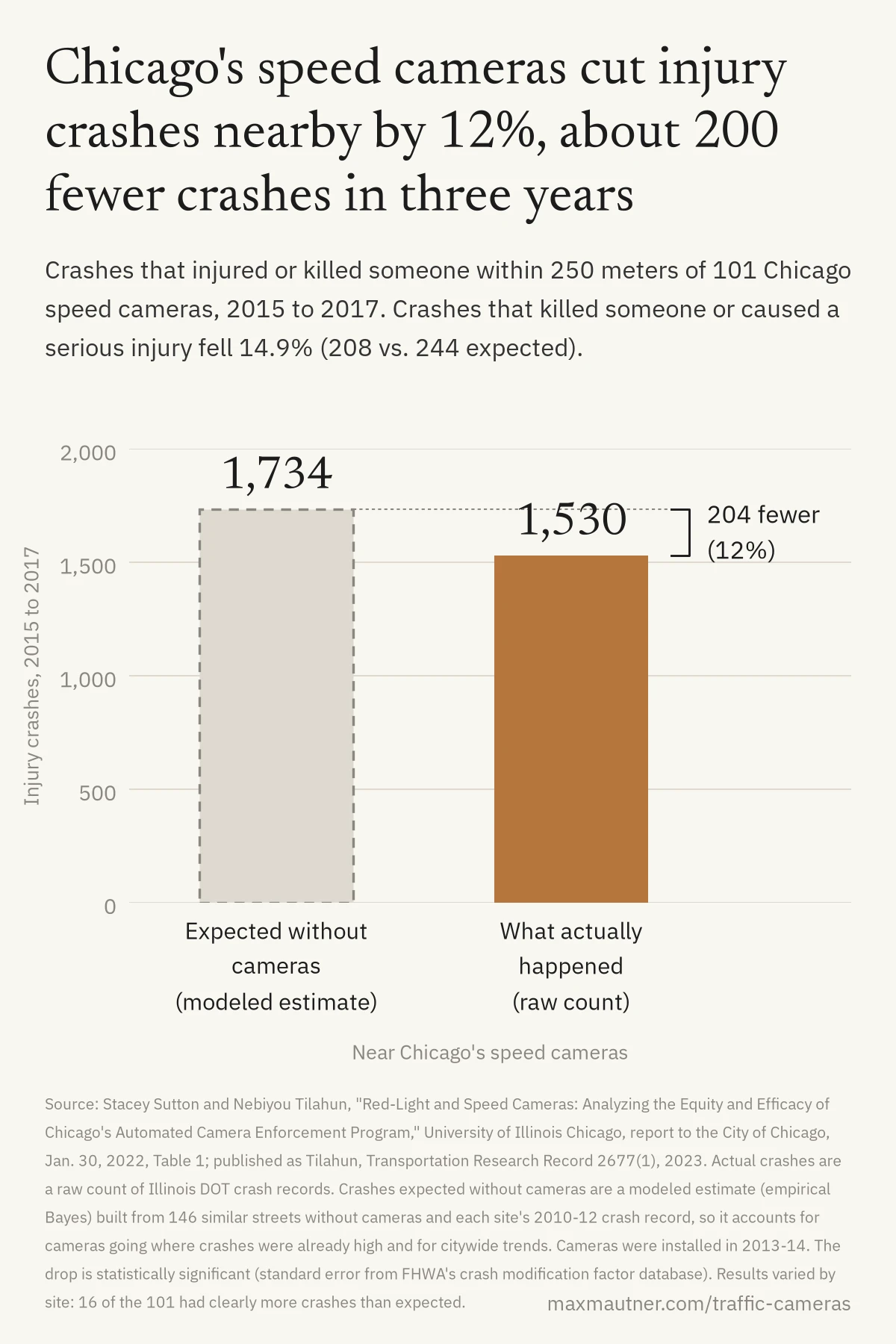
Fewer crashes near a new camera could just be luck. Cities put cameras on their worst streets, and a street coming off a bad year usually recovers, camera or not. So Chicago’s evaluators didn’t just count crashes before and after the cameras went up. They used similar streets that never got cameras to estimate how many crashes each camera’s street would have had without one, then compared that with what actually happened. Measured that way, injury crashes near the cameras still fell, and crashes causing serious injuries and deaths fell by even more.
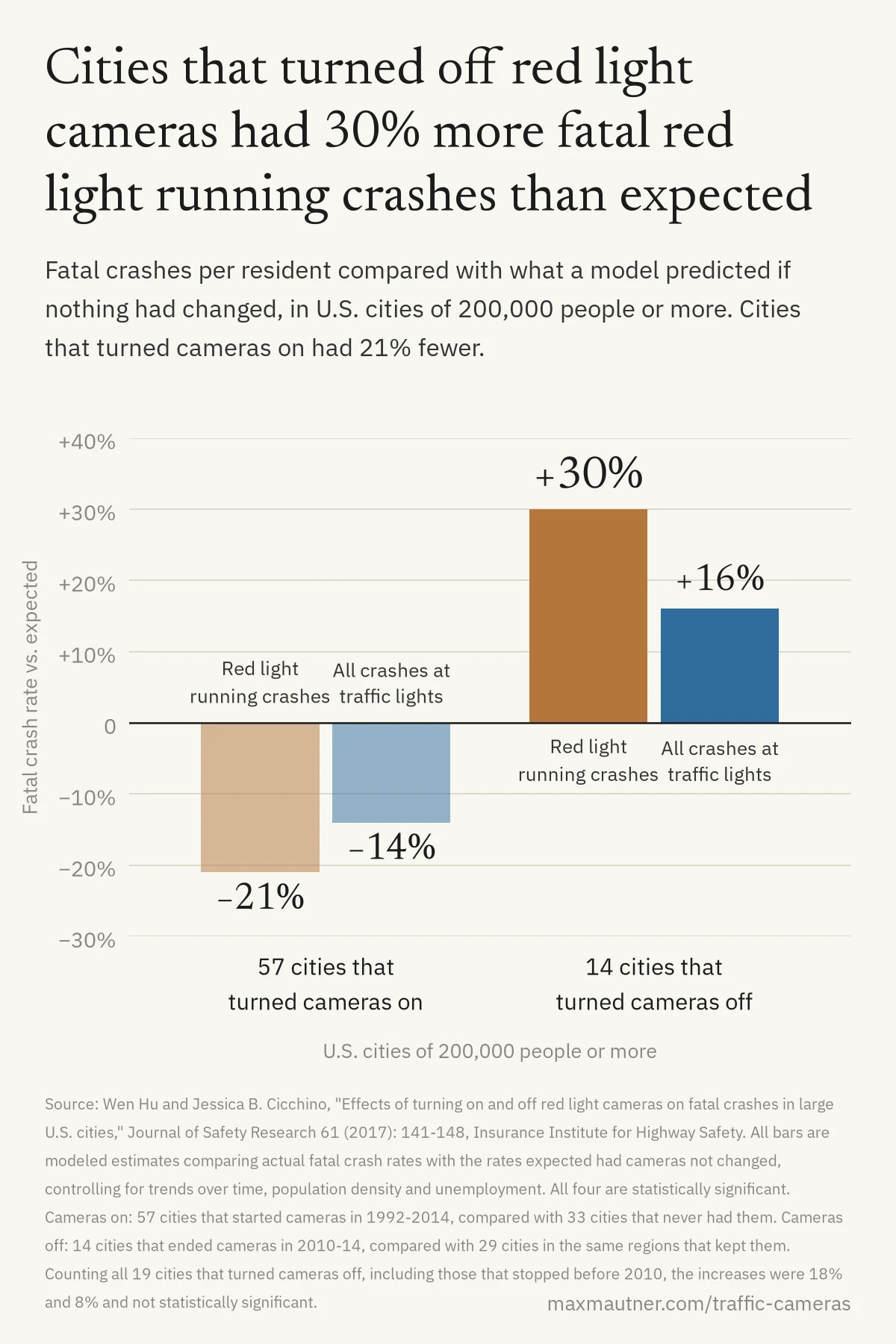
The Insurance Institute for Highway Safety compared large cities that turned red light cameras on, cities that never had them, and cities that turned them off. When cameras came down in 2010-14, fatal red light running crashes rose above what those cities would have seen with cameras still on. The cameras also cut fatal crashes of every kind at traffic lights, not only the red light runners they ticket.
The hours a camera is allowed to run matter as much as where it stands. New York State let New York City run its school zone speed cameras only on weekdays from 6 a.m. to 10 p.m., and ~30% of the city’s 2021 traffic deaths off highways happened in those camera zones at hours the cameras had to stay dark, per the city’s 2024 report. After the state allowed 24/7 enforcement in August 2022, injuries in the newly covered nights and weekends fell 7.6% at camera locations while rising everywhere the city compared them to.
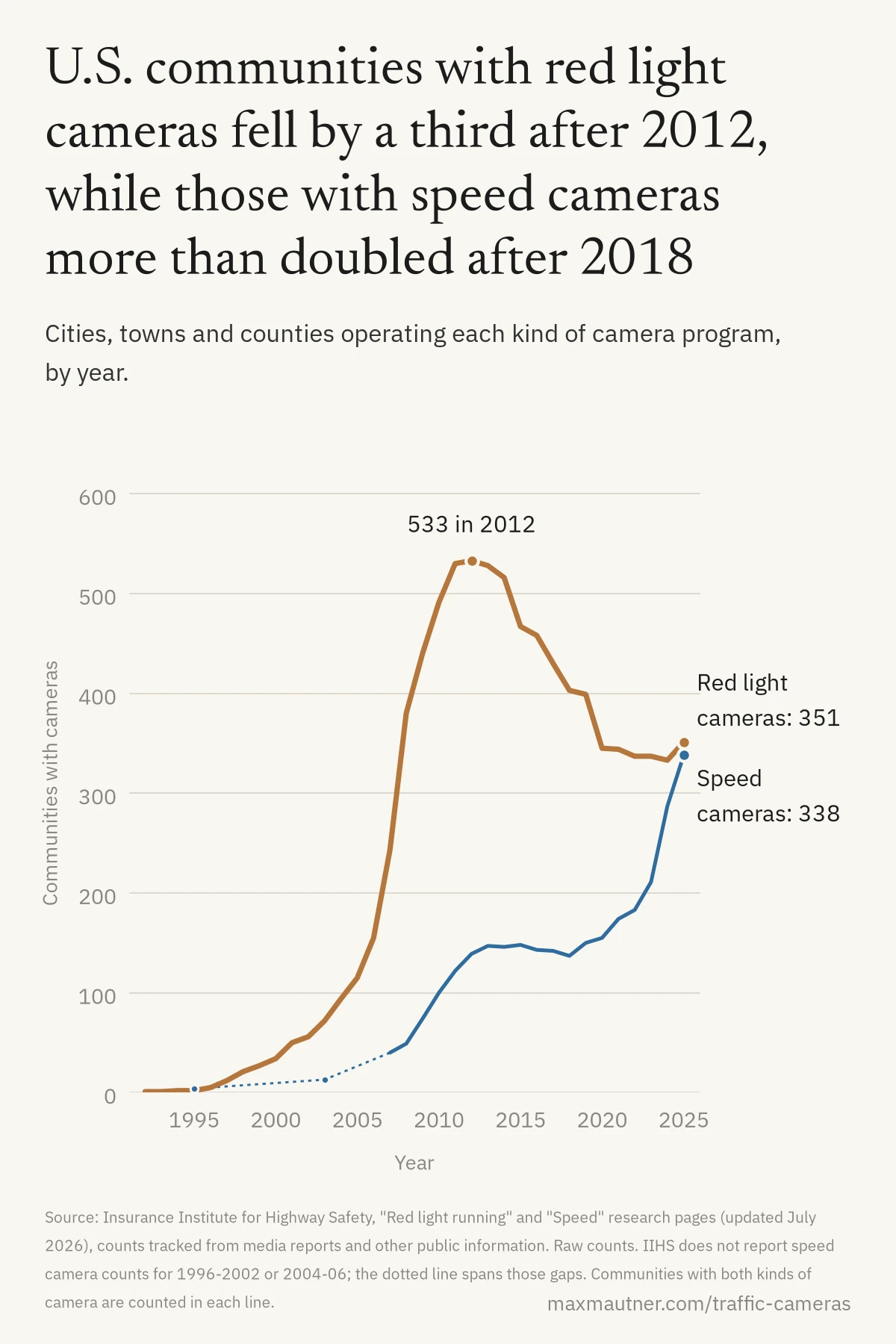
Red light cameras show what happens when the politics go wrong. Since 2012, more programs have shut down than started, and IIHS lists the reasons as 1. fewer tickets over time, 2. money troubles and 3. community opposition. Speed cameras are going the other way. Asked in the abstract, most Americans want safer streets, but only 47% of drivers back speed cameras on residential streets, so each new program starts out one bad news cycle from repeal.
The first objection is that camera tickets are regressive, and it is right. A camera doesn’t see who is driving, which is an improvement over a traffic stop, but a flat fine costs a worker on a living wage a meaningful share of a paycheck and costs a centimillionaire nothing. Late fees make it worse. Chicago doubles a camera fine that is paid late, and tickets issued to drivers in its low-income neighborhoods were far more likely to pick up a late fee than tickets in upper-income ones.
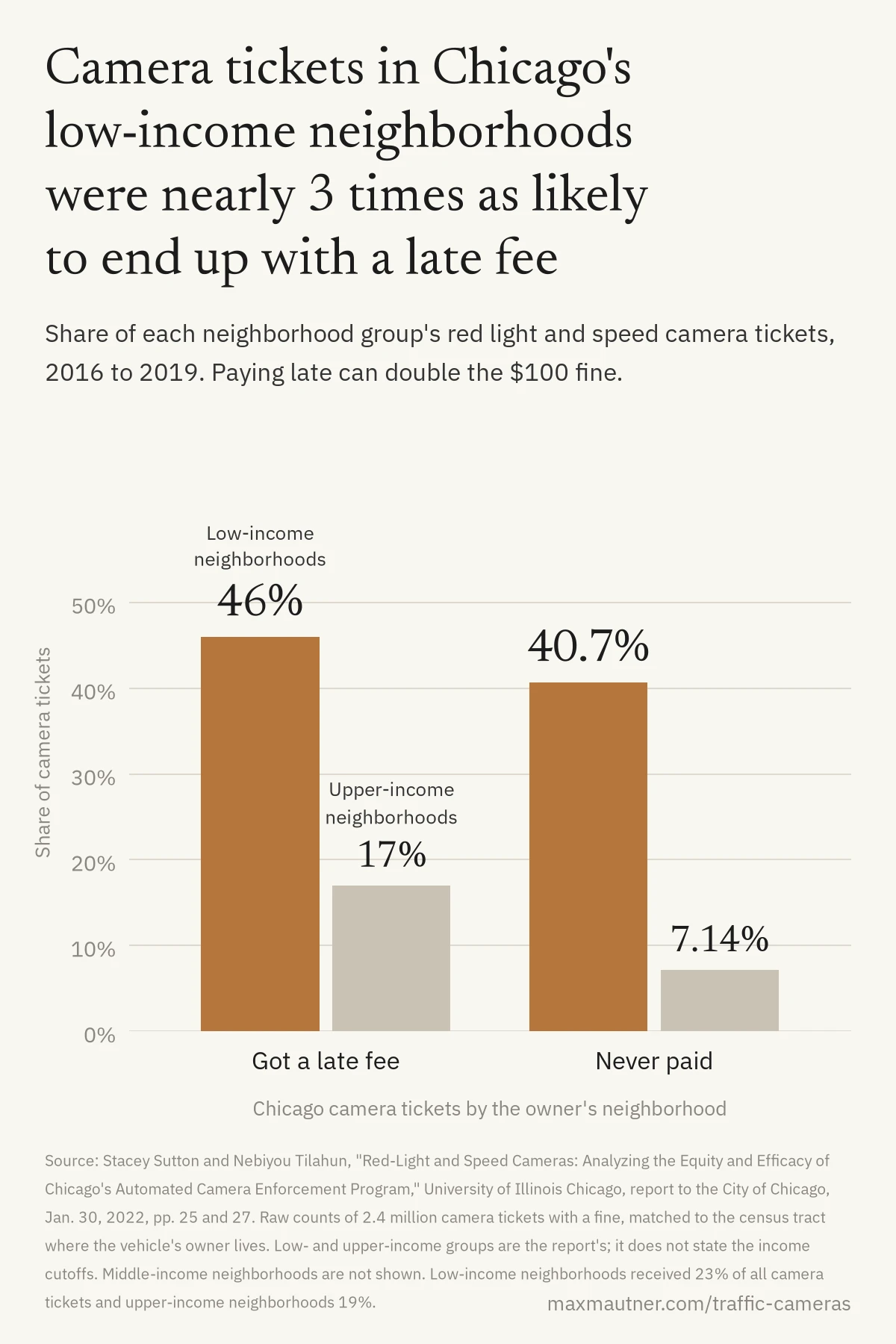
The fix is a fine amount that follows ability to pay. Chicago’s own evaluators recommended ending the doubling, capping late fees and moving to income-based fines. California’s speed camera pilot (AB 645) already cuts fines 80% for people with low incomes, offers small monthly payment plans and makes a driver’s first ticket for modest speeding a warning.
The second objection is that cameras are a revenue trap, and the strongest version is about design. People drive the speed a road is built for, not the speed on the sign. On S Delaware St in San Mateo, posted at 25 mph, the fastest 15% of drivers go over 38, per the city’s own speed survey.
A camera on a road built for speed will issue tickets forever without anyone stepping into change the road itself. In Chicago, the red light cameras within 350 feet of a freeway, where drivers arrive straight off the highway, were 1 in 8 of the city’s red light cameras and issued nearly 1 in 3 of its red light tickets.
California’s AB 645 treats a camera that keeps issuing tickets as a sign the street needs fixing, not as a source of money. A camera has to stop running after 18 months unless speeding at its site drops, or the city adds speed humps, curb extensions, a road diet or other changes that make the street slower by design. Either way the tickets taper off, so a city can’t come to depend on them. Vendors can’t be paid per ticket, and whatever the tickets bring in can only go to running the program and to traffic calming. Neither law tickets drivers for creeping a few mph over: New York’s cameras start at 11 mph over the limit, 36 mph on most city streets.
The third objection is about privacy and who gets watched. The cameras themselves treat drivers alike, but placement doesn’t. Chicago’s majority-Black neighborhoods received more camera tickets per household. Once the city’s evaluators accounted for the road, cameras there ticketed at the same rate as cameras in white neighborhoods, but more of them sat near freeways and on wide roads, where every camera issues more tickets. New York found no link between a neighborhood’s share of people of color and its number of speed cameras. AB 645 requires cameras in “geographically and socioeconomically diverse” locations, photographs of the rear license plate only and records that can’t be used for anything else.
My city of San Mateo can’t use any of this yet, and its streets have the crashes speed cameras are built to stop. On Oct. 19, a motorcyclist was killed on Franklin Parkway near Baze Road when he hit a light pole, and police said speed was likely a factor. In August 2025, a driver going too fast for conditions seriously injured someone at N Delaware St and State St, per state crash records.
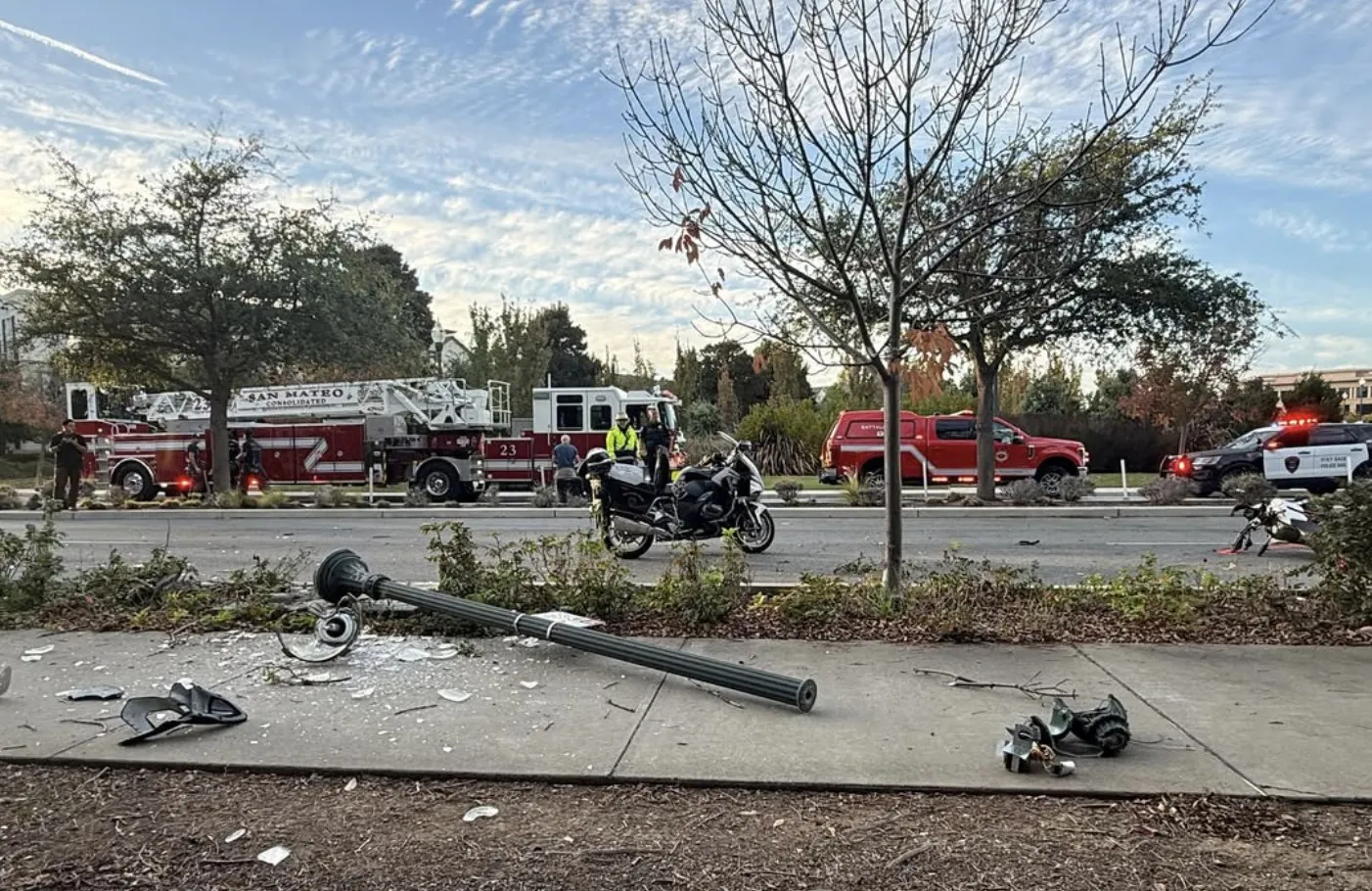
Photo: San Mateo Police Department
California allows speed cameras only in the 6 cities in AB 645, on Pacific Coast Highway in Malibu and in state highway work zones–and only as pilot programs. The state adds eligible places one bill at a time: in September, a law added Pacific Coast Highway in Long Beach to the pilot. San Mateo gets cameras only if Assemblymember Diane Papan or Sen. Josh Becker carries a bill to add it. The City Council can ask them to carry one in 2027, on the terms AB 645 already sets–and I intend to ask for that.
The charts are generated by this code, which lists every input and its source.
Enjoyed this post? Get new posts by email.